A red blood corpuscle (RBC) was kept in a solution and treated so that it became inside-out. What will be the polarity of the phospholipid bilayer in this cell ?
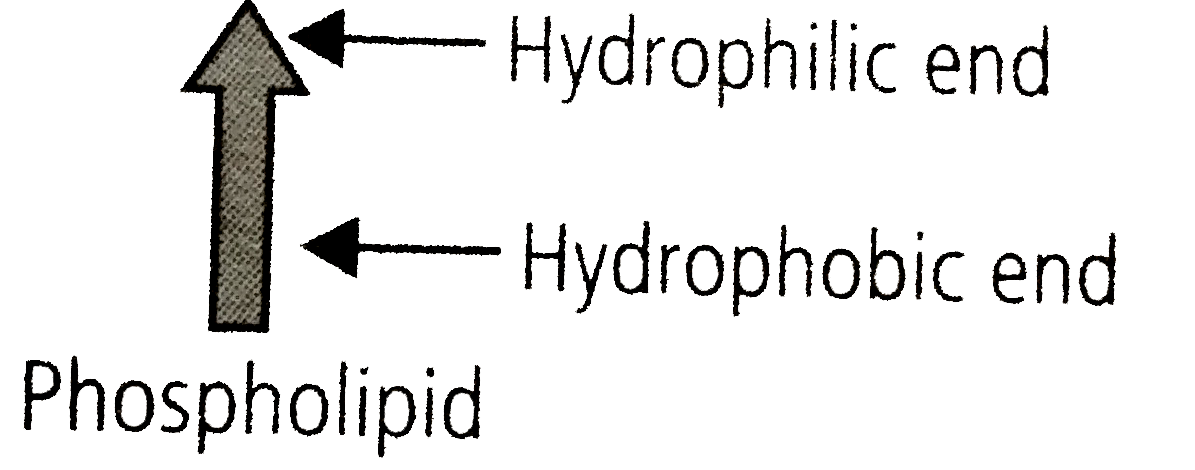
A red blood corpuscle (RBC) was kept in a solution and treated so that it became inside-out. What will be the polarity of the phospholipid bilayer in this cell ?
A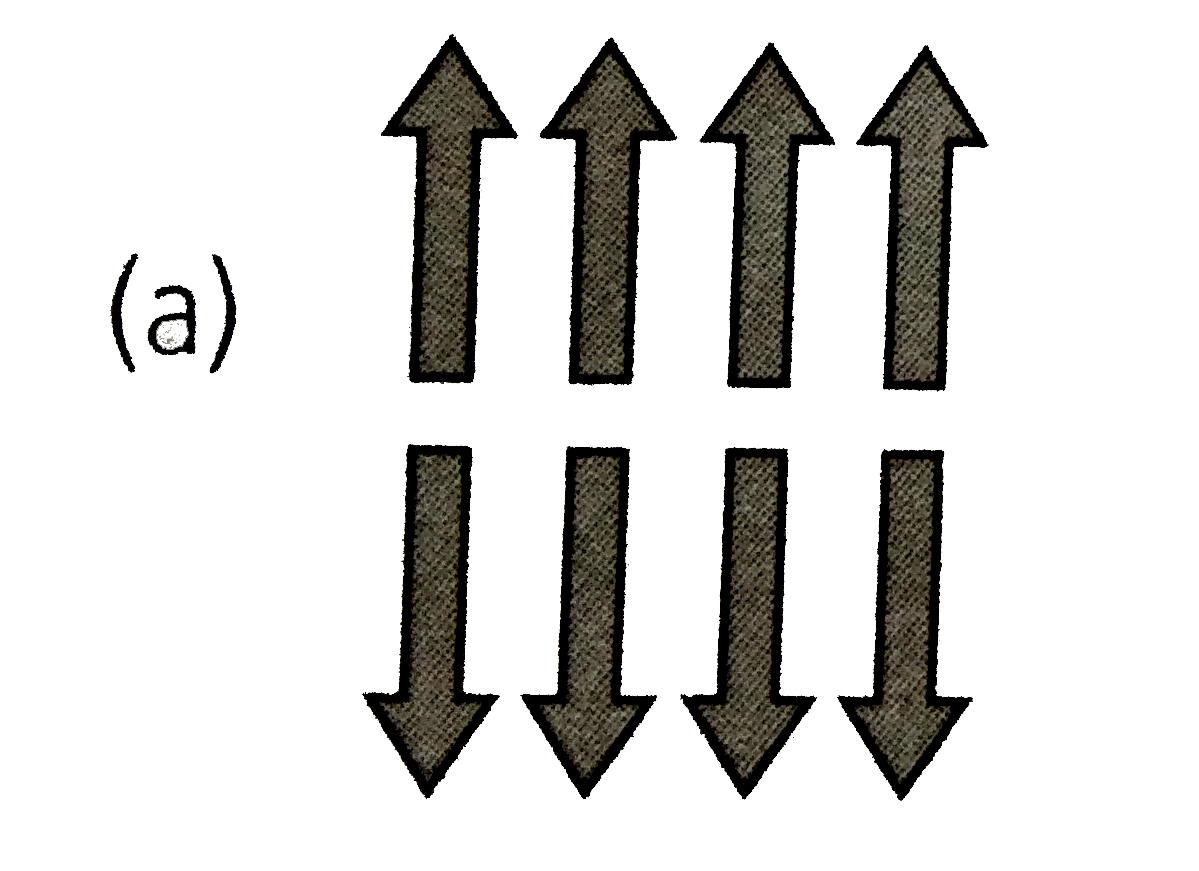
B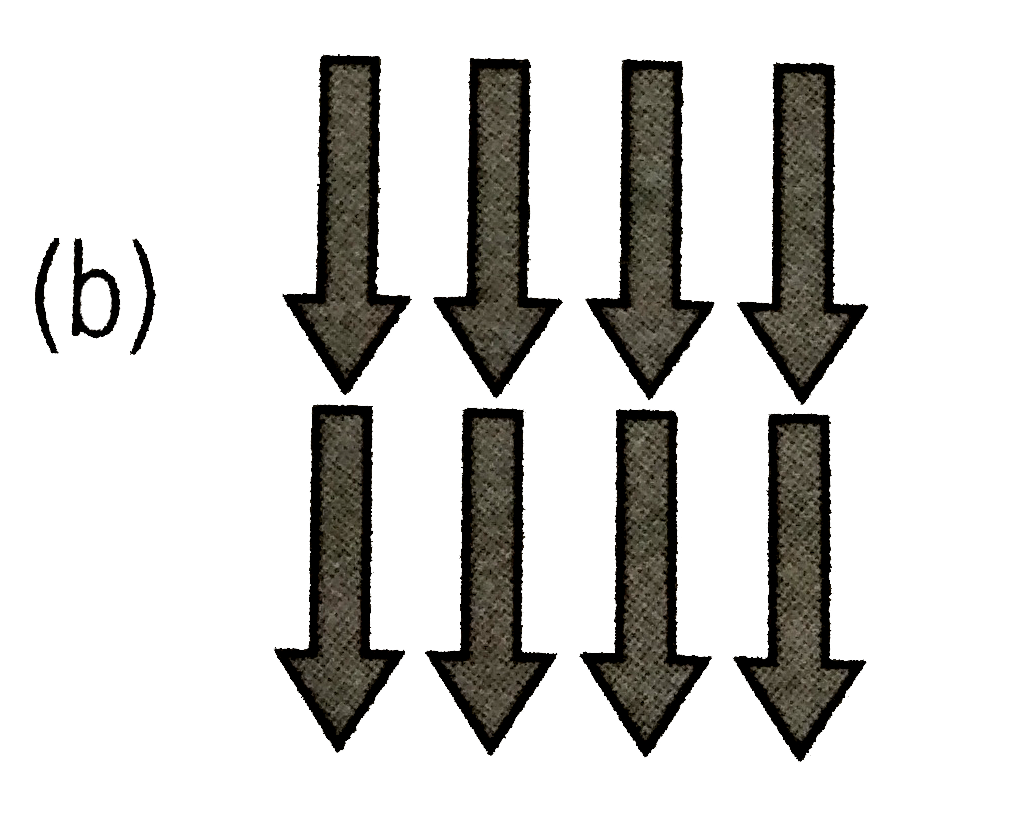
C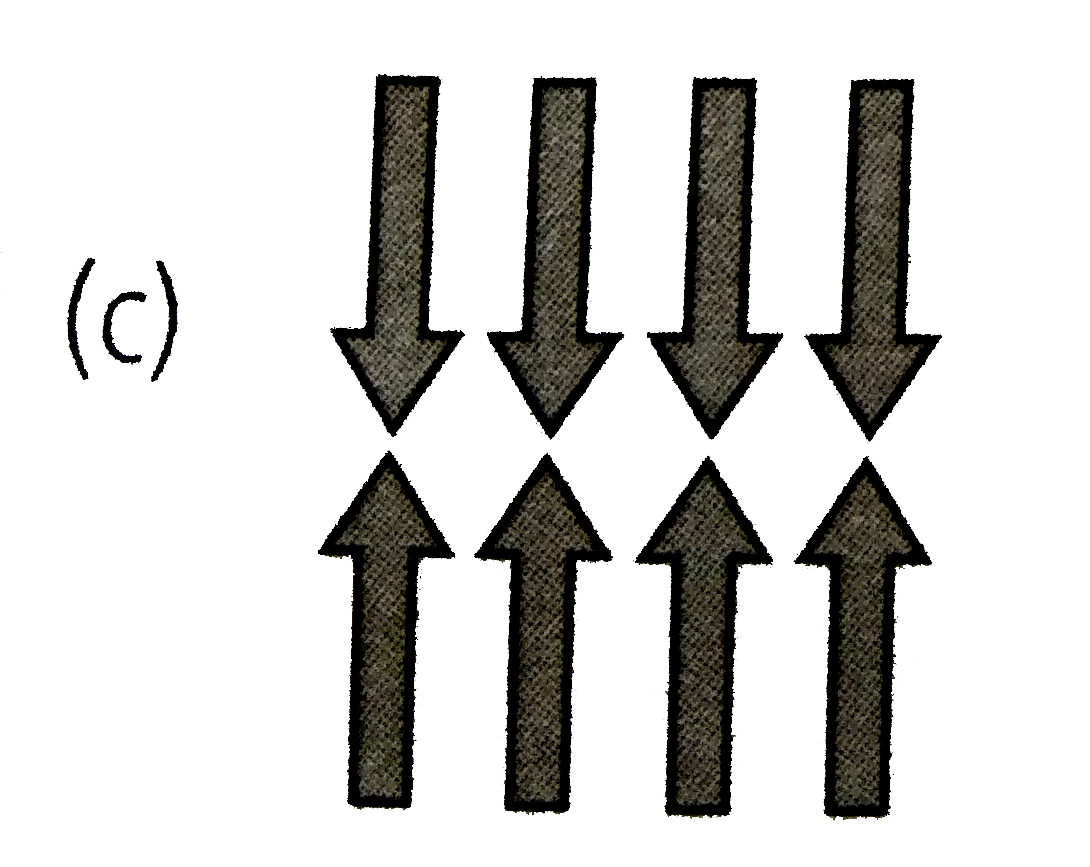
D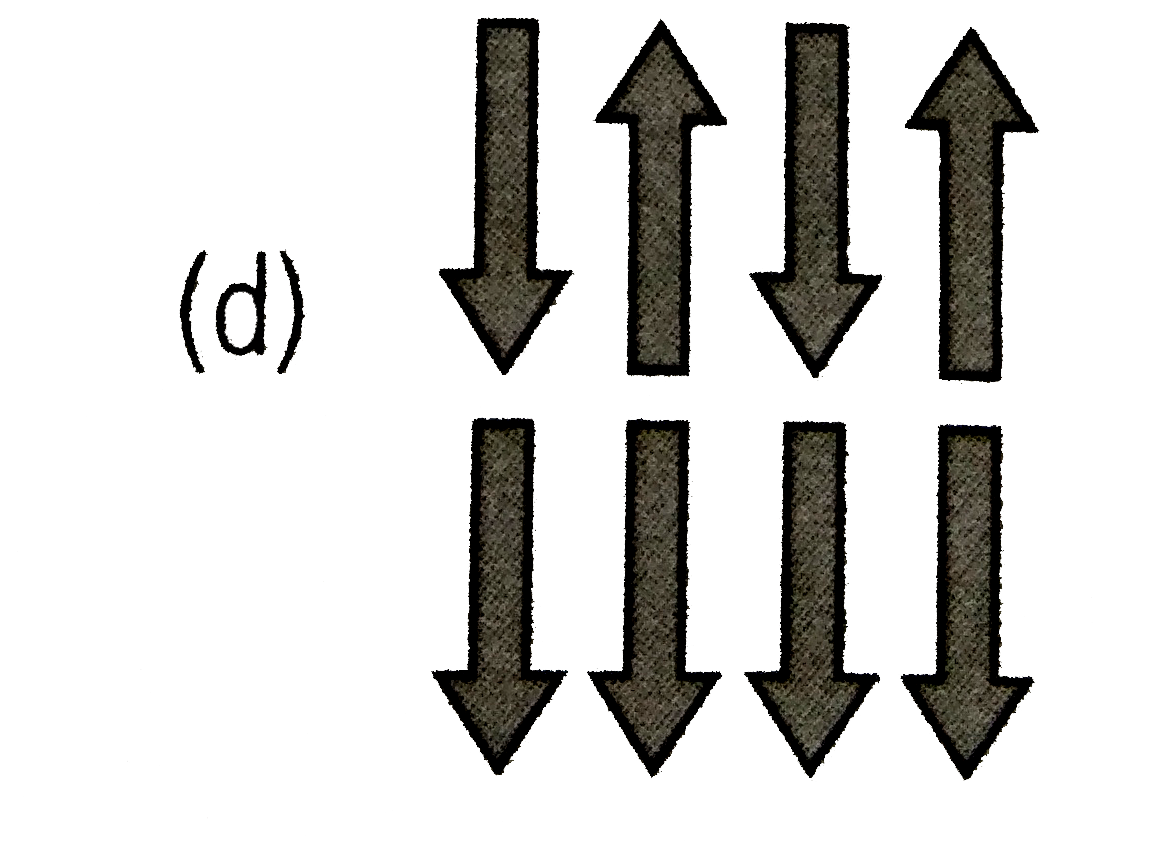
Text Solution
Verified by Experts
The correct Answer is:
A
When phospholipid bilayer is turned inside out the sturcture of bilayer will remain the same as earlier as from both the sides, poalr hydrophilic heads are at puter side and non-polar hydrophobic tails are inside the former. When the bio-menbrane if freeze-fractured to cut it from the middle of the bilayer and turned inside out, only then direction of phospholipids changes.



Similar Questions
Explore conceptually related problems
A wire forming a loop is dipped into soap solution and taken out so that a film of soap solution is formed. A loop of 6.28 cm long thread is gently put on the film and the film is pricked with a needle inside the loop. The thread loop takes the shape of a circle. Find the tension in the thread. Surface tension of soap solution =0.030Nm^-1 .
Water level is maintained ina cylindrical vessel up to a fixed height H. The vessel is kept on a horizontal plane. At what height above the bottom should a hole be made in the vessel so that the water stream coming out of the hole strikes the horizontal plane at the greatest distance from the vessel.
What happens if a plant cell is treated with hypertonic solution ?
A king ordered his Goldsmith to make a crown which should be of pure gold. SO the goldsmith to made a crown of pure gold & brought it to king. but the king was not contended with the crown as he suspected whether it is made of pure gold or not. So he called for Archimedes and asked him to check whether it is a pure gold crowm. Archimedes was serious about this and went his home thinking how to solve this issue. He wanted to take bath, all of a sudden the jumped on to the bath tyb. Water inside the tub had splashed out of it. An idea striked him suddenly he went running naked straight from his bathroom to the king's pace shouting Eureka Eureka on the road side. From this what do we infer ? How Archimeded would have solved this problem ?
A king ordered his Goldsmith to make a crown which should be of pure gold. SO the goldsmith to made a crown of pure gold & brought it to king. but the king was not contended with the crown as he suspected whether it is made of pure gold or not. So he called for Archimedes and asked him to check whether it is a pure gold crowm. Archimedes was serious about this and went his home thinking how to solve this issue. He wanted to take bath, all of a sudden the jumped on to the bath tub. Water inside the tub had splashed out of it. An idea striked him suddenly he went running naked straight from his bathroom to the king's pace shouting Eureka Eureka on the road side. From this what do we infer ? State Archimedes principle.
a. The top of the atmosphere is at about 400 kV with respectto the surface of the earth, corresponding to an electric field that decreases with altitude. Near the surface of the earth, the field is about 100 Vm^(-1). Why then do we not get a electric shock as we step out of our house into the openy (Assume the house to be a steel cage so there is no field inside!) b. A man fixes outside his house one evening a two metre high insulating slab carrying on its top a large aluminium sheet of area 1m^(2) . Will he get an electric shock if he touches the metal sheet next morning? c. The discharging current in the atmosphere due to the small conductivity of air is known to be 1800A on an average over the globe. Why then does the atmosphere not discharge itself completely in due course and become electrically neutral? In other words, what keeps the atmosphere charged? d. What are the forms of energy into which the electrical energy of the atmosphere is dissipated during a lightning? (Hint: The earth has an electric field of about 100 Vm^(-1) at its surface in the downward direction, corresponding to a surface charge density =-10^(-9) Cm^(-2) ?.
Read the given passage and answer the questions that follows: Rhodinus, a blood-sucking bug, shows five instars before it metamorphoses into an adult. It ahs a very long head with the brain located at tip and an organ called Corpora Cardiaca (C C) behind it. The hormone that ensures the continuum of the juvenile stages is called a juvenile hormone. Behind the head is a pro - thoracic gland, which gets triggered by the Pro - Thoracico - Tropic Hormone (PTTH) to release ecdysone required for molting into an adult. The following observations were made when the juveniles of this insect were subjected to various conditions : 1. Starved juveniles (any instar) when decapitated rarr remained juveniles and did not molt into adults. 2. Well-fed juveniles (any instar) when decapitated rarr molted into adults. 3. Starved juveniles (any instar) when partially decapitated to remove the brain cells rarr remained juveniles and did not molt into adults. 4. Well - fed juveniles (any instar) when partially deitated to remove the brain cells rarr did not molt into adults. If an unfed, completely decapitated, fth (final) instar juvenile is connected to a well-fed, decapitated fourth instar juvenile by a glass tube so that fluids can be exchanged, what whill be the expected result ?
Read the passage and answer the following question: In, vacuum the velocity of light radiation with different wavelength is the same. But in a material medium, the velocity of different colour radiations is not the same and they travel with different paths. Due to this, the refractive index of the medium is different for different colours. If white beam of light is incident on a glass prism, the angle of refraction for different colours is different. When Sunlight is incident on a refracting surface, then it gets split into seven coloured spectrum and emerges out. The splitting of light into its component colours is called dispersion. Sir Isaac Newton was the first to use a glass prism to obtain the spectrum of Sunlight. A glass prism is transparent medium bounded by two plane surfaces inclined at an angle. When white light is dispersed into seven colours by a prism, different colours of light bend through different angles with respect to incident ray. Out of these seven colours, red light bends the least, while violet light bends the most. So, the rays of each colour emerge along different paths and becomes distinct. Hence, we get spectrum of seven - different colours. Q. What is dispersion ?
Recommended Questions
- A red blood corpuscle (RBC) was kept in a solution and treated so that...
Text Solution
|
- What do you expect to happen when red blood corpuscles (RBCs) are plac...
Text Solution
|
- Red blood cells(RBCs) have
Text Solution
|
- What will happen if a red blood cell is kept in concentrated salt solu...
Text Solution
|
- Red blood cells :Erythrocytes White blood cells :
Text Solution
|
- what are Erythrocytes of Red blood corpuscles (RBC)? State the functio...
Text Solution
|
- The other name of red blood corpuscles is .
Text Solution
|
- What makes red blood corpuscles red?
Text Solution
|
- एक लाल रक्त कोशिका को एक विलयन में इस प्रकार से उपचारित किया गया कि यह...
Text Solution
|