Satellite TV manufacturing businesses tend to have what economists call "economies of scale." When economies of scale exist, bigness can be its own reward.
The more TV's you manufacture in a single run, lower the costs per unit, which in turn increases your bottom-line margins.
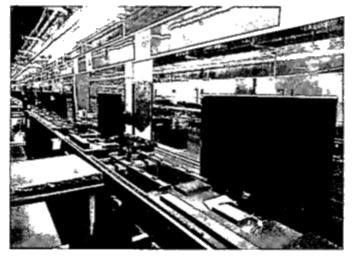 Keeping that in mind, a T.V. manufacturing company increases its production uniformly by fixed number every year. The company produces 8000 sets in the 6th year and 11,300 sets in the 9th year.
On the basis of the above information, answer any four of the following questions:
The company's production of the first year is:
Satellite TV manufacturing businesses tend to have what economists call "economies of scale." When economies of scale exist, bigness can be its own reward.
The more TV's you manufacture in a single run, lower the costs per unit, which in turn increases your bottom-line margins.
Keeping that in mind, a T.V. manufacturing company increases its production uniformly by fixed number every year. The company produces 8000 sets in the 6th year and 11,300 sets in the 9th year.
On the basis of the above information, answer any four of the following questions:
The company's production of the first year is:
The more TV's you manufacture in a single run, lower the costs per unit, which in turn increases your bottom-line margins.
Keeping that in mind, a T.V. manufacturing company increases its production uniformly by fixed number every year. The company produces 8000 sets in the 6th year and 11,300 sets in the 9th year. On the basis of the above information, answer any four of the following questions:
The company's production of the first year is:
A
2000
B
2500
C
3000
D
5000
Text Solution
Verified by Experts
The correct Answer is:
B



Similar Questions
Explore conceptually related problems
Satellite TV manufacturing businesses tend to have what economists call "economies of scale." When economies of scale exist, bigness can be its own reward. The more TV's you manufacture in a single run, lower the costs per unit, which in turn increases your bottom-line margins. Keeping that in mind, a T.V. manufacturing company increases its production uniformly by fixed number every year. The company produces 8000 sets in the 6th year and 11,300 sets in the 9th year. The company's production of the 8th year is:
Satellite TV manufacturing businesses tend to have what economists call "economies of scale." When economies of scale exist, bigness can be its own reward. The more TV's you manufacture in a single run, lower the costs per unit, which in turn increases your bottom-line margins. Keeping that in mind, a T.V. manufacturing company increases its production uniformly by fixed number every year. The company produces 8000 sets in the 6th year and 11,300 sets in the 9th year. In which year the company's production is 9100 sets ?
Satellite TV manufacturing businesses tend to have what economists call "economies of scale." When economies of scale exist, bigness can be its own reward. The more TV's you manufacture in a single run, lower the costs per unit, which in turn increases your bottom-line margins. Keeping that in mind, a T.V. manufacturing company increases its production uniformly by fixed number every year. The company produces 8000, sets in the 6^(th) year and 11,300 sets in the 9^(th) year. The company's production of the first year is:
Satellite TV manufacturing businesses tend to have what economists call "economies of scale." When economies of scale exist, bigness can be its own reward. The more TV's you manufacture in a single run, lower the costs per unit, which in turn increases your bottom-line margins. Keeping that in mind, a T.V. manufacturing company increases its production uniformly by fixed number every year. The company produces 8000, sets in the 6^(th) year and 11,300 sets in the 9^(th) year. The company's production of the 8th year is:
Satellite TV manufacturing businesses tend to have what economists call "economies of scale." When economies of scale exist, bigness can be its own reward. The more TV's you manufacture in a single run, lower the costs per unit, which in turn increases your bottom-line margins. Keeping that in mind, a T.V. manufacturing company increases its production uniformly by fixed number every year. The company produces 8000 sets in the 6th year and 11,300 sets in the 9th year. The company's production increases every year by:
Satellite TV manufacturing businesses tend to have what economists call "economies of scale." When economies of scale exist, bigness can be its own reward. The more TV's you manufacture in a single run, lower the costs per unit, which in turn increases your bottom-line margins. Keeping that in mind, a T.V. manufacturing company increases its production uniformly by fixed number every year. The company produces 8000, sets in the 6^(th) year and 11,300 sets in the 9^(th) year. The company's production increases every year by:
Satellite TV manufacturing businesses tend to have what economists call "economies of scale." When economies of scale exist, bigness can be its own reward. The more TV's you manufacture in a single run, lower the costs per unit, which in turn increases your bottom-line margins. Keeping that in mind, a T.V. manufacturing company increases its production uniformly by fixed number every year. The company produces 8000 sets in the 6th year and 11,300 sets in the 9th year. The company's total production of the first 6 years is:
Satellite TV manufacturing businesses tend to have what economists call "economies of scale." When economies of scale exist, bigness can be its own reward. The more TV's you manufacture in a single run, lower the costs per unit, which in turn increases your bottom-line margins. Keeping that in mind, a T.V. manufacturing company increases its production uniformly by fixed number every year. The company produces 8000, sets in the 6^(th) year and 11,300 sets in the 9^(th) year. The company's total production of the first 6 years is:
The production of TV in a factory increases uniformly by a fixed number every year .It produced 8000 TV's in 6^(th) year & 11300 in 9^(th) year , find the production in 8^(th) year .
India is competitive manufacturing location due to the low cost of manpower and strong technical and engineering capabilities contributing to higher quality production runs. The production of TV sets in a factory increases uniformly by a fixed number every year. It produced 16000 sets in 6th year and 22600 in 9th year. Based on the above information, answer the following questions: In which year, the production is Rs 29,200.
Recommended Questions
- Satellite TV manufacturing businesses tend to have what economists cal...
Text Solution
|
- How many lines of symmetry does the above figure have ? <img src="http...
Text Solution
|
- Determine the point of symmetry of a regular hexagon. <img src="htt...
Text Solution
|
- Dtermine the images of the following figure about the given line : ...
Text Solution
|
- Match the following Column A to Column B
Text Solution
|
- Match the following Column A to Column B
Text Solution
|
- Match the following Column A to Column B
Text Solution
|
- The inequation represented by the graph given below is : <img src="htt...
Text Solution
|
- The inequation that best describes the graph given below is <img src=...
Text Solution
|