Home
Class 8
MATHS
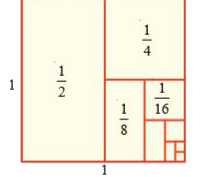
Guess a formula for a(n). Use the subdiv...

Guess a formula for `a_(n)`. Use the subdivided ubit square below to give a visual justification of your conjecture

Text Solution

Verified by Experts

The correct Answer is:

`a_(n)=?`
Promotional Banner

Similar Questions

Explore conceptually related problems

Valence bond theory successfully explains the magnetic behaviour of complexes. The substances which contains unpaired electrons are paramagnetic and paramagnetic character increases as the number of unpaired electrons increases. Magnetic moment of a complex can be determined experimentally and by using formula sqrt(n(n+2)) and we can determine the number of unpaired electrons in it. This information is important in writing electronic structure of complex which in turn also useful in deciding the geometry of complex. The magnetic moment of complexes given below are in the order : {:(Ni(CO)_(4),[Mn(CN)_(6)]),("(I)","(II)"),([Cr(NH_(3))_(6)]^(3+),[CoF_(6)]^(3+)),("(I)","(II)"):}

For a general reaction given below, the value of solubility product can be given us {:(A_(x)B_(y),=xA^(+y),+yB^(-x)),(a,0,0),(a-s,xs,ys):} K_(sp)=(xs)^(x).(ys)^(y) (or) K_(sp)=x^(x)y^(y) (S)^(x+y) Solubility product gives us not only an idea about the solubility of an electrolyte in a solvent but also helps in explaining concept of precipitation and calculation [H^(+)] ion, [OH^(-) ] ion. It is also useful in qualitative analysis for the idetification and separation of basic radicals Potussium chromate is slowly aded toa solution containing 0.20M Ag NO_(3) , and 0.20M Ba(NO_(3))_(2) . Describe what happensif the K_(sp) for Ag_(2),CrO_(4) , is 1.1 xx 10^(-12) and the K_(sp) of BaCiO_(4) , is 1.2 xx 10^(-10) ,

For a general reaction given below, the value of solubility product can be given us {:(A_(x)B_(y),=xA^(+y),+yB^(-x)),(a,0,0),(a-s,xs,ys):} K_(sp)=(xs)^(x).(ys)^(y) (or) K_(sp)=x^(x)y^(y) (S)^(x+y) Solubility product gives us not only an idea about the solubility of an electrolyte in a solvent but also helps in explaining concept of precipitation and calculation [H^(+)] ion, [OH^(-) ] ion. It is also useful in qualitative analysis for the idetification and separation of basic radicals What is the molar solubility of Cu(OH)_(2) , in 1.0 M NH_(3) if the deep blue complex ion [Cu(NH_(3))_(4)]^(2+) is formed. The K_(sp), of Cu(OH)_(2) , is 1.6xx 10^(-19) and K_(3) , of [Cu(NH_(3))_(4) is 1.1 xx 10^(13)

Your friend told a formula to you as 1/f = (n - 1) (1/R_1-1/R_2),1/f=1/v-1/u then he put the following questions. In what context you have to use the two formulae ?

Your friend told a formula to you as 1/f = (n - 1) (1/R_1-1/R_2),1/f=1/v-1/u then he put the following questions. What are the precautions that you have to take while using these formulae ?

The molar entropies of HI_((g)), H_((g)) and I_((g)) at 298K are 206.5, 114.6, and 180.7 J mol^(-1)K^(-1) respectively. Using the DeltaG^(@) given below, calculate the bond energy of HI. HI_((g)) rarr H_((g)) + I_((g)), DeltaG^(@) = 271.8kJ (Give your answer after divide with 49.7)
