Home
Class 12
CHEMISTRY
A copper block of mass 'm' at temperatur...

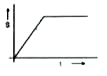
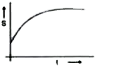
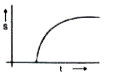
A copper block of mass 'm' at temperature `'T_(1)'` is kept in the open atmosphere at temperature `'T_(2)'` where `T_(2) gt T_(1)`. The variation of entropy of the copper block with time is best illustrated by

A

B

C

D

Text Solution

AI Generated Solution

The correct Answer is:

To solve the problem of how the entropy of a copper block changes over time when it is placed in an environment with a higher temperature, we can follow these steps: ### Step-by-Step Solution: 1. **Understanding the Initial Conditions**: - We have a copper block with mass 'm' at an initial temperature \( T_1 \). - The block is placed in an open atmosphere at a higher temperature \( T_2 \) (where \( T_2 > T_1 \)). - The initial entropy of the copper block at time \( t = 0 \) is denoted as \( S_0 \). **Hint**: Remember that entropy is a measure of disorder or randomness in a system, and it is affected by temperature changes. 2. **Heat Transfer**: - Since \( T_2 > T_1 \), heat will flow from the surroundings (at temperature \( T_2 \)) into the copper block (at temperature \( T_1 \)). - This heat transfer will cause the temperature of the copper block to increase over time. **Hint**: Consider the direction of heat flow and how it affects the temperature of the block. 3. **Change in Entropy**: - As the copper block absorbs heat, its entropy will increase. The relationship between heat transfer and entropy change is given by: \[ \Delta S = \frac{Q}{T} \] - Here, \( Q \) is the heat absorbed by the copper block, and \( T \) is the temperature at which the heat transfer occurs. As the temperature of the block increases, the entropy change will also increase. **Hint**: Think about how entropy changes with temperature and how it is related to heat transfer. 4. **Equilibrium Condition**: - The process continues until the temperature of the copper block equals the temperature of the surroundings (\( T_1 = T_2 \)). At this point, the system reaches thermal equilibrium. - At equilibrium, there is no further heat transfer, and thus the entropy of the copper block will remain constant. **Hint**: Identify the point at which the system reaches equilibrium and how that affects the entropy. 5. **Graphical Representation**: - The graph of entropy (y-axis) versus time (x-axis) will start at a finite value \( S_0 \) and will increase continuously as the block absorbs heat until it reaches equilibrium. - After reaching equilibrium, the entropy will remain constant, indicating no further change. **Hint**: Visualize how the graph would look based on the behavior of the system over time. ### Conclusion: The correct illustration of the variation of entropy of the copper block with time would show an initial increase in entropy that continues until the block reaches thermal equilibrium with the surrounding atmosphere, after which the entropy remains constant. ### Final Answer: The correct option is **C**, which illustrates the increase in entropy over time until equilibrium is reached.
Promotional Banner

Similar Questions

Explore conceptually related problems

A solid at temperature T_(1) is kept in an evacuated chamber at temperature T_(2)gtT_(1) . The rate of increase of temperature of the body is propertional to

If K_1 is the equilibrium constant at temperature T_1 and K_2 is the equilibrium constant at temperature T_2 and If T_2 gt T_1 and reaction is endothermic then

Shown below are the black body radiation curves at temperature T_(1) and T_(2) (T_(2) gt T_(1)) . Which of the following plots is correct?

One end of a rod of length L and crosssectional area A is kept in a furnace at temperature T_(1) . The other end of the rod is kept at a temperature T_(2) . The thermal conductivity of the matrieal of the rod is K and emissivity of the rod is e. It is gives that T_(!)=T_(s)+DeltaT , where DeltaTltlt T_(s),T_(s) is the temperature of the surroundings. If DeltaTprop(T_(1)-T_(2)) find the proportional constant, consider that heat is lost only by rediation at the end where the temperature of the rod is T_(1) .

Two bars of same length and same cross-sectional area but of different thermal conductivites K_(1) and K_(2) are joined end to end as shown in the figure. One end of the compound bar it is at temperature T_(1) and the opposite end at temperature T_(2) (where T_(1) gt T_(2) ). The temperature of the junction is

One end of rod of length L and cross-sectional area A is kept in a furance of temperature T_(1) . The other end of the rod is kept at at temperature T_(2) . The thermal conductivity of the material of the rod is K and emissivity of the rod is e . It is given that T_(2)=T_(S)+DeltaT where DeltaT lt lt T_(S) , T_(S) being the temperature of the surroundings. If DeltaT prop (T_(1)-T_(S)) , find the proportionality constant. Consider that heat is lost only by radiation at the end where the temperature of the rod is T_(2) .

The V - i graph for a conductor at temperature T_(1) and T_(2) are as shown in the figure. ( T_(2) - T_(1)) is proportional to

A copper ball of mass 100 gm is at a temperature T. It is dropped in a copper calorimeter of mass 100 gm, filled with 170 gm of water at room temperature. Subsequently, the temperature of the system is found to be 75^(@)C . T is given by : (Given : room temperature = 30^(@)C , specific heat of copper =0.1 cal//gm^(@)C )

The isothermal diagram of a gas at three different temperatures T_(1),T_(2) and T_(3) , is show in the given figure .Then

A rod of length l and cross-section area A has a variable thermal conductivity given by K = alpha T, where alpha is a positive constant and T is temperature in kelvin. Two ends of the rod are maintained at temperature T_(1) and T_(2) (T_(1)gtT_(2)) . Heat current flowing through the rod will be
