A
B
C
D
Text Solution
Verified by Experts
The correct Answer is:



Similar Questions
Explore conceptually related problems
Recommended Questions
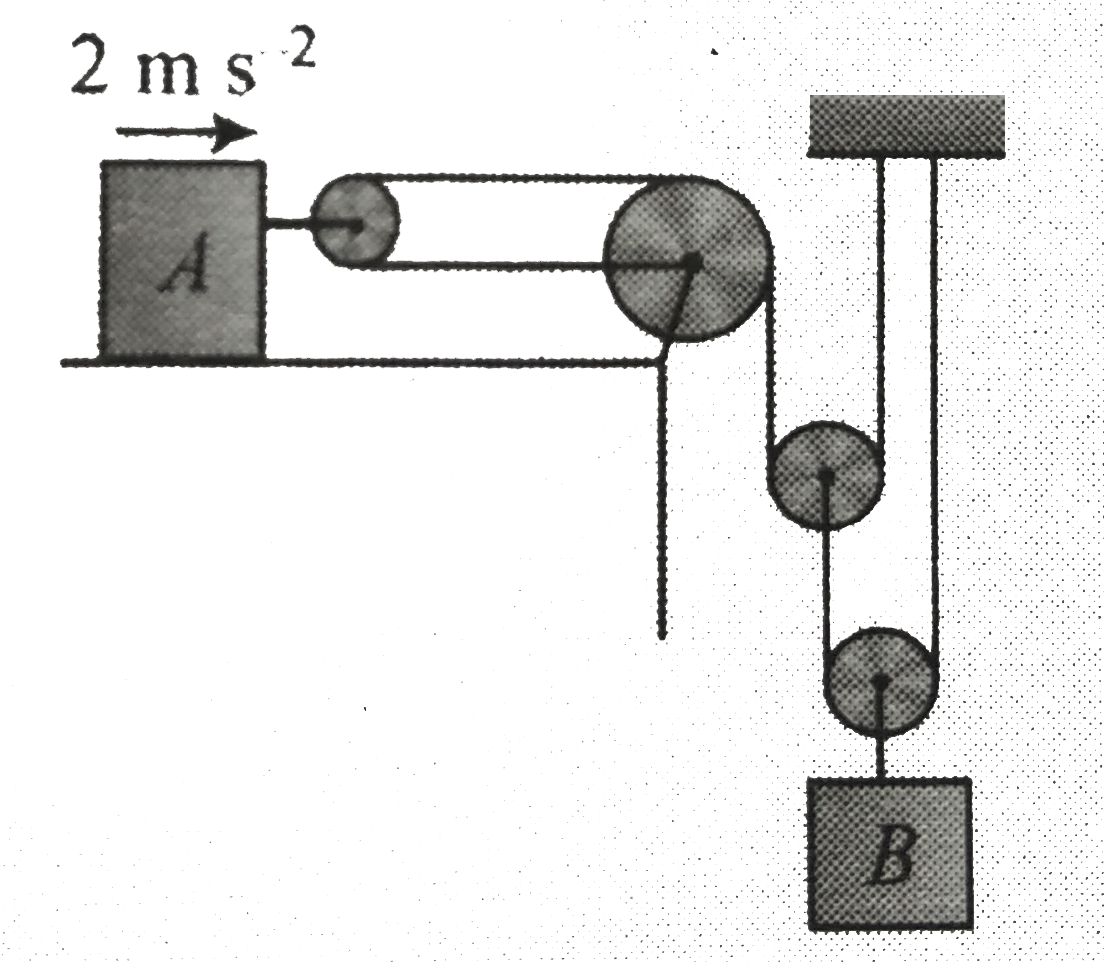
- In fig. find the acceleration of B if acceleration of A is 2ms^(-2).
Text Solution
|
- As shown in fig, if acceleration of M with respect to ground is 2ms^(-...
Text Solution
|
- In the arrangement shown in fig., if the acceleration of B is vec(a) ....
Text Solution
|
- The elevator shown in fig. is descending with an acceleration of 2ms^(...
Text Solution
|
- In the figure acceleration of A is 1m//s^(2) upward, acceleration of B...
Text Solution
|
- If acceleration of A is 2m//s^(2) to left and acceleration of B is 1m/...
Text Solution
|
- In the fig, find the acceleration of mass m(2) .
Text Solution
|
- In the fig, find the acceleration of m(1) and m(2) .
Text Solution
|
- In the figure find the velocity and acceleration of B, if instaneous v...
Text Solution
|