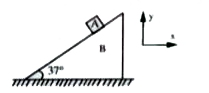
A
B
C
D
Text Solution
Verified by Experts
The correct Answer is:



Similar Questions
Explore conceptually related problems
Recommended Questions
- In the figure shown the acceleration of A is, veca =15hati+15hatj then...
Text Solution
|
- In the figure shown the accelerationof A is a(A) = (15 hati + 15 hatj)...
Text Solution
|
- In the situation as shown in the figure if acceleration of B is a, the...
Text Solution
|
- In the figure shown the acceleration of A is, vec(a)(A) = 15 hat (i) +...
Text Solution
|
- In the figure find the velocity and acceleration of B, if instaneous v...
Text Solution
|
- In an arrangement shown in the figure, the acceleration of block A and...
Text Solution
|
- In the figure shown the acceleration of A is, bara(A)=(15hati+15hatj)m...
Text Solution
|
- Consider the situation shown in the figure. Find acceleration of...
Text Solution
|
- In the arrangement shown in figure, if the acceleration of B is overli...
Text Solution
|