Home
Class 11
PHYSICS
A lead shot of 1nm diameter falls throug...

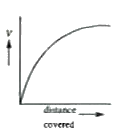
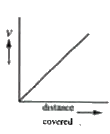
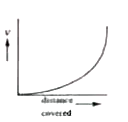
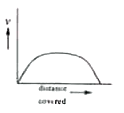
A lead shot of 1nm diameter falls through a long column of glycerine. The variation of its velocity v with distance covered is represented by

A

B

C

D

Text Solution

Verified by Experts

The correct Answer is:

A
Promotional Banner

Similar Questions

Explore conceptually related problems

A lead shot of 1 mm diameter falls through a long colummn of glycerine. The variation of the velocity v with distance covered (s) is represented by

For a body moving with uniform acceleration along straight line, the variation of its velocity (v) with position (x) is best represented by

A bar magnet is made to fall through a long vertica! copper tube. The speed (V) of the magnet as a function of time (t) is best represented by

Two identical source moving parallel to each other at seperation 'd' are producing sounds of frequency 'f' and are moving with constant velocity v_(0) . A stationary .observer 'O' is on the line of motion of one of the sources. Then the variation of beat frequency heard by O with time is best represented by: (as they come from large distance and go to a large distance)

Two ends of a rod of non uniform area of cross section are maintained at temperature T_(1) and T_(2) (T_(1)>T_(2)) as shown in the figure If l is heat current through the cross-section of conductor at distance x from its left face, then the variation of l with x is best represented by

A point moves with decleration along the circle of radius R so that at any moment of time its tangential and normal accelerations are equal in moduli. At the initial moment t=0 the velocity of the point equals v_0 . Find: (a) the velocity of the point as a function of time and as a function of the distance covered s_1 , (b) the total acceleration of the point as a function of velocity and the distance covered.

A spherical steel ball released at the top of along column of glycerin of length l falls through a distance l//2 with accelerated motion and the remaining distance l//2 with uniform velocity let t_(1) and t_(2) denote the times taken to cover the first and second half and w_(1) and w_(2) are the work done against gravity in the two halves, then compare times and work done.

A point object moves along an arc of a circle of radius 'R'. Its velocity depends upon the distance covered 'S' as V = Ksqrt(S) where 'K' is a constant. If ' theta' is the angle between the total acceleration and tangential acceleration, then

A charge Q is uniformly distributed over the surface of non - conducting disc of radius R . The disc rotates about an axis perpendicular to its plane and passing through its centre with an angular to its plane and passing through its centre of the disc. If we keep both the amount of charge placed on the disc and its angular velocity to be constant and vary the radius of the disc then the variation of the magnetic induction at the centre of the disc will br represented by the figure:

A body falling from rest has a velocity v after it falls through a distanc.e h. The distance it has to fall down further, for its velocity to become double, is ..... times h
