Home
Class 11
PHYSICS
A uniformaly moving cricket ball is turn...

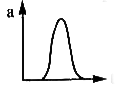
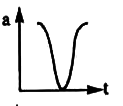
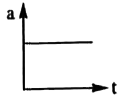
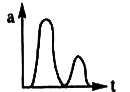
A uniformaly moving cricket ball is turned back by hitting it with a bat for a very shor time interval. Show the variation of its acceleration with time (Take acceleration in the backward direction as positive).

A

B

C

D

Text Solution

Verified by Experts

The correct Answer is:

A
Promotional Banner

Similar Questions

Explore conceptually related problems

A uniform moving cricket ball is turned back by hitting it with a bat for a very short time interval. Show the variation of its acceleration with time. (Take acceleration in the back ward direction as positive).

A uniformly moving cricket balls is hit with a bat for a very short time and is turned back. Show that variation of its acceleration with time taking the acceleration in the backward direction as positive.

A ball is dropped from an elevator moving upward with acceleration 'a' by a boy standing in it. The acceleration of ball with respect to [Take upward direction positive]

Draw the position-time graph of a moving object, moving with zero acceleration.

For a body moving with uniform acceleration along straight line, the variation of its velocity (v) with position (x) is best represented by

If a point is moving in a line so that its velocity at time t is proportional to the square of the distance covered, then its acceleration at time t varies as

A particle starts its motion from the origin in positive x-direction. The given graph shows the variation of acceleration (a) with velocity (v). Plot the corresponding graph between velocity and time.

A body moving in a straight line with constant acceleration covers distances a and b in successive equal time interval of t. The acceleration of the body is

A ball thrown vertically upward with initial velocity u. Which of the following graphs represent the velocity of ball correctly as function of time? (Take upward direction as positive)

A particle moves along a straight line path. After some time it comes to rest. The motion is with constant acceleration whose direction with respect to the direction of velocity is :
