Home
Class 11
PHYSICS
An object is moving with a uniform accel...

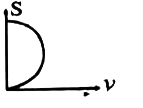
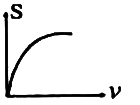
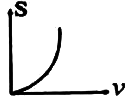
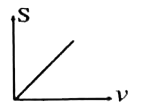
An object is moving with a uniform acceleration which is parallel to its instantaneous direction of motion. The displacement velocity (v) graph of this object is

A

B

C

D

Text Solution

Verified by Experts

The correct Answer is:

C
Promotional Banner

Similar Questions

Explore conceptually related problems

An object is moving with a uniform acceleration which is parallel to its instantaneous direction of motion. The dispalcement (s)-velocity (v) graph of this object is.

An object is moving with a uniform acceleration which is parallel to its instantaneous direction of motion. The dispalcement (s)-velocity (v) graph of this object is.

The displacement (s)- velocity ( v ) graph of a particle if it starts moving from rest with a uniform acceleration which is parallel to its instantaneous direction of motion is

The slope of velocity-time graph for uniform motion of an object is

Assertion: A uniform circular motion is an acceleration motion. Reason: Direction of acceleration is parallel to velocity vector.

Can an object accelerate If its velocity is constant?

Starting from rest a body moves with uniform acceleration and acquires a velocity v after n seconds. Then its displacement in the last two seconds is

State which of the following situations are possible and give an example for each of these : (a) An body with a constant acceleration but with zero velocity. (b) An object moving with an acceleration but with uniform speed (c) An object moving in a certain direction with an acceleration in the perpendicular direction.

A : The relative acceleration of two objects moving under the effect of gravity, only is always zero, irrespective of direction of motion. R : The acceleration of object moving under the effect of gravity have acceleration always in downward direction and is independent from size and mass of object.

Say Yes or No: a. Can an object moving towards north have acceleration towards south? b. Can an object reverse the direction of its motion even thouth it has reverse the direcleration? C. Can an object reverse the derction of its acceleration even though it continues to move in the same dirction? d. Average speed is the magnitude of average velocity e. At any instant of time. the directions of change in velocity and acceleration are differnt.
