Home
Class 11
PHYSICS
Two blocks of masses 1 kg and 2 kg are c...

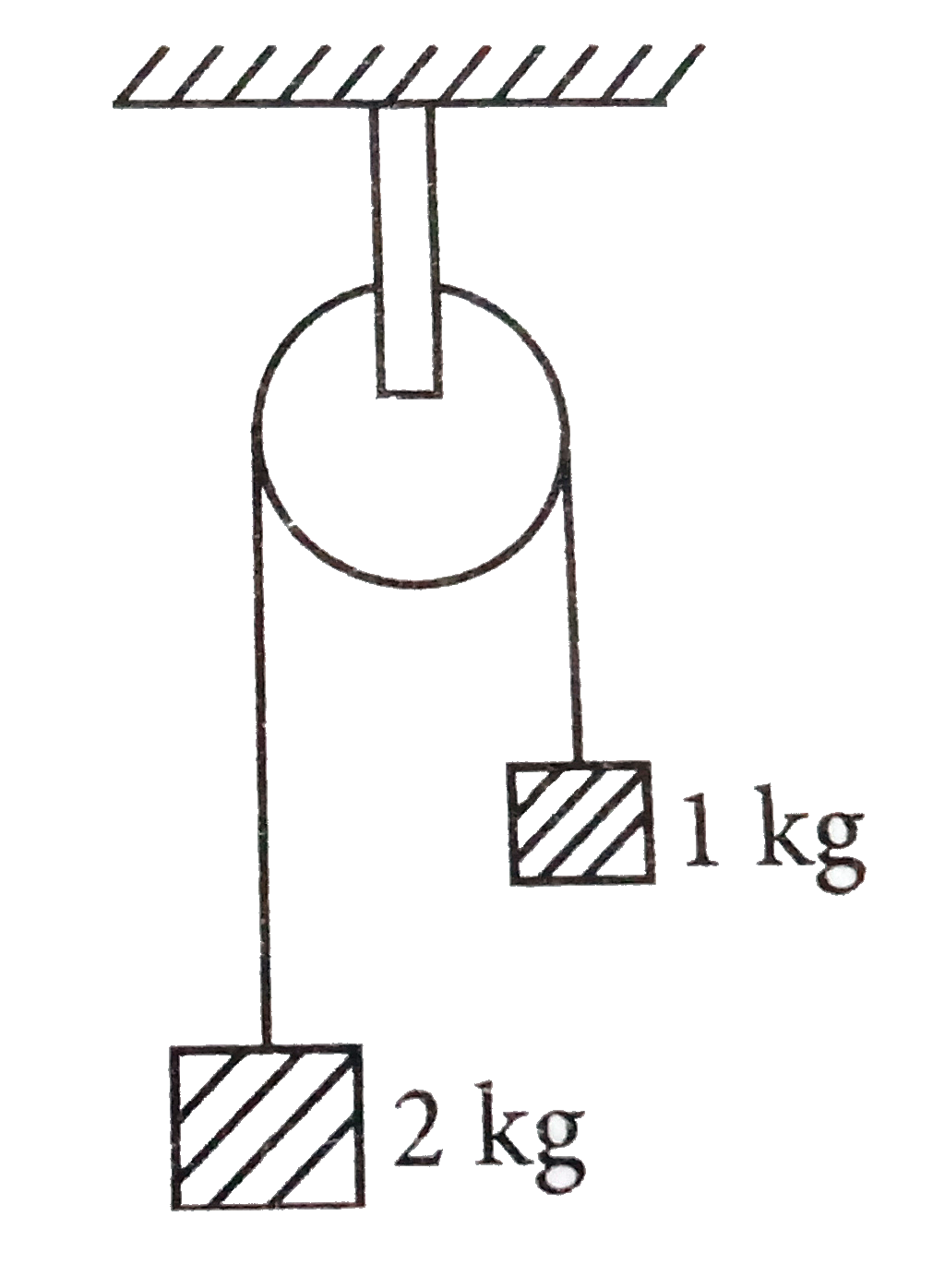
Two blocks of masses 1 kg and 2 kg are connected by a metal wire going over a smooth pulley as shown is figure. The breaking stress of the metal is `(40//3pi)xx 10^(6) N//m^(-2)`. If `g= 10 m s^(-2)`, them the minimum radius of the wire used if it s not to break is

A

0.5 mm

B

2 mm

C

1 mm

D

1.5 mm

Text Solution

Verified by Experts

The correct Answer is:

C
Promotional Banner

Similar Questions

Explore conceptually related problems

Two blocks of masses 1 kg and 2 kg are connected by a metal wire going over a smooth pulley as shown in figure. The breaking stress of the metal is (40//3pi)xx10^(6)N//m^(2) . If g=10ms^(-2) , then what should be the minimum radius of the wire used if it is not to break?

Two blocks of masses 1 kg and 2 kg are connected by a metal wire going over a smooth pulley as shown in figure. The breaking stress of the metal is (40//3pi)xx10^(6)N//m^(2) . If g=10ms^(-2) , then what should be the minimum radius of the wire used if it is not to break?

Two blocks of masses 5 kg and 10 kg are connected by a metal wire going over a smooth pulley as shown in the figure. The breaking stress of the metal wire is 2xx10^(9)"N m"^(-2) . If g=10ms^(-2) , then what is the minimum radius of the wire which will not break

Two blocks of masses 1 kg and 2kg are connect by a metal wire going over a smooth pulley as shown in figure. The breaking stress of the metal is 2xx10^9Nm^-2 . What should be the minimum radius of the wire used if it is not to break? Take g=10ms^-2

Two blocks of masses 2 kg and 3kg are connected by a metal wire going over a smoother pulley as shown in figure. The breaking stress of the steel is 2xx10^(9)Nm^(-2) . What would be the minimum radius of the wire used if it not to break ? Take , g=10 ms^(-2)

Two masses of 10 kg and 20 kg are connected with an inextensible string passing over two smooth pulleys as shown in the figure. The acceleration of 20 kg mass will be :

Two blocks of masses 3 kg and 6 kg are connected by a string as shown in the figure over a frictionless pulley. The acceleration of the system is A. 4m // s^2 B. 2m//s^2 C. zero D. 6m//s^2

Three blocks of masses m_(1)=4kg, m_(2)=2kg, m_(3)=4kg are connected with ideal strings passing over a smooth, massless pulley as shown in figure. The acceleration of blocks will be (g=10m//s^(2))

Two unequal masses of 1kg and 2kg are connected by a string going over a clamed light smooth pulley as shown in figure . The system is released from rest .The larger mass is stopped for a moment 1.0 s after the system is set in motion.Find the time elapsed before the string is tight again.

Two unequal masses of 1kg and 2kg are connected by an inextensible light string passing over a smooth pulley as shown in figure. A force F = 20N is applied on 1kg block find the acceleration of either block (g = 10m//s^(2)) .
