Home
Class 11
PHYSICS
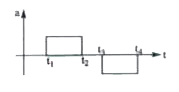
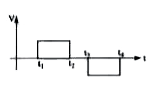
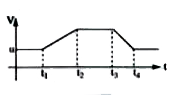
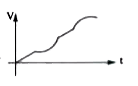
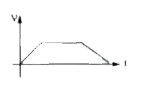
Convert the given graph into V, t graph ...

Convert the given graph into V, t graph ( initial velocity is u)

A

B

C

D

Text Solution

Verified by Experts

The correct Answer is:

B
Promotional Banner

Similar Questions

Explore conceptually related problems

A particle is moving in a straight line whose acceleration versus time graph is given. Assume that initial velocity is in the direction of acceleration. Then which of the statement is correct between time t =0 to t = t_(0) . .

Draw a velocity-time graph for a body moving with an initial velocity u and uniform acceleration a. Use this graph to find the distance travelled by the body in time t.

Which one of the given graphs shows the effect of pH on the velocity of a typical enzymatic reaction (V) ?

At t=0 , a particle starts from reat and moves along a straight line, whose acceleration-time graph is shown in . . Convert this graph into velocity-time, From the velocity-time graph, find the maximum velocity attained by the particle. Also find from v-t graph, the sisplacement and distance travelled by the particle from 2 to 6 s ,

For a particle moving along straight line with constant acceleration (a), we define velocity of the particle with time as v=u+at , (u = initial velocity) Draw the velocity-time graph of the particle in following situations. (i) Velocity is decresing with time (i.e., acceleration in negative) (ii) Initial velocity is negative but acceleration is positive

Acceleration (a) -displacement (s) graph of a particle moving in a straight line is as shown in the figure. The initial velocity of the particle is zero. The v-s graph of the particle would be

Write three equations of uniformly accelerated motion relating the initial velocity (u), final velocity (v), time (t), acceleration (a) and displacement (S).

Acceleration (a)-displacement(s) graph of a particle moving in a straight line is shown here. The initial velocity of the particle is zero. The v-s graph of the particle would be

A particle moves vertically with an upwards initial speed v_0 = 10.5 ms^(-1). If its acceleration varies with time as shown in a-t graph in figure, find the velocity of the particles at t = 4s.

A particle is projected with a velocity u making an angle theta with the horizontal. At any instant its velocity becomes v which is perpendicular to the initial velocity u. Then v is
