Home
Class 12
PHYSICS
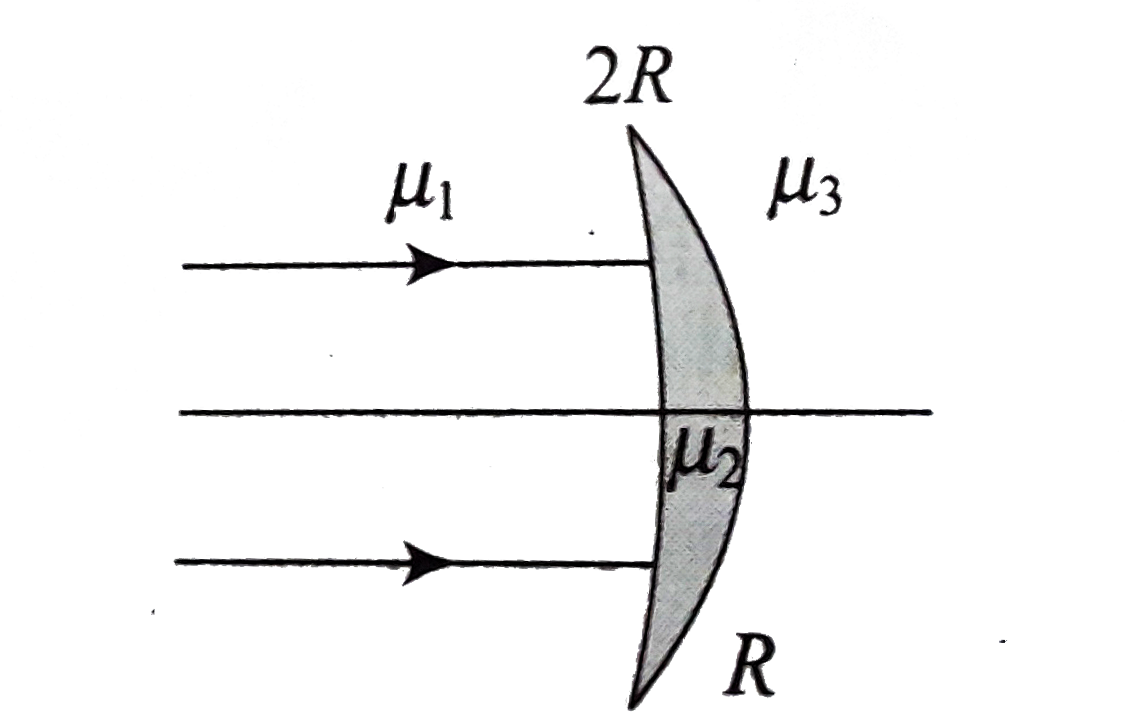
Figure, shows a concavo-convex lens mu(2...

Figure, shows a concavo-convex lens `mu_(2)`. What is the condition on the refractive indiecs so the at the lens is diverging?

A

`2mu_3 lt mu_1 + mu_2`

B

`2mu_3 gt mu_1 + mu_2`

C

`mu_3 gt 2(mu_1 - mu_2)`

D

none of these

Text Solution

Verified by Experts

The correct Answer is:

B
Promotional Banner

Topper's Solved these Questions

  • GEOMETRICAL OPTICS

    AAKASH SERIES|Exercise LECTURE SHEET (EXERCISE-III (LEVEL-II (ADVANCED) STRAIGHT OBJECTIVE TYPE QUESTIONS))|12 Videos
  • GEOMETRICAL OPTICS

    AAKASH SERIES|Exercise LECTURE SHEET (EXERCISE-III (LEVEL-II (ADVANCED) MORE THAN ONE CORRECT ANSWER TYPE QUESTIONS))|1 Videos
  • GEOMETRICAL OPTICS

    AAKASH SERIES|Exercise LECTURE SHEET (EXERCISE-II (LEVEL-II (ADVANCED) INTEGER TYPE QUESTIONS))|2 Videos
  • ELEMENTS OF VECTORS

    AAKASH SERIES|Exercise QUESTIONS FOR DESCRIPTIVE ANSWERS|10 Videos
  • LAWS OF MOTION

    AAKASH SERIES|Exercise PRACTICE EXERCISE|106 Videos

Similar Questions

Explore conceptually related problems

The figure shows an equi-convex lens. What should be the condition of the refractive indices so that the lens becomes diverging?

The figure shows an equi-convex lens. What should be the condition of the refractive indices so that the lens becomes diverging?

The diagram shows an equiconvex lens. What should be the condition on the refractive indices so that the lens becomes diverging?

A plano-convex lens P and a concavo-convex lens Q are in contact as shown in figure. The refractive index o fthe material of the lens P and Q is 1.8 and 1.2 respectively. The radius of curvature of the concave surface of the lens Q is double the radius of curvature of the convex surface. The convex surface of Q is silvered. An object is placed on the placed on the principal axis at a distance 10 cm form the plane surface. The image is formed at a distance 40 cm from the plane surfaces on the same side. The focal length of the system is

A plano-convex lens P and a concavo-convex lens Q are in contact as shown in figure. The refractive index o fthe material of the lens P and Q is 1.8 and 1.2 respectively. The radius of curvature of the concave surface of the lens Q is double the radius of curvature of the convex surface. The convex surface of Q is silvered.The focal lengthof combination is 8cm. The radius of curvature of common surface is

A plano-convex lens P and a concavo-convex lens Q are in contact as shown in figure. The refractive index o fthe material of the lens P and Q is 1.8 and 1.2 respectively. The radius of curvature of the concave surface of the lens Q is double the radius of curvature of the convex surface. The convex surface of Q is silvered. The radius of curvature of common surface is

Find the radius of curvature of the convex surface of a plan-convex lens, whose focal length is 0.3 m and the refractive index of the material of the lens is 1.5.

The radius of curvature of the convex face of a plano convex lens is 12cm and the refractive index of the material of the lends 1.5. Then, the focal length of the lens is

The effective focal length of the lens combination shown in figure is -60 cm. The radius of curvature of the curved surfaces of the plano-convex lenses are 12 cm each and refractive index of the material of the lens is 1.5. The refractive index of the liquid is

If in a planoconvex lens, the radius of curvature of the convex surface is 10cm and the focal length is 30 cm , the refractive index of the material of the lens will be
