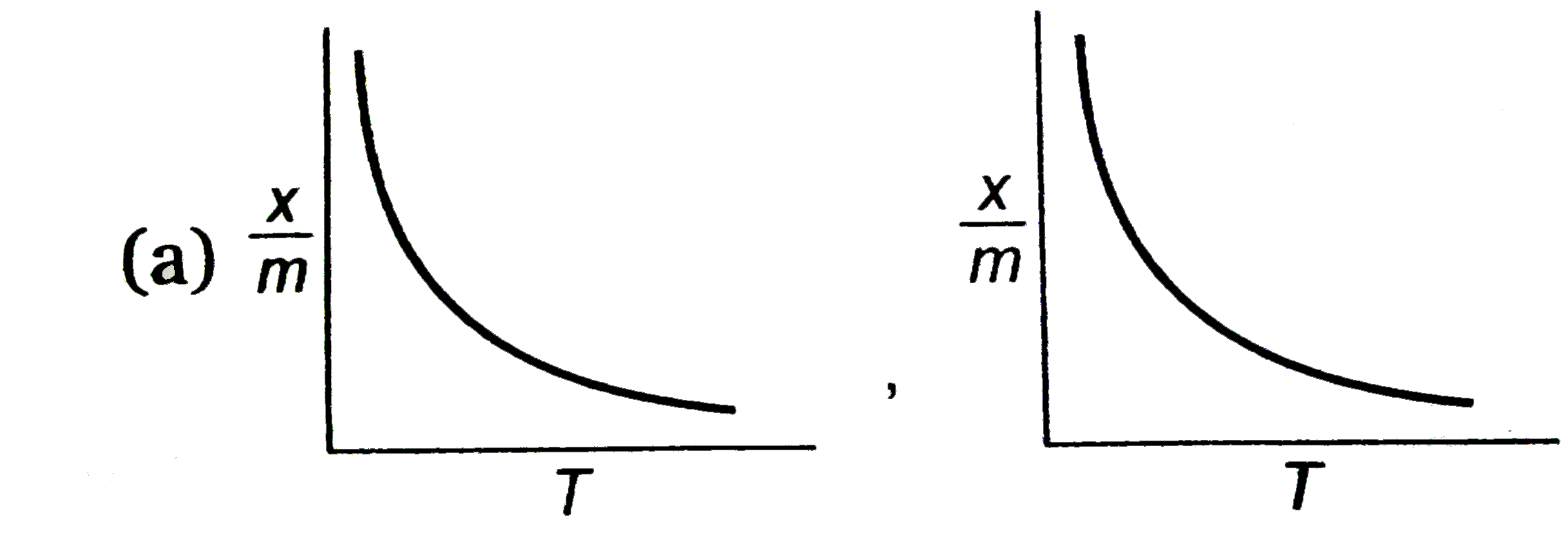
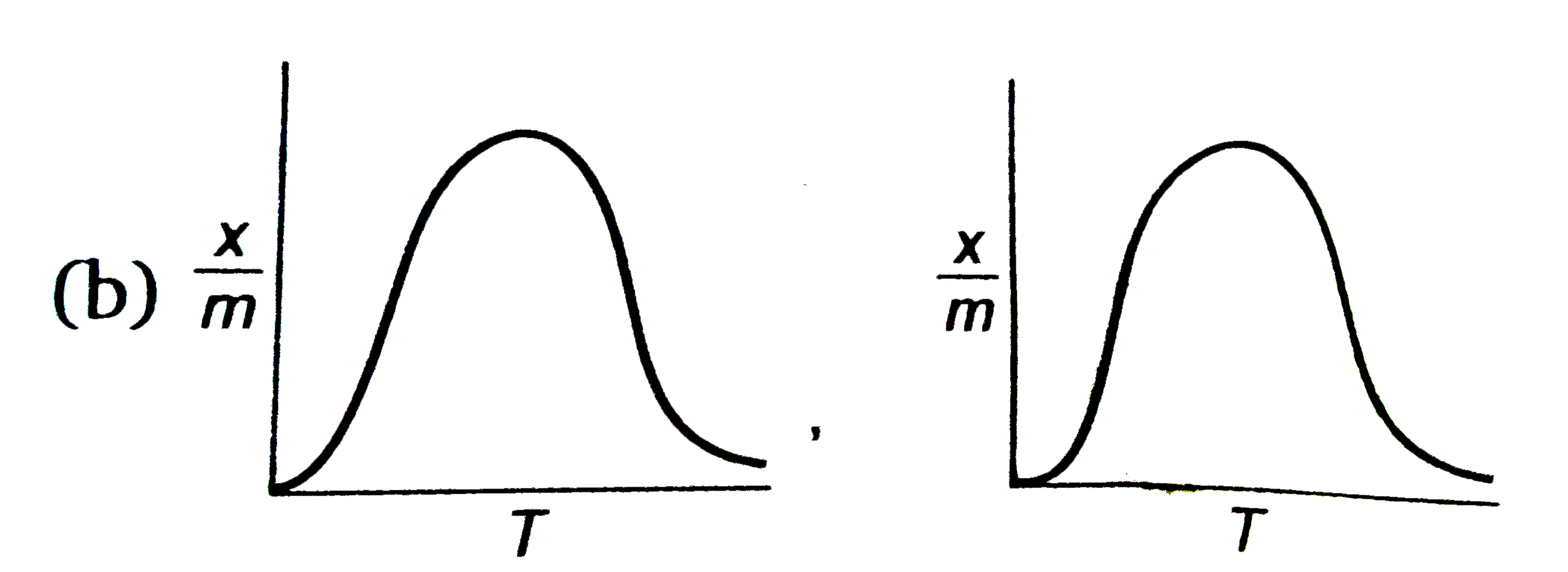
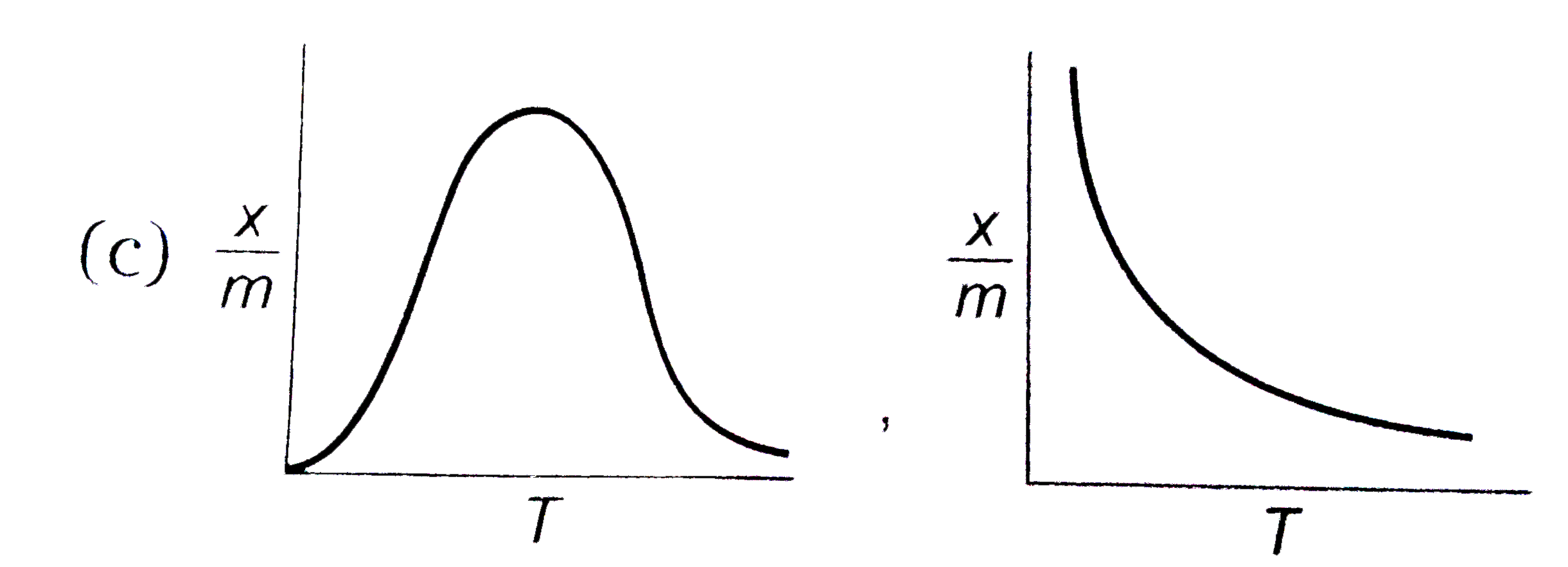
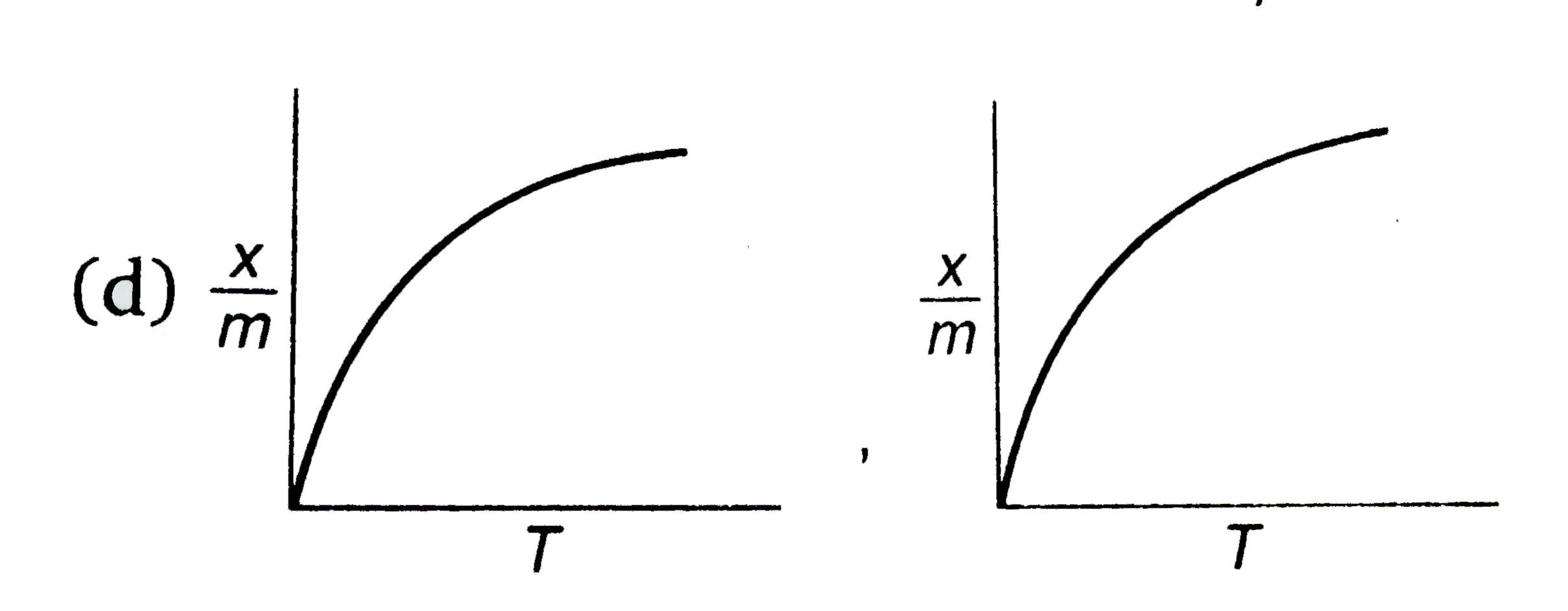
The following are some statements about adsorption of solutes from the solutions. A) Increase in the surface area of the adsorbent increases the extent of adsorption. B) Increase in temperature decreases the extent of adsorption. C) The extent of adsorption (x/m) is related to the molar concentration of solution ( c) is given by x//m = k.c^(1//n) The correct combination is
According to Maxwell distribution, the area under the curve is equal to the total number of molecules in collision. On increasing temperature, fraction of molecules having speed equal to u_(mp) .(most probable speed) decreases. The speed distribution also depends on the mass of the molecules along with the temperature. In general, the distribution depends upon the value of M/T (where M is molar mass and Tis temperature in kelvin). If at T_1 K is u, then value of u_(rms) at T_2 is
According to Maxwell distribution, the area under the curve is equal to the total number of molecules in collision. On increasing temperature, fraction of molecules having speed equal to u_(mp) .(most probable speed) decreases. The speed distribution also depends on the mass of the molecules along with the temperature. In general, the distribution depends upon the value of M/T (where M is molar mass and Tis temperature in kelvin). Relationship between T_1 and T_2 is given as
According to Maxwell distribution, the area under the curve is equal to the total number of molecules in collision. On increasing temperature, fraction of molecules having speed equal to u_(mp) .(most probable speed) decreases. The speed distribution also depends on the mass of the molecules along with the temperature. In general, the distribution depends upon the value of M/T (where M is molar mass and Tis temperature in kelvin). On increasing the temperature, number of molecules having speed between u_1 and u_2
Freundlich adsorption isotherms for the physical adsorption of a gas at temperature T_(1), T_(2) and T_(3) are shown in the graph given below. The correct relationship between T_(1), T_(2) and T_(3) is
The curve showing variation of x/m with temperature is inverted 'V' shape. What is the type of adsorption ?
The curve showing variation of x/m with temperature is inverted 'V' shape. What is the type of adsorption ?
NARENDRA AWASTHI-SURFACE CHEMISTRY-Level 3 - Assertion - Reason Type Questions