Home
Class 11
CHEMISTRY
STATEMENT-1: In CrO(5) oxidation number...

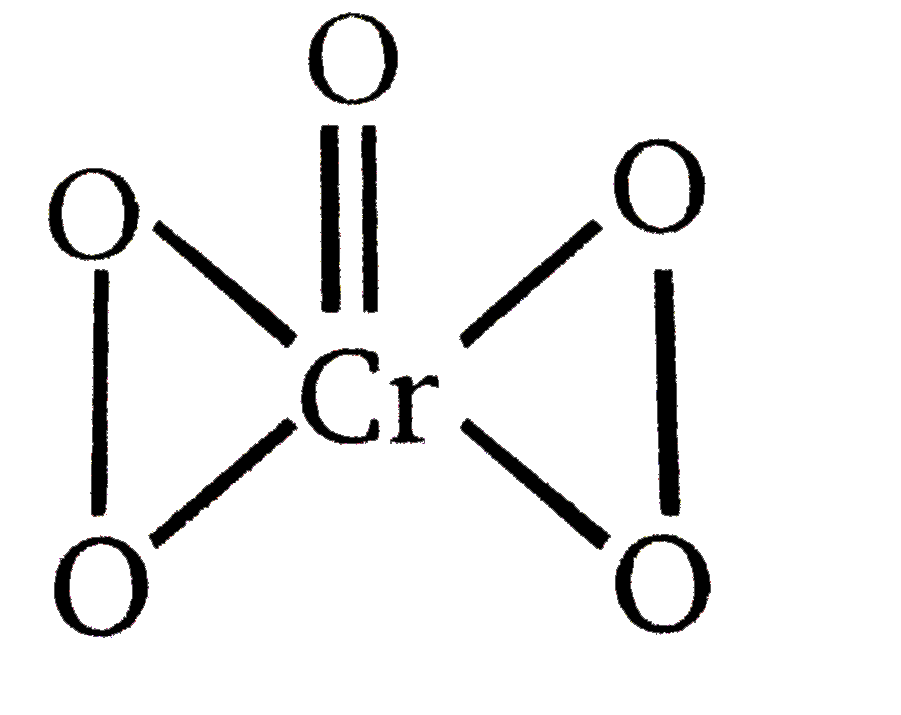
STATEMENT-1: In `CrO_(5)` oxidation number of Cr is +6.
STATEMENT-2 : `CrO_(5)` has butterfly structure in which peroxide peroxide bonds are present.

A

If both the statement are TRUE and STATEMENT -2 is the correct explanation of STATEMENT-1

B

If both the statement are TRUE but STATEMENT-2 is NOT the correct explanation of STATEMENT-1

C

If STATEMENT- is 1 TRUE and STATEMENT-2 is FALSE

D

If STATEMENT-1 is FALSE and STATEMENT-2 is TRUE

Text Solution

Verified by Experts

The correct Answer is:

A
Promotional Banner

Topper's Solved these Questions

  • STOICHIOMETRY

    NARENDRA AWASTHI|Exercise Level 3 - Subjective Problems|20 Videos
  • STOICHIOMETRY

    NARENDRA AWASTHI|Exercise Match the Colum-II|3 Videos
  • SOLID STATE

    NARENDRA AWASTHI|Exercise Level 3 - Subjective Problems|1 Videos
  • THERMODYNAMICS

    NARENDRA AWASTHI|Exercise Level 3 - Match The Column|2 Videos

Similar Questions

Explore conceptually related problems

The oxidation number of Cr is CrO_(5) is

The oxidation number of Cr in CrO_(5) is

Calculate the oxidation number of sulphur in H_(2)S_(2)O_(8) ? (Hint: Two of the oxygens form peroxide bond)

Some statements on [Co(NH_3)_6]^(3+) (a) oxidation number of Co is +3 (b) octahedral shape (c) high spin complex d) hybridization of cobalt is d^2sp^3 The correct set of statements

Passage-III : The binary compounds of oxygen with other elements are called oxides. They are classified either depending upon their acid - base characteristics or on the basis of oxygen content. a ) Normal oxides : These oxides which contain oxygen atoms as permitted by the normal oxidation number, i.e., -2. Normal oxide may be acidic, basic, amphoteric or neutral. b) Polyoxides : The oxides which contain oxygen atoms different than those permitted by the normal oxidation number of -2. i) Peroxides : Two oxygen atoms are linked to each other and oxygen has -I oxidation number. They contain (O-O)^(2) unit. ii) Superoxides : These oxides contain (O-O)^(-1) units, i.e., each O-atom has oxidation number -1//2 . c ) Suboxides : These contain low content of oxygen than expected. d) Mixed oxides : These oxides are made of two simpler oxides. Which of the following oxides is paramagnetic in nature?

Passage-III : The binary compounds of oxygen with other elements are called oxides. They are classified either depending upon their acid - base characteristics or on the basis of oxygen content. a ) Normal oxides : These oxides which contain oxygen atoms as permitted by the normal oxidation number, i.e., -2. Normal oxide may be acidic, basic, amphoteric or neutral. b) Polyoxides : The oxides which contain oxygen atoms different than those permitted by the normal oxidation number of -2. i) Peroxides : Two oxygen atoms are linked to each other and oxygen has -I oxidation number. They contain (O-O)^(2) unit. ii) Superoxides : These oxides contain (O-O)^(-1) units, i.e., each O-atom has oxidation number -1//2 . c ) Suboxides : These contain low content of oxygen than expected. d) Mixed oxides : These oxides are made of two simpler oxides. Which of the following pairs contains mixed oxides?

Passage-III : The binary compounds of oxygen with other elements are called oxides. They are classified either depending upon their acid - base characteristics or on the basis of oxygen content. a ) Normal oxides : These oxides which contain oxygen atoms as permitted by the normal oxidation number, i.e., -2. Normal oxide may be acidic, basic, amphoteric or neutral. b) Polyoxides : The oxides which contain oxygen atoms different than those permitted by the normal oxidation number of -2. i) Peroxides : Two oxygen atoms are linked to each other and oxygen has -I oxidation number. They contain (O-O)^(2) unit. ii) Superoxides : These oxides contain (O-O)^(-1) units, i.e., each O-atom has oxidation number -1//2 . c ) Suboxides : These contain low content of oxygen than expected. d) Mixed oxides : These oxides are made of two simpler oxides. Which of the following pairs contains neutral oxides ?

Passage-III : The binary compounds of oxygen with other elements are called oxides. They are classified either depending upon their acid - base characteristics or on the basis of oxygen content. a ) Normal oxides : These oxides which contain oxygen atoms as permitted by the normal oxidation number, i.e., -2. Normal oxide may be acidic, basic, amphoteric or neutral. b) Polyoxides : The oxides which contain oxygen atoms different than those permitted by the normal oxidation number of -2. i) Peroxides : Two oxygen atoms are linked to each other and oxygen has -I oxidation number. They contain (O-O)^(2) unit. ii) Superoxides : These oxides contain (O-O)^(-1) units, i.e., each O-atom has oxidation number -1//2 . c ) Suboxides : These contain low content of oxygen than expected. d) Mixed oxides : These oxides are made of two simpler oxides. Which pair of species is referred to as suboxides?

State which of the following statements are true. {1,3,5,9,10}
