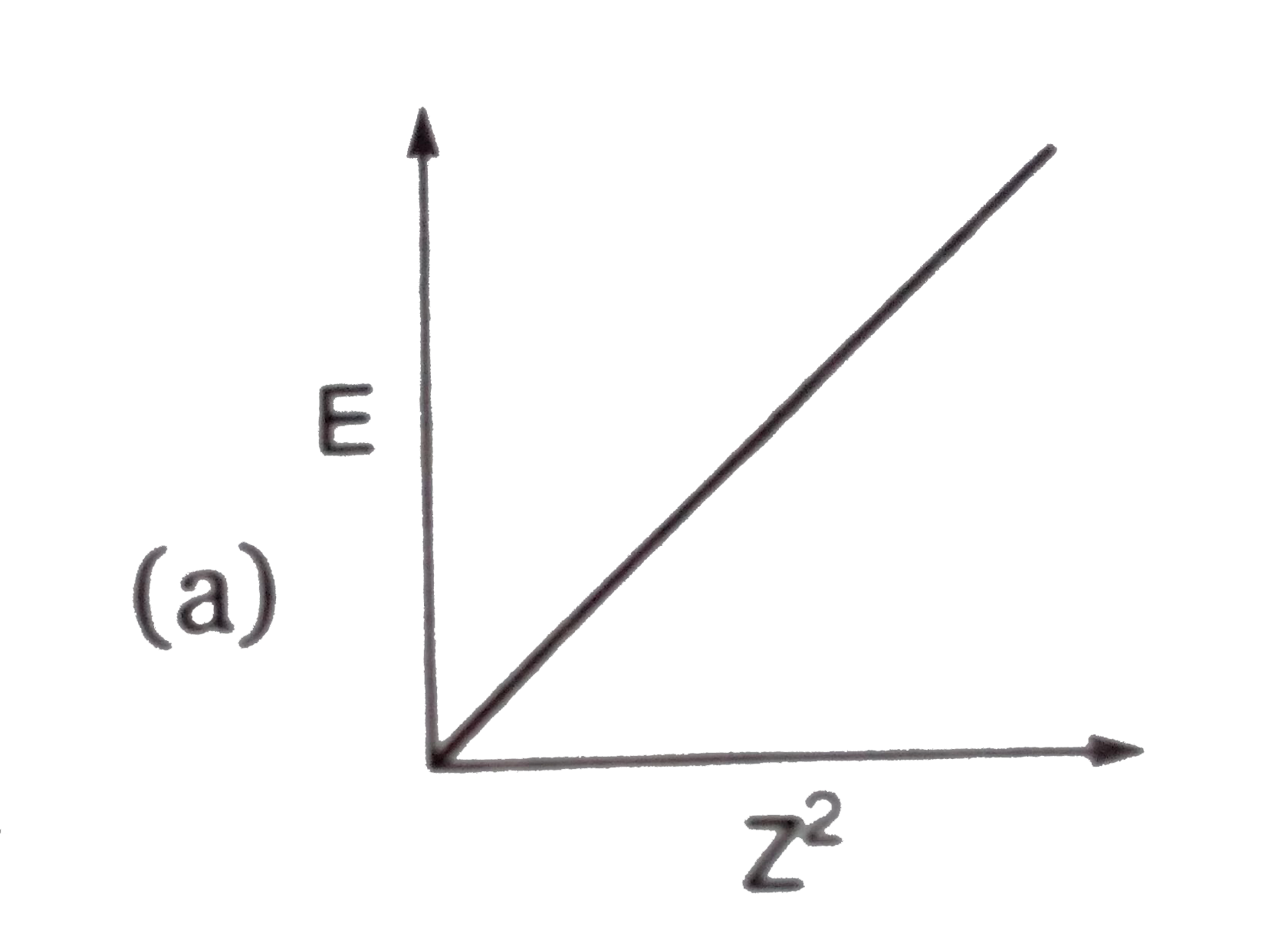
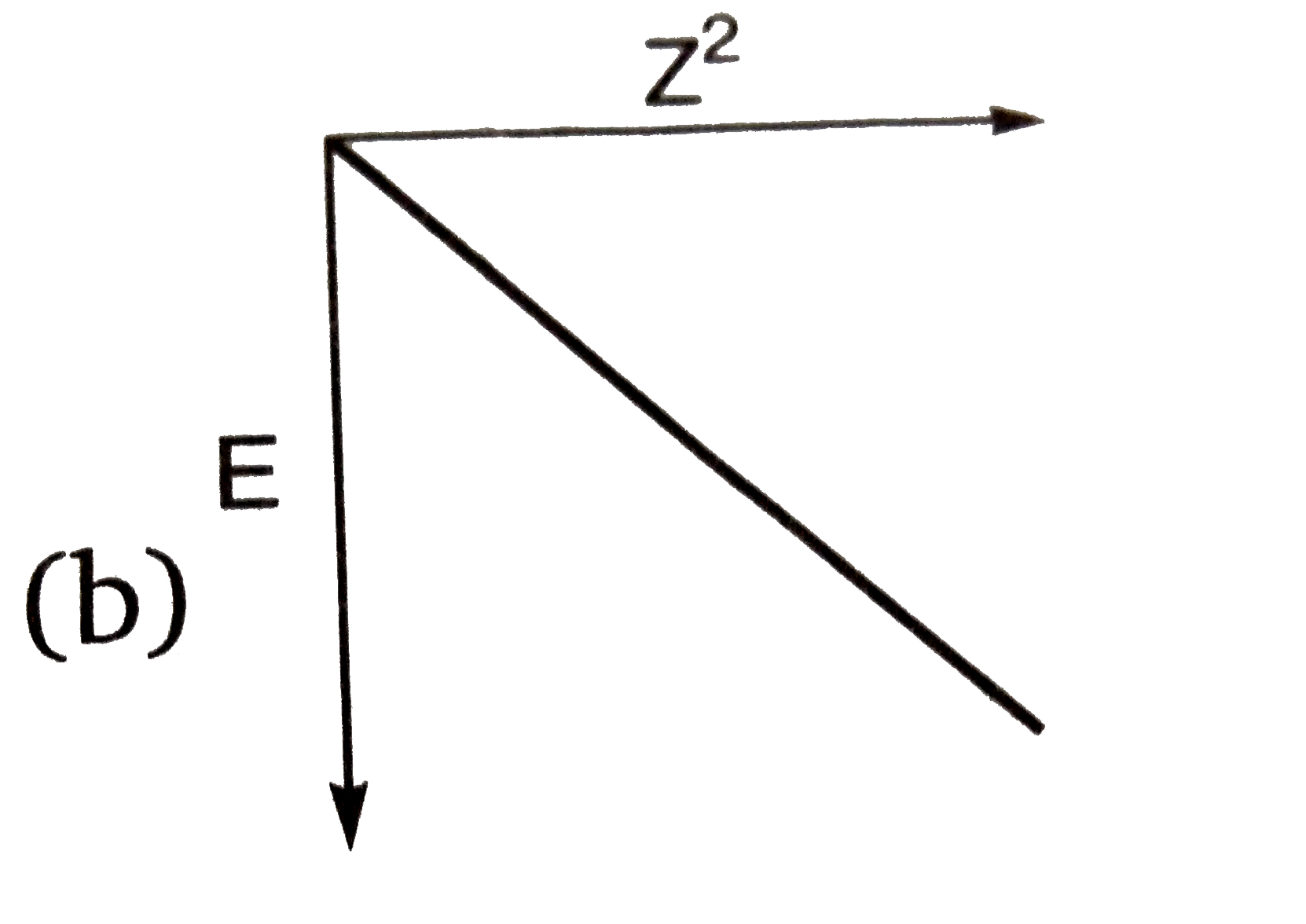
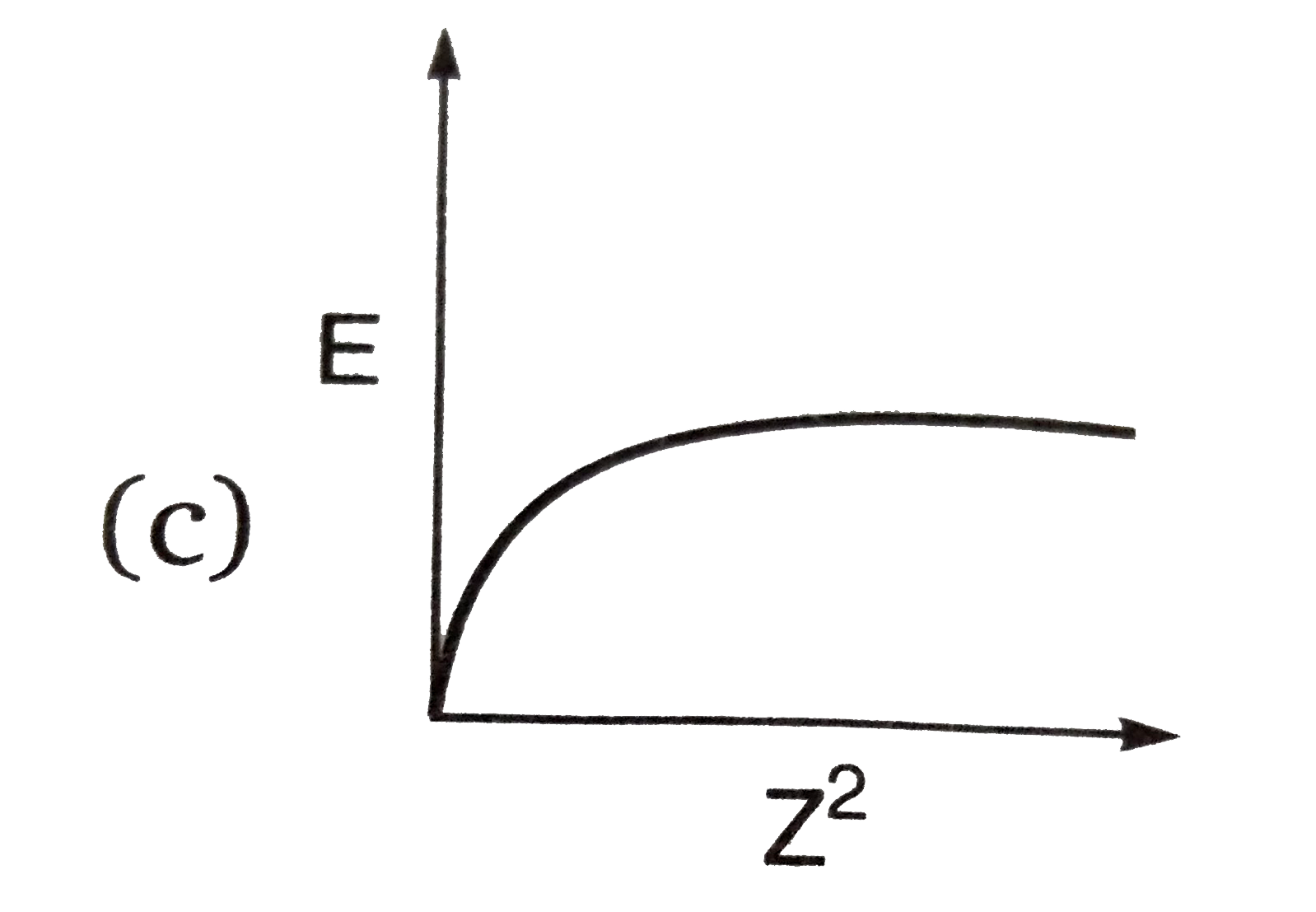
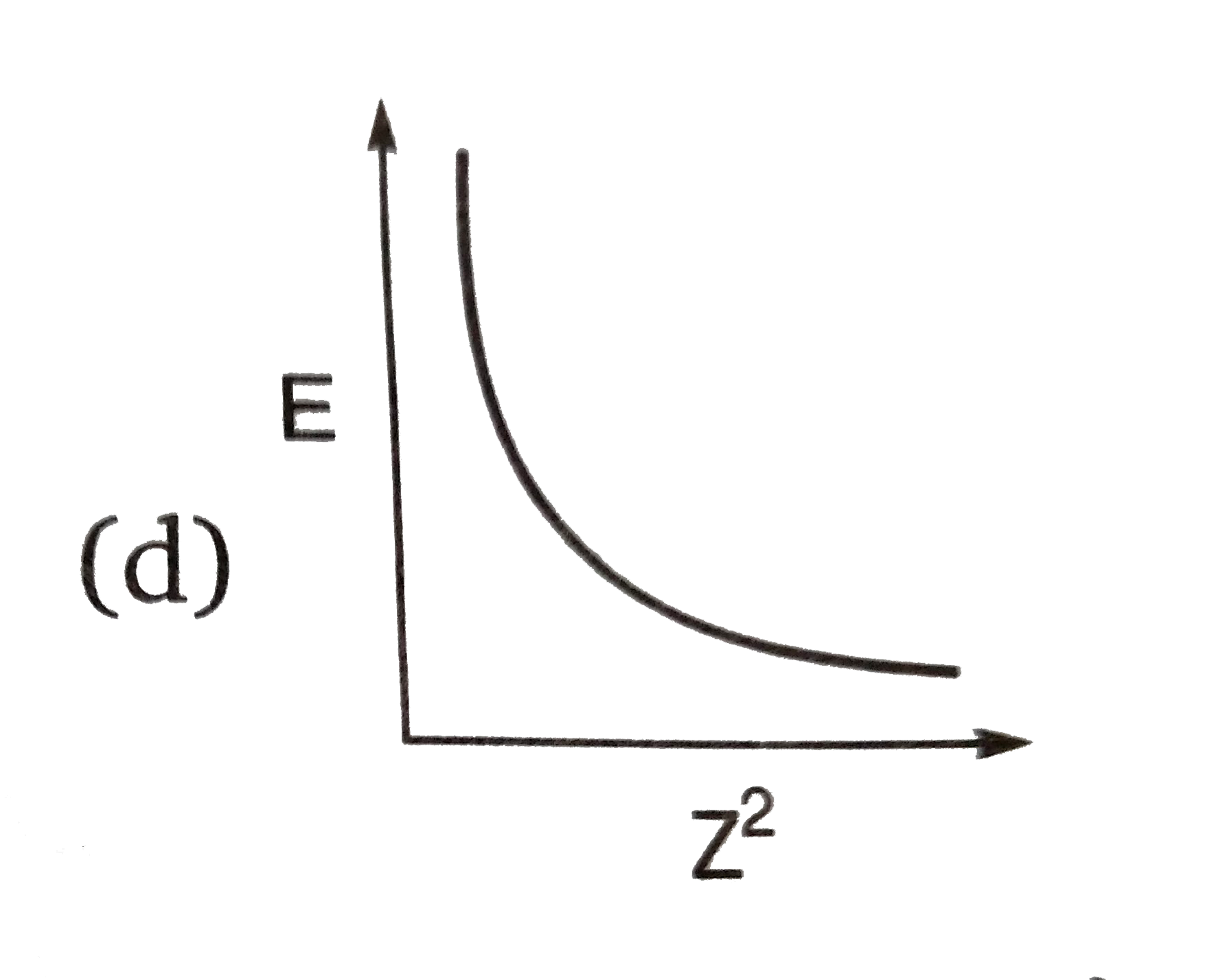
The energy of an electron moving in `n^(th)` Bohr's orbit of an element is given by `E_(n)=(-13.6)/n^(2)Z^(2)` eV/ atom (Z=atomic number). The graph of E vs. `Z^(2)` (keeping "n" constant) will be :
A
B
C
D
Text Solution
Verified by Experts
The correct Answer is:
B
Topper's Solved these Questions
ATOMIC STUCTURE
NARENDRA AWASTHI|Exercise Level- 1|1 Videos
ATOMIC STUCTURE
NARENDRA AWASTHI|Exercise level 2|1 Videos
CHEMICAL EQUILIBRIUM
NARENDRA AWASTHI|Exercise Level 2|1 Videos
Similar Questions
Explore conceptually related problems
Energy of an electron in n^(th) Bohr orbit is given as
Energy of an electron in n^(th) Bohr orbit is given as
The energy associated with Bohr's orbit in the hydrogen atom is given by the expression, E_(n) = - (13.6)/(n^(2))eV. the energy in eV associated with the orbit having a radius 9 r_(1) is ( r_(1) is the radius of the first orbit )
The velocity of an electron in a certain Bohr.s orbit of H-atom bears the ratio 1:275 to the velocity of light. Then find the quantum number (n) of orbit ?
For which of the following species, the expression for the energy of electron in n^(th) orbit [E_(n) = -(13.6)/(n^(2)) xx Z^(2) e "V atom"^(-1)] has the validity ?
Consider a hydrogen-like atom whose energy in n^(th) excited state is given by E_(n) = (13.6Z^(2))/(n^(2)) When this excited atom makes transition from excited state to ground state most energetic photons have energy E_(max) = 52.224eV and least energetic photons have energy E_(min) = 1.223eV. find the atomic number of atom and the state of excitation.
De Broglie poroposed that moving micro particles exhibit wave behaviours. Electron in a Bohr.s orbit also shows dual nature whose wave length is given by lambda_(e) = (h)/(m_(e)V_(e)) m_(e) = mass of electron , V_(e) = velocity of electron , h = planck.s constant Bohr.s atomic model is in good agreement with De-broglie concept and the electron has fixed energy in Bohr.s orbit : 2pi r = n lambda (constructive wave in phase). The kinetic energy of an electron in alpha Bohr.s orbit of H-atom is 3.4 eV. What is the its De-broglie.s wave length ?