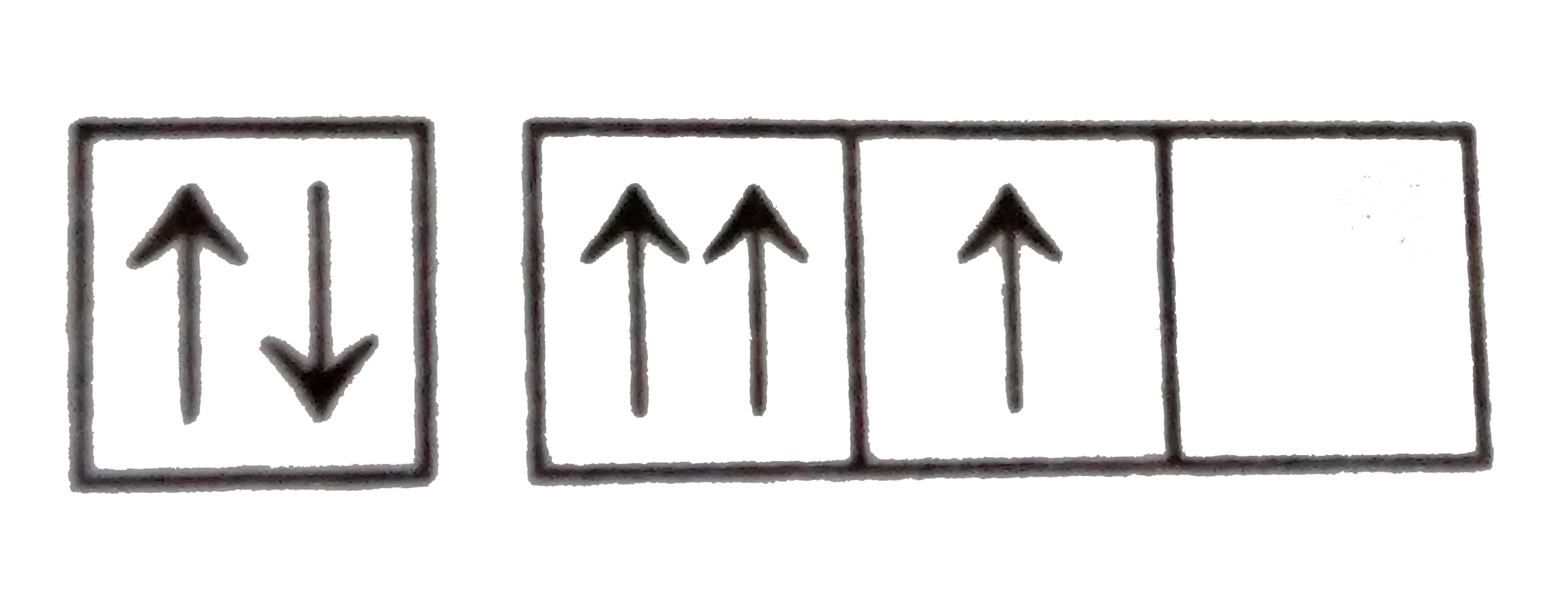
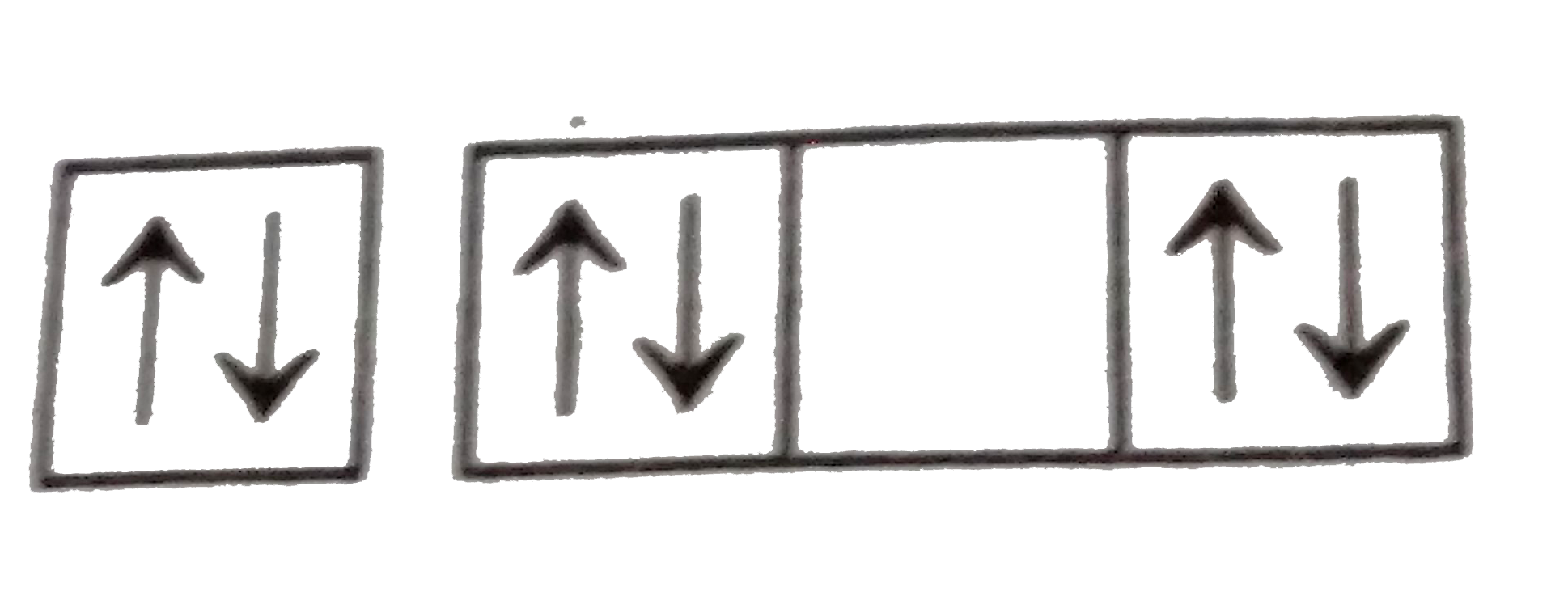
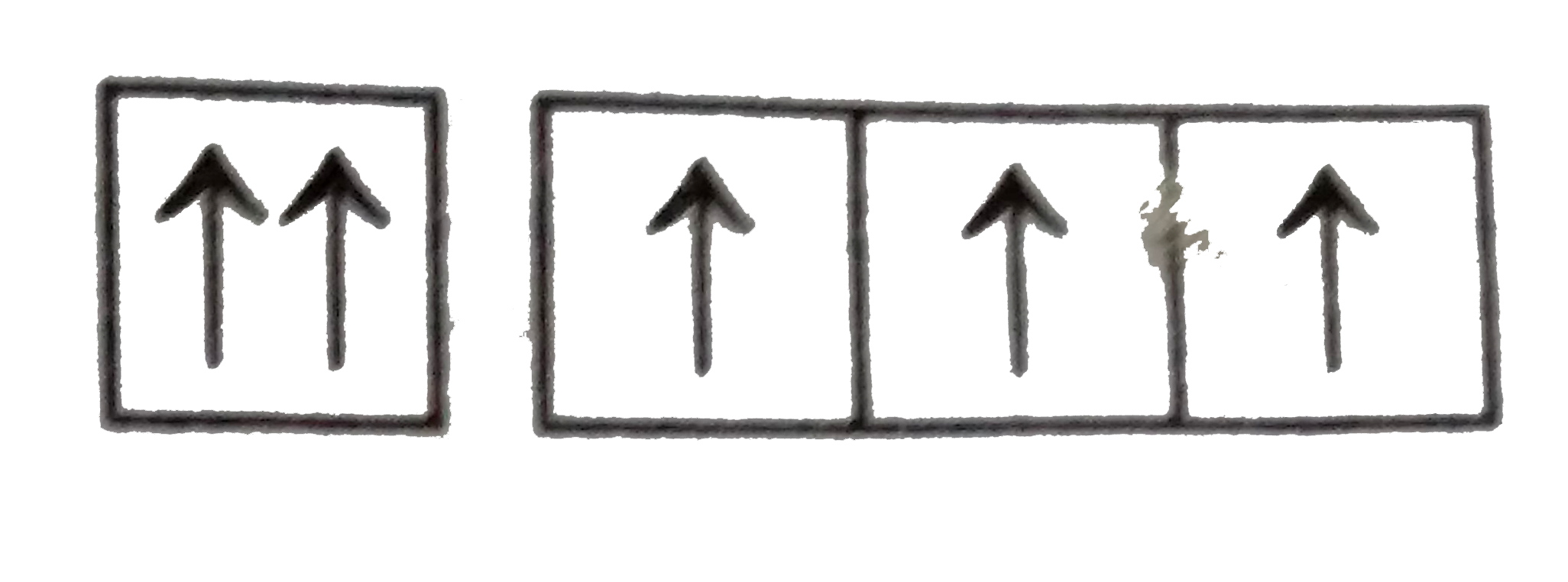
The orbital diagram in which both the Pauli.s exclusion principle and Hund.s rule are violated, is:
A
B
C
D
Text Solution
Verified by Experts
Topper's Solved these Questions
ATOMIC STUCTURE
NARENDRA AWASTHI|Exercise Level- 1|1 Videos
ATOMIC STUCTURE
NARENDRA AWASTHI|Exercise level 2|1 Videos
CHEMICAL EQUILIBRIUM
NARENDRA AWASTHI|Exercise Level 2|1 Videos
Similar Questions
Explore conceptually related problems
Explain Paulis exclusion principle .
State and explain Pauli's exclusion principle.
Explain Pauli's Exclusion principle with an example.
Which of the following is violation of Pauli's exclusion principle ?
He : Which rule is violated ?
The electrons in atoms occupy atomic orbitals (AO_(s)) that are represented as theregions around the nuclei where there is a high probability of finding the electrons. ln the so-called LCAO (linear combitaks) approach, as pioneered by Hund and Mulliken, when AOs come close together, they overlap forming MOs (molecular orbitals). Two AO s can overlap to form two MOs, one of which lies at a lower energy level (BMO) than the other at a higher energy level and is called an antibonding molecular orbital (ABMO). Each MO can hold one or two electrons in accordance with Pauli's exclusion principle. MOT can explain the paramagnetism of molecules such as O_(2) and NO and other spectral features. In a molecule number of electrons in bonding MO is more as compared to antibonding MO, hence
The electrons in atoms occupy atomic orbitals (AO_(s)) that are represented as theregions around the nuclei where there is a high probability of finding the electrons. ln the so-called LCAO (linear combitaks) approach, as pioneered by Hund and Mulliken, when AOs come close together, they overlap forming MOs (molecular orbitals). Two AO s can overlap to form two MOs, one of which lies at a lower energy level (BMO) than the other at a higher energy level and is called an antibonding molecular orbital (ABMO). Each MO can hold one or two electrons in accordance with Pauli's exclusion principle. MOT can explain the paramagnetism of molecules such as O_(2) and NO and other spectral features. Bond strength increases with