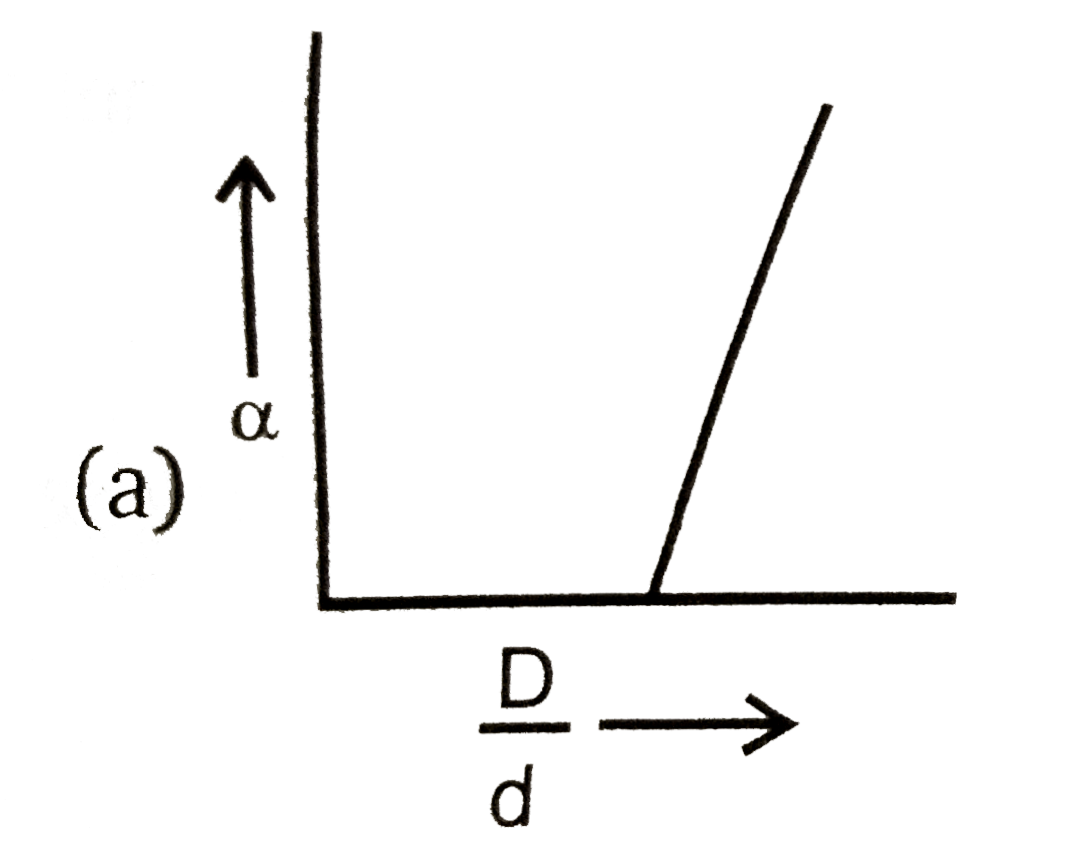
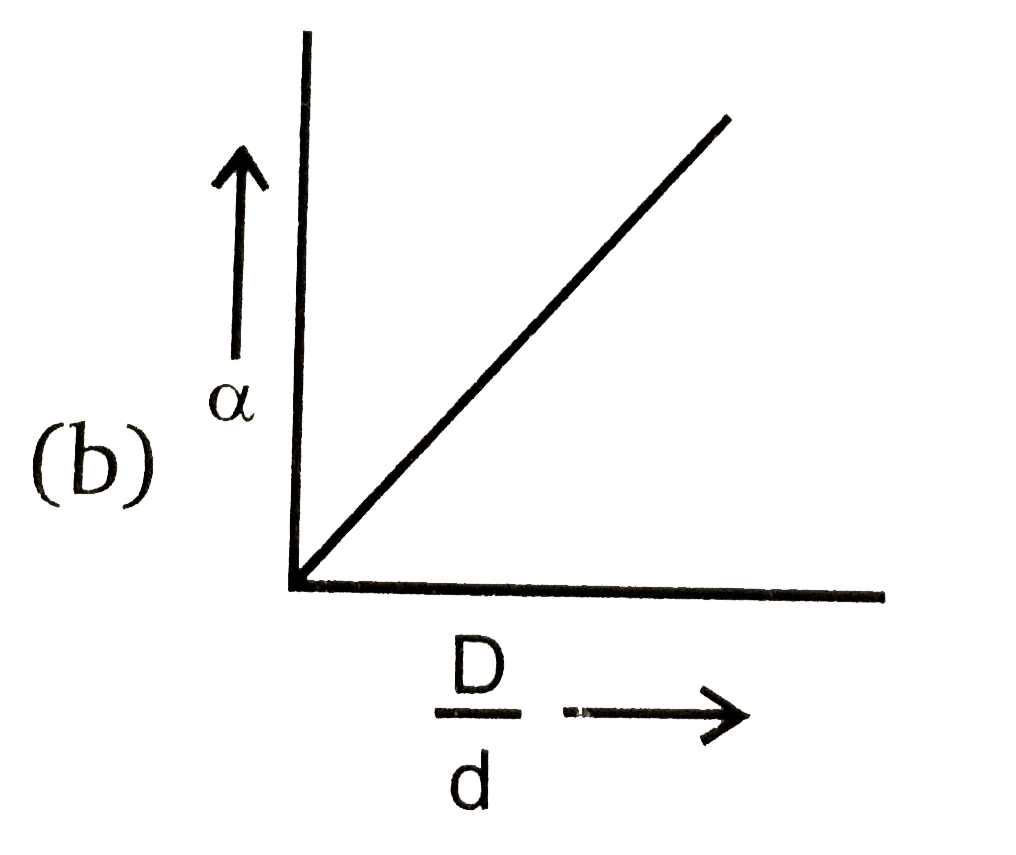
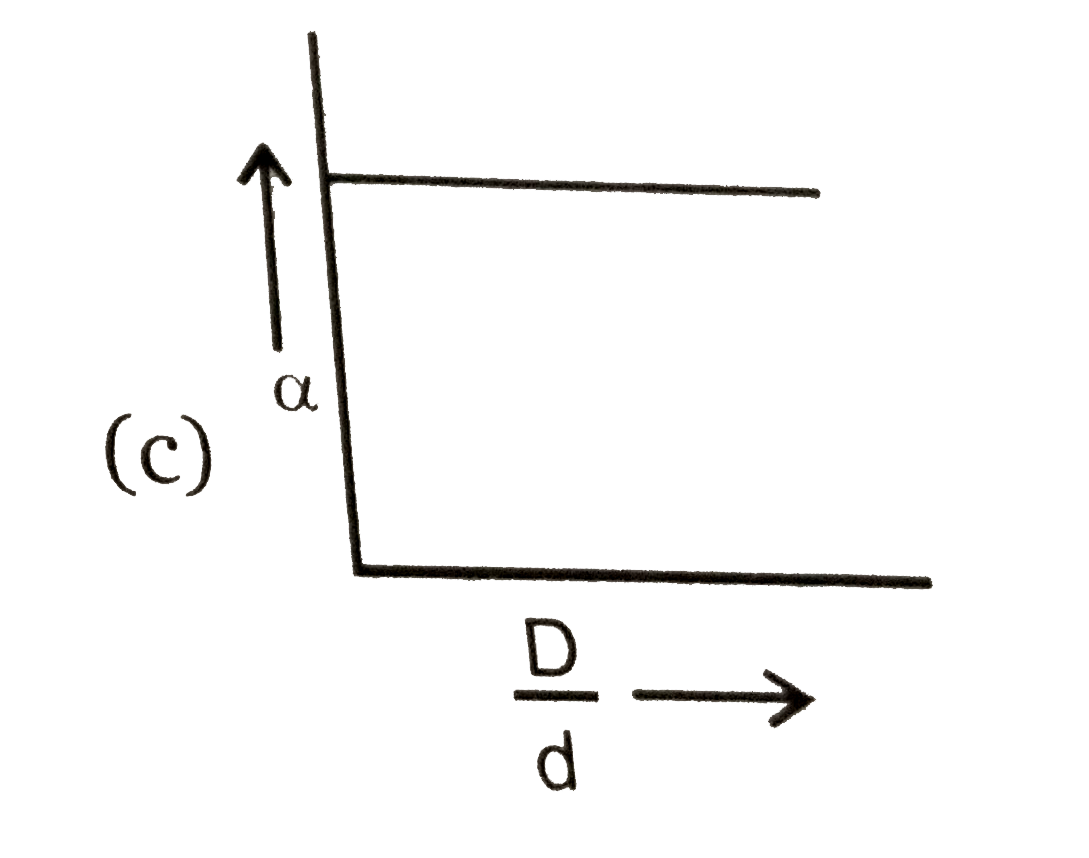
For the dissociation of `PCI_(5)` into `PCI_(3) and Cl_(2)` in gaseous phase reaction, If "d' is the observed vapour density and 'D' theoretical vapour density with `'alpha'` as degree of dissociation. Variation of `(D)/(d)` with `'alpha'` is given by which graph?
A
B
C
D
none of these
Text Solution
Verified by Experts
The correct Answer is:
a
Topper's Solved these Questions
CHEMICAL EQUILIBRIUM
NARENDRA AWASTHI|Exercise Level 1 (Q.93 To Q.122)|1 Videos
CHEMICAL EQUILIBRIUM
NARENDRA AWASTHI|Exercise Level 2|1 Videos
ATOMIC STUCTURE
NARENDRA AWASTHI|Exercise level 2|1 Videos
DILUTE SOLUTION
NARENDRA AWASTHI|Exercise Level 3 - Match The Column|1 Videos
Similar Questions
Explore conceptually related problems
Vapour density of N_(2)O_(4) of x 60^(@) C is found to be 30.6 The degree of dissociation of N_(2) O_(4) is :
Vapour density of PCl_(5) is 104.16 but when heated at 230^(@) C its vapour density is reduced to 62 . The degree of dissociation of PCl_(5) at this temperature will be
At 200^(@) C PCl_(5) dissociates as follow , PCl_(s(g)) hArr PCl_(3(g)) + Cl_(2(g)) . It was found that the equilibrium vapour. are 62 times as heavy as hydrogen. The degree of dissociation of PCl_(5) at 200^(@) C is nearly.
Dissociation of PCI_(5) takes place on heating as follows: PCl_(5(g)) harr PCl_(3(g))+Cl_(2(g)) 'D' is the vapour density of PCI_(5) initially and 'd' is the vapour density of the equilibrium mixture. Which of the following graph is correct ( alpha = degree of dissociation).
PCl_(5) dissociates as follows in a closed reaction vessel PCI_(5(g)) harr PCl_(3(g)) + Cl_((g)) . If total pressure at equilibrium of the reaction mixture is P and degree of dissociation of PCl_(5) is x, the partial pressure of PCI_(3) will be
In fully dissociated NH_(4)CI, [NH_(4)Cl_((g)) harr NH_(3(g)) + HCl_((g))] observed vapour density is
For the reaction 2A+Bto3C+D which of the following does not express the reaction rate:
3d_(x^(2)-y^(2)) and 3d_(xy) orbitals both have electron density in the xy-plane. Comment