Home
Class 12
PHYSICS
The capacitance between the adjacent pl...

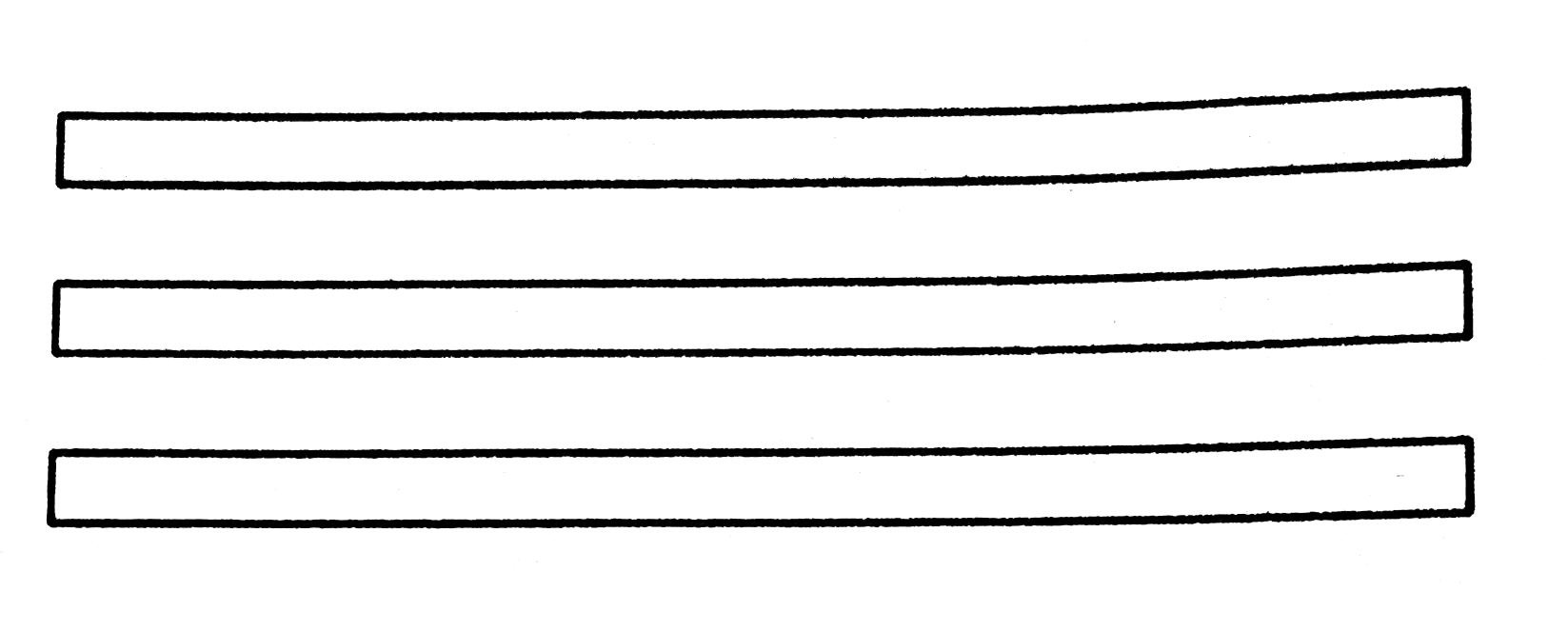
The capacitance between the adjacent plates shown in figure (31-E20 ) is `50 nF` . A charge of `1.0muC `is placed on the middle plate (a )What will be the charge on the outer surface pf the upper plate ? (b ) Find the potential difference developed between the upper and the middle plates .

Text Solution

Verified by Experts

(a) when charge of `1 mu C is introduced to the B plate, We also get a ` 0.5 mu C ` charge on the upper surface of plate A
(b) Given, ` C = 50 mu F = 50 xx 10(-9) F `
`= 5 xx 10^(-8) F `
Now charge `= 0.5 xx 10^(-6) C `
`v= 10V` .
Promotional Banner

Topper's Solved these Questions

  • CAPACITORS

    HC VERMA|Exercise Exercise|2 Videos
  • CAPACITORS

    HC VERMA|Exercise Objective 2|7 Videos
  • BOHR'S MODEL AND PHYSICS OF THE ATOM

    HC VERMA|Exercise Exercises|46 Videos
  • DISPERSION AND SPECTRA

    HC VERMA|Exercise Exercises|11 Videos

Similar Questions

Explore conceptually related problems

Positive and negative charges of 1 muC each are placed at two points as shown in the figure. Find the potential difference between A and B

A battery of emf 2.0 V and internal resistance 0.10 Omega is being charged with a current of 5.0 A . Find the potential difference between the terminals of the battery?

A battery of emf 2.0 V and internal resistance 0.10 Omega is being charged with a current of 5.0 A . Find the potential difference between the terminals of the battery?

Figure 8.6 shows a capacitor made of two circular plates each of radius 12 cm, and separated by 5.0 cm. The capacitor is being charged by an external source (not shown in the figure). The charging current is constant and equal to 0.15A. (a) Calculate the capacitance and the rate of change of potential difference between the plates. (b) Obtain the displacement current across the plates. (c) Is Kirchhoff’s first rule (junction rule) valid at each plate of the capacitor? Explain.

An electric charge 10^6muC is placed at the origin (0, 0) of X-Y co-ordinate system. Two points A and B are situated at (sqrt2, sqrt2) and (2, 0) respectively. The potential difference between the points A and B will be

Two large thin metal plates are parallel and close to each other on their inner faces the plates have surface charges densites of opposite region of the first plate (b) in the outer region of the second plate and (c ) between the plates

Two plates of equal areas are placed in contact wih each other. Their thickness are 2.0 cm and 5.0 cm respectively. The temperature of the external surface of the first plate is -20^(@)C and that of the external surface of the second plate is 20^(@)C . What will be the temperature of the current surface if the plates (i) are of the same material, (ii) have thermal conductivities in the ratio 2:5 .

An electron passes between two parallel plate of a capacitor as shown in the diagram. The electron enters the plate at t=0 and it comes out of the plates at time t=T. The electron hits the screen at A, as shown. Now a time varying potential difference V is applied between the plates, as shown in the graph. (Neglect the gravity). The point where the electron now will strike (as compared to point A) will be

3 identical capacitors are joined in parallel and are charged with a battery of 10 V. Now the battery is removed and they are joined in series with each other in this condition what would be the potential difference between the freed plates in the combination?

Light of wavelength lambda_(ph) falls on a cathode plate inside a vacuum tube as shown in the figure .The work function of the cathode surface is phi and the anode is a wire mesh of conducting material kept at distance d from the cathode. A potential different V is maintained between the electrodes. If the minimum de Broglie wavelength of the electrons passing through the anode is lambda_(e) which of the following statement (s) is (are) true?

HC VERMA-CAPACITORS-Exercises
  1. A charge of 1 muC is given to one plate of a parailel - plate capacito...

    Text Solution

    |

  2. Each of the plates shown in figure ( 31- E19 ) haas serface area (96/e...

    Text Solution

    |

  3. The capacitance between the adjacent plates shown in figure (31-E20 ...

    Text Solution

    |

  4. Consider the situation of the previous . If 1.0muC is placed on the ...

    Text Solution

    |

  5. Two capacitors of capacitances 20 .0pF and 50.0pF are connected in se...

    Text Solution

    |

  6. Two capacitor of capacitance 4.0muF and 6.0muF are connected in series...

    Text Solution

    |

  7. Each capacitor in figure has a capacitance of 10muF . The emf of the ...

    Text Solution

    |

  8. A capacitor with stored energy 4.0J is connected with an identical ca...

    Text Solution

    |

  9. A capacitor of capacitor of capacitance 2.0muF is charge to a potenti...

    Text Solution

    |

  10. A point charge Q is placed at the origin . Find the electrostatic ener...

    Text Solution

    |

  11. A metal sphere of radius R is charged to a pontital V . (a ) Find the ...

    Text Solution

    |

  12. A large conducting plane has a surface charge density 1.0xx10^(-4)c m ...

    Text Solution

    |

  13. A parellel - plate capacitor having plate area 20cm^2 and seperation ...

    Text Solution

    |

  14. A capacitor having a capacitance of 100muF is chargeed to a potential ...

    Text Solution

    |

  15. Consider the situation shown in figure (31-E23 ) . The switch S is ope...

    Text Solution

    |

  16. 47-A capacitor of capacitor 5.00 muF is charged to 24.0 V and another ...

    Text Solution

    |

  17. A 5.0muF capacitor is charged to 12V. The positive plate of this capa...

    Text Solution

    |

  18. The two square faces of a rectangular dielectric slab (dielectric con...

    Text Solution

    |

  19. If the above capacitor is connected across a 6.0Vbettery , find (a)the...

    Text Solution

    |

  20. The separation between the plates of a parallel-plate capacitor is 0.5...

    Text Solution

    |
