Home
Class 12
BIOLOGY
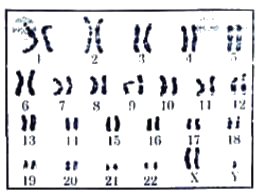
Given below a karyotype obtained after a...

Given below a karyotype obtained after analysis of foetal cell for probable genetic disorder .

Based on the above karyotype , the chromosomal disorder detected in unborn foetus and the consequent symptoms the child may suffere from are -

A

Down's syndrome : Gynaecomastia , overall masculine development

B

Down's syndrome : Furrowed tongue ,short stature

C

Klinefelter's syndrome : Gynecomastia Masculine development

D

Klinefelter's syndrome : Rudimentary ovaries short stature

Text Solution

Verified by Experts

Promotional Banner

Topper's Solved these Questions

  • QUESTION PAPER 2022 TERM 1 SET 1

    XII BOARDS PREVIOUS YEAR|Exercise SECTION-B|24 Videos
  • QUESTION PAPER 2022 SET-3

    XII BOARDS PREVIOUS YEAR|Exercise SECTION C|8 Videos
  • QUESTION PAPER 2022 TERM 1 SET 2

    XII BOARDS PREVIOUS YEAR|Exercise SECTION-C|12 Videos

Similar Questions

Explore conceptually related problems

(i) List the chromosomal disorders a human may suffer from if karyotype analysis of the individual shows 47 chromosomes instead of normal 46 (ii) Explain the cause that results in the gain of chromosome number. (iii) Mention the symptoms of any one the disorders an individual can suffer from

Karyotype of a child shows trisomy of chromosome number 21. Identify the disorder and state the symptoms which are likely to be exhibited in this case.

Given below is the representation of a relevant part of amino acid composition of the beta -chain of haemoglobin, related to the shape of human red blood cells. (a) Is this representation of the sequence of amino acids indicating a normal human or a sufferer from a certain blood related genetic disease ? Give reason in support of your answer. (b) Why is the disease referred to as a Mendelian disorder ? Explain.

The cause of chromosomal disorders is absence or excess of abnormal arrangement of one of more chromosomes. Analysis of karyotypes is used to study the chromosomal disorders. l(aryotype is defined as the profile of an individual's chromosomes that are arranged according to their shape, size and number. Case - Sarika encountered a teenager with short stature and a small round head, furrowed tongue and partially open mouth The palm of the person is broad with characteristic palm crease. She has a doubt that the individual might be suffering from a Chromosomal disorder. On the basis of your reading, answer the following questions: Name the syndrome from which the given individual might be suffering. Describe it along with its symptoms.

Sickle cell anemia is a genetic disorder where the body produces an abnormal hemoglobin called hemoglobin S. Red blood cells are normally flexible and round, but when the hemoglobin is defective, blood cells take on a “sickle” or crescent shape. Sickle cell anemia is caused by mutations in a gene called HBB. It is an inherited blood disorder that occurs if both the maternal and paternal copies of the HBB gene are defective. In other words, if an individual receives just one copy of the defective HBB gene, either from mother or father, then the individual has no sickle cell anemia but has what is called “sickle cell trait”. People with sickle cell trait usually do not have any symptoms or problems but they can pass the mutated gene onto their children. There are three inheritance scenarios that can lead to a child having sickle cell anemia: - Both parents have sickle cell trait - One parent has sickle cell anemia and the other has sickle cell trait - Both parents have sickle cell anemia If one parent has sickle cell anemia and the other has sickle cell trait, there is __________that their children will have sickle cell anemia and ___________will have sickle cell trait.

Sickle cell anemia is a genetic disorder where the body produces an abnormal hemoglobin called hemoglobin S. Red blood cells are normally flexible and round, but when the hemoglobin is defective, blood cells take on a “sickle” or crescent shape. Sickle cell anemia is caused by mutations in a gene called HBB. It is an inherited blood disorder that occurs if both the maternal and paternal copies of the HBB gene are defective. In other words, if an individual receives just one copy of the defective HBB gene, either from mother or father, then the individual has no sickle cell anemia but has what is called “sickle cell trait”. People with sickle cell trait usually do not have any symptoms or problems but they can pass the mutated gene onto their children. There are three inheritance scenarios that can lead to a child having sickle cell anemia: - Both parents have sickle cell trait - One parent has sickle cell anemia and the other has sickle cell trait - Both parents have sickle cell anemia The following statements are drawn as conclusions from the above data (Kenya). I. Patients with SCD (Sickle Cell Disease) are less likely to be infected with malaria. II. Patients with SCD (Sickle Cell Disease) are more likely to be infected with malaria. III. Over the years the percentage of people infected with malaria has been decreasing. IV. Year 2000 saw the largest percentage difference between malaria patients with and without SCD. Choose from below the correct alternative.

Sickle cell anemia is a genetic disorder where the body produces an abnormal hemoglobin called hemoglobin S. Red blood cells are normally flexible and round, but when the hemoglobin is defective, blood cells take on a “sickle” or crescent shape. Sickle cell anemia is caused by mutations in a gene called HBB. It is an inherited blood disorder that occurs if both the maternal and paternal copies of the HBB gene are defective. In other words, if an individual receives just one copy of the defective HBB gene, either from mother or father, then the individual has no sickle cell anemia but has what is called “sickle cell trait”. People with sickle cell trait usually do not have any symptoms or problems but they can pass the mutated gene onto their children. There are three inheritance scenarios that can lead to a child having sickle cell anemia: - Both parents have sickle cell trait - One parent has sickle cell anemia and the other has sickle cell trait - Both parents have sickle cell anemia If both parents have sickle cell trait, then there is _______________of the child having sickle cell anemia.

