A
B
C
D
Text Solution
Verified by Experts
The correct Answer is:



Topper's Solved these Questions
TRANSMISSION OF HEAT
ERRORLESS|Exercise NCERT BASED QUESTIONS (Radiation (Wien.s law))|13 VideosTRANSMISSION OF HEAT
ERRORLESS|Exercise NCERT BASED QUESTIONS (Radiation (Stefan.s law))|25 VideosTRANSMISSION OF HEAT
ERRORLESS|Exercise NCERT BASED QUESTIONS (Convection)|4 VideosTHERMOMETRY, THERMAL EXPANSION AND CALORIMETRY
ERRORLESS|Exercise ASSERTION & REASON|10 VideosUNITS, DIMENSIONS AND MEASUREMENT
ERRORLESS|Exercise ASSERTION & REASON |17 Videos
Similar Questions
Explore conceptually related problems
ERRORLESS-TRANSMISSION OF HEAT -NCERT BASED QUESTIONS (Radiation (General,Kirchhoff.s law,Black body))
- In which mode of tranmission , the heat waves travel along straight li...
Text Solution
|
- The process in which rate of transfer of heat maximum is .
Text Solution
|
- Which of the following is the correct device for the detection of ther...
Text Solution
|
- The energy supply being cut-off, an electric heater element cools down...
Text Solution
|
- We consider the radiation emitted by the human body. Which one of the ...
Text Solution
|
- A hot and a cold body are kept in vacuum separated from each other. Wh...
Text Solution
|
- A black body radiates heat at temperatures 'T1' and 'T2' (T2 gt T1) Th...
Text Solution
|
- A closed bottle containing water at 30^(@)C is open on the surface of ...
Text Solution
|
- Which of the following law states that "good absorbers of heat are goo...
Text Solution
|
- For a perfectly black body, its absorptive power is
Text Solution
|
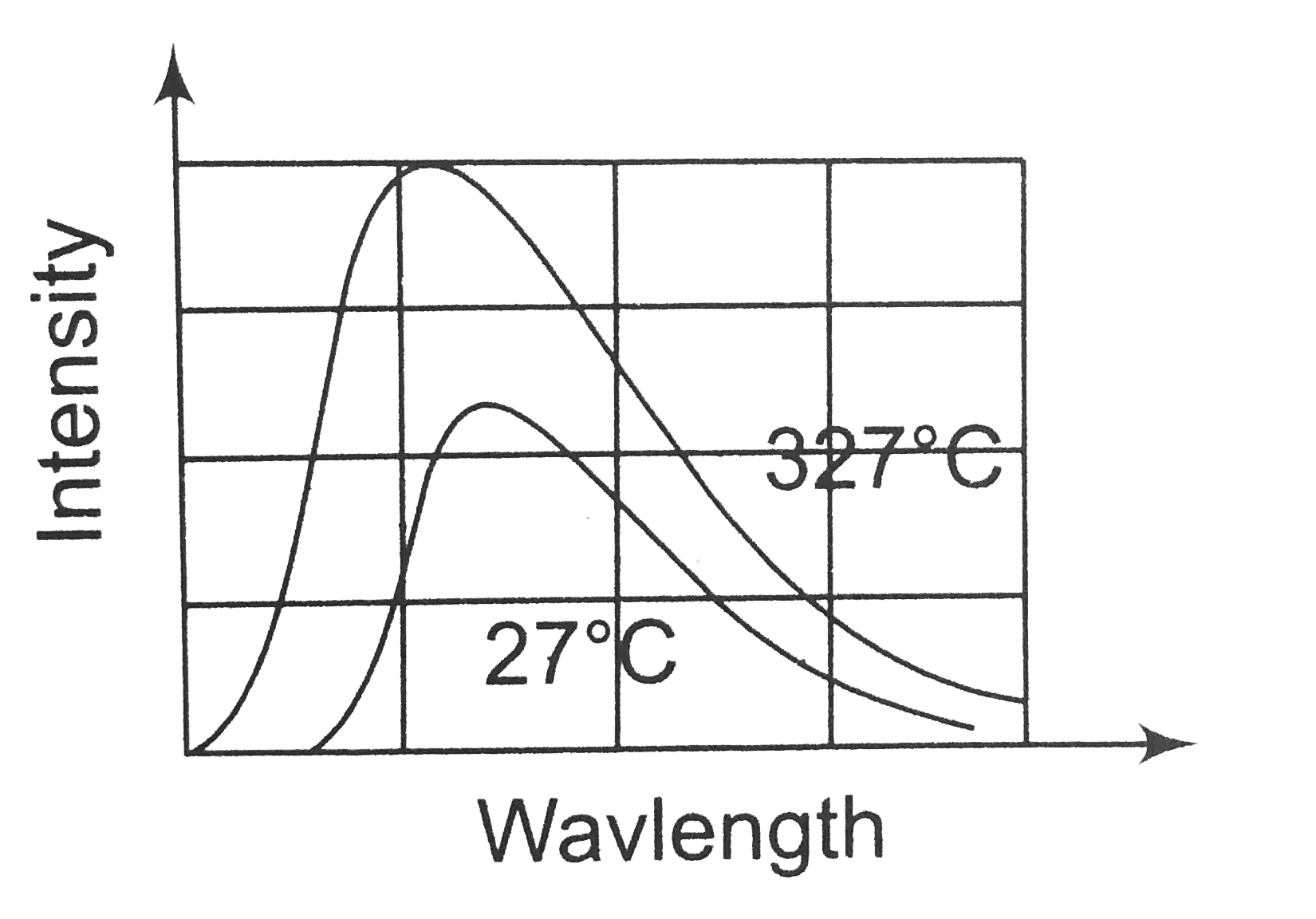
- The spectrum of a black body at two temperatures 27^(@)C and 327^(@)C ...
Text Solution
|
- There is a rough black spot on a polished metallic plate. It is heated...
Text Solution
|
- A piece of blue glass heated to a high temperature and a piece of red ...
Text Solution
|
- Which of the following statements is correct
Text Solution
|