Home
Class 11
CHEMISTRY
Among the following atomic orbital overl...

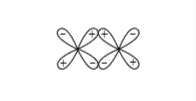
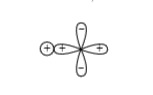
Among the following atomic orbital overlap, the non– bonding overlap is

A

B

C

D

Text Solution

AI Generated Solution

The correct Answer is:

To determine the non-bonding overlap among the given atomic orbital overlaps, we need to analyze the types of overlaps that can occur between different atomic orbitals. Here’s a step-by-step solution: ### Step 1: Understand Types of Orbital Overlaps Atomic orbitals can overlap in different ways, leading to either bonding, anti-bonding, or non-bonding interactions. The key types of overlaps are: - **Bonding Overlap**: Occurs when orbitals overlap in a way that allows for electron sharing, leading to a stable bond. - **Anti-bonding Overlap**: Occurs when orbitals overlap in such a way that they create a node between them, destabilizing the bond. - **Non-bonding Overlap**: Occurs when orbitals do not effectively overlap, resulting in no bond formation. ### Step 2: Identify the Given Orbitals In the question, we are provided with various atomic orbital overlaps. We need to identify which of these overlaps does not lead to bonding. ### Step 3: Analyze the Overlaps 1. **P-P Overlap**: If two p orbitals are oriented perpendicularly (one on the z-axis and the other on the x-axis), they do not effectively overlap. This results in a non-bonding interaction. 2. **D-D Overlap**: When two d orbitals (like dxy) overlap effectively (either plus-plus or minus-minus), they form a bonding molecular orbital. 3. **S-D Overlap**: An s orbital overlapping with a d orbital can lead to bonding if the overlap is head-on. 4. **P-D Overlap**: This can lead to anti-bonding if the phases are opposite (plus-minus). ### Step 4: Conclusion Based on the analysis, the overlap between the two p orbitals that are oriented perpendicularly does not lead to effective bonding and is classified as non-bonding overlap. Therefore, the correct answer is the overlap between the two p orbitals. ### Final Answer The non-bonding overlap is the overlap between the two p orbitals that are oriented perpendicularly. ---

To determine the non-bonding overlap among the given atomic orbital overlaps, we need to analyze the types of overlaps that can occur between different atomic orbitals. Here’s a step-by-step solution: ### Step 1: Understand Types of Orbital Overlaps Atomic orbitals can overlap in different ways, leading to either bonding, anti-bonding, or non-bonding interactions. The key types of overlaps are: - **Bonding Overlap**: Occurs when orbitals overlap in a way that allows for electron sharing, leading to a stable bond. - **Anti-bonding Overlap**: Occurs when orbitals overlap in such a way that they create a node between them, destabilizing the bond. - **Non-bonding Overlap**: Occurs when orbitals do not effectively overlap, resulting in no bond formation. ...
Promotional Banner

Similar Questions

Explore conceptually related problems

Which of the following atomic orbitals overlapping are not allowed

Orbital Overlap Concept

Which of the following is a positive overlap which leads to bonding ? .

Which of the following is a positive overlap that leads bonding ?

A covalent bond will be formed by the overlapping of atomic orbitals having single electron of opposite spin, according to the overlapping of atomic orbitals the covalent bond may be of two types : (i) Sigma bond (sigma) " " (ii) Pi bond (pi) Sigma bond is stronger bond than the Pi-bond. If atomic orbitals overlap about the nuclear axis then sigma bond is formed but when atomic orbitals overlap sideway then Pi-bond is formed. Compound having maximum bond angle is :

A covalent bond will be formed by the overlapping of atomic orbitals having single electron of opposite spin, according to the overlapping of atomic orbitals the covalent bond may be of two types : (i) Sigma bond (sigma) " " (ii) Pi bond (pi) Sigma bond is stronger bond than the Pi-bond. If atomic orbitals overlap about the nuclear axis then sigma bond is formed but when atomic orbitals overlap sideway then Pi-bond is formed. The strength of bonds formed by 2s-2s,2p-2p and 2p-2s overlap has the order :
