Home
Class 11
CHEMISTRY
Which of the following chemical system i...

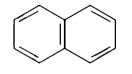
Which of the following chemical system is non aromatic

A

B

C

D

Text Solution

AI Generated Solution

The correct Answer is:

To determine which of the following chemical systems is non-aromatic, we need to understand the criteria for aromatic, anti-aromatic, and non-aromatic compounds. Here’s a step-by-step solution: ### Step 1: Understand Aromatic Compounds Aromatic compounds must satisfy the following criteria: - They must be cyclic. - They must be planar (flat). - They must have a continuous ring of p-orbitals (usually sp² hybridized). - They must follow Hückel's rule, which states that the compound must have \(4n + 2\) π electrons, where \(n\) is a non-negative integer (0, 1, 2, ...). ### Step 2: Understand Anti-Aromatic Compounds Anti-aromatic compounds also must be cyclic and planar, but they follow a different rule: - They must have \(4n\) π electrons. - This leads to instability in the compound. ### Step 3: Understand Non-Aromatic Compounds Non-aromatic compounds do not meet the criteria for aromaticity or anti-aromaticity. They can be: - Non-cyclic (acyclic). - Cyclic but do not have a continuous ring of p-orbitals. - Cyclic but do not have the required number of π electrons. ### Step 4: Analyze the Given Options Now, we need to analyze the chemical systems provided in the question. Look for: - Systems that are not cyclic. - Systems that have sp³ hybridized carbons (which do not contribute to π bonding). - Systems that do not fulfill the \(4n + 2\) or \(4n\) rules. ### Step 5: Identify the Non-Aromatic System After analyzing the options, identify the one that does not meet the criteria for aromatic or anti-aromatic systems. This will be the non-aromatic compound. ### Conclusion The correct answer will be the option that is non-aromatic based on the criteria discussed above. ---

To determine which of the following chemical systems is non-aromatic, we need to understand the criteria for aromatic, anti-aromatic, and non-aromatic compounds. Here’s a step-by-step solution: ### Step 1: Understand Aromatic Compounds Aromatic compounds must satisfy the following criteria: - They must be cyclic. - They must be planar (flat). - They must have a continuous ring of p-orbitals (usually sp² hybridized). - They must follow Hückel's rule, which states that the compound must have \(4n + 2\) π electrons, where \(n\) is a non-negative integer (0, 1, 2, ...). ...
Promotional Banner

Topper's Solved these Questions

  • HYDROCARBONS

    ERRORLESS|Exercise ASSERTION & REASON|18 Videos
  • HYDROCARBONS

    ERRORLESS|Exercise NCERT BASED QUESTION (AROMATIC HYDROCARBON)|78 Videos
  • GENERAL ORGANIC CHEMISTRY

    ERRORLESS|Exercise ASSERTION AND REASON|14 Videos
  • HYDROGEN

    ERRORLESS|Exercise ASSERTION & REASON|6 Videos

Similar Questions

Explore conceptually related problems

Which of the following chemical systems is/are nonaromatic?

The chemical system that is non - aromatic is

Which of the following chemical can act as non-classical ligand(s) ?

Which of the following compounds is non aromatic?

ERRORLESS-HYDROCARBONS-PAST YEAR QUESTIONS
  1. Which one is the correct order of acidity?

    Text Solution

    |

  2. The most suitable reagent for the following conversion, is

    Text Solution

    |

  3. Which of the following chemical system is non aromatic

    Text Solution

    |

  4. Which one of these is not compatible with arenes

    Text Solution

    |

  5. Pyridine is less basic than triethylamine because .

    Text Solution

    |

  6. The hydrocarbon which does not decolourise alkaline KMnO4 solution and...

    Text Solution

    |

  7. The radisal is aromatic because it has

    Text Solution

    |

  8. In which of the following moleucles, all atoms are coplanar?

    Text Solution

    |

  9. Among the following the aromatic compound is

    Text Solution

    |

  10. In the given reaction The product P is

    Text Solution

    |

  11. Select the true statement about benzene amongst the following

    Text Solution

    |

  12. Nitrobenzene on reaction with conc HNO(3)//H(2)SO(4) at 80-100^(@)C fo...

    Text Solution

    |

  13. Catalytic hydrogenation of benzene gives

    Text Solution

    |

  14. Which one of the following is most reactive towards electrophilic atta...

    Text Solution

    |

  15. Benzene vapour mixed with air when passed over V2O5 catalyst at 775K g...

    Text Solution

    |

  16. Which is formed when benzene is heated with chlorine in the presence ...

    Text Solution

    |

  17. C(6)H(6)overset(HNO(3))underset(H(2)SO(4))rarr X overset(Cl(2))underse...

    Text Solution

    |

  18. Which one of the following compounds will undergo meta substitution (m...

    Text Solution

    |

  19. Some meta-directing substituents in aromatic substitution are given wh...

    Text Solution

    |

  20. Xylenes on oxidation with acidic KMnO4 gives

    Text Solution

    |
