Home
Class 12
BIOLOGY
In a type of layering the basal branch i...

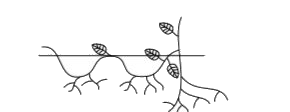
In a type of layering the basal branch is pegged down in the soil at several places to form a number of new plants from a single branch it is known as

A

Serpentine layering

B

Air layering

C

Simple layering

D

All of these

Text Solution

Verified by Experts

The correct Answer is:
A

Compound (serpentine layering): In this several layers can result from single stem. Bend the stem to the rooting medium as for simple layering but alternately cover and expose section of the stem.
Promotional Banner

Similar Questions

Explore conceptually related problems

Which is the particular type of drug that is obtained from the plant whose one flowering branch is

Which is the particular type of drug that is obtained from the plant whose one flowering branch is shown below?

Complete the following by selecting the correct option for the blanks A , B and C from the options given below. The symbiotic association formed by fungi with roots of higher plants is known as .... A....it is mainly formed by members from the genus.... B..... The fungal symbiont in these associations is responsible for absorbing......C......from the soil and passing it to the plant. It also has many other benefits like resistance to root borne pathogens tolerance to salinity and droughts , etc......D..... Seeds cannot germinate and establish without the presence of ......A .....

Polymers are made up of small molecules called monomers. Polymers which are formed by one type of monomer called homopolymers and which are formed by more than one type of monomers are called co-polymers. Natural polymers are biodegradable whereas systhetic polymers may or may not be. Addition or chain growth polymerization involves the repeated addition of monomers to the polymer chain. The monomers are unsaturated compounds and this type of polymerization takes placed by ionic (cationic or anionic) as well as free radical a series of condensation reactions between the monomers. Each monomer normally contains two functional groups. Branch chain polymers may be condensation polymers or addition but cross linked polymers are always condensation polymers. Total number of lone pairs of electrons in melamine is:

Polymers are made up of small molecules called monomers. Polymers which are formed by one type of monomer called homopolymers and which are formed by more than one type of monomers are called co-polymers. Natural polymers are biodegradable whereas systhetic polymers may or may not be. Addition or chain growth polymerization involves the repeated addition of monomers to the polymer chain. The monomers are unsaturated compounds and this type of polymerization takes placed by ionic (cationic or anionic) as well as free radical a series of condensation reactions between the monomers. Each monomer normally contains two functional groups. Branch chain polymers may be condensation polymers or addition but cross linked polymers are always condensation polymers. Which of the these are natural polymers ?

