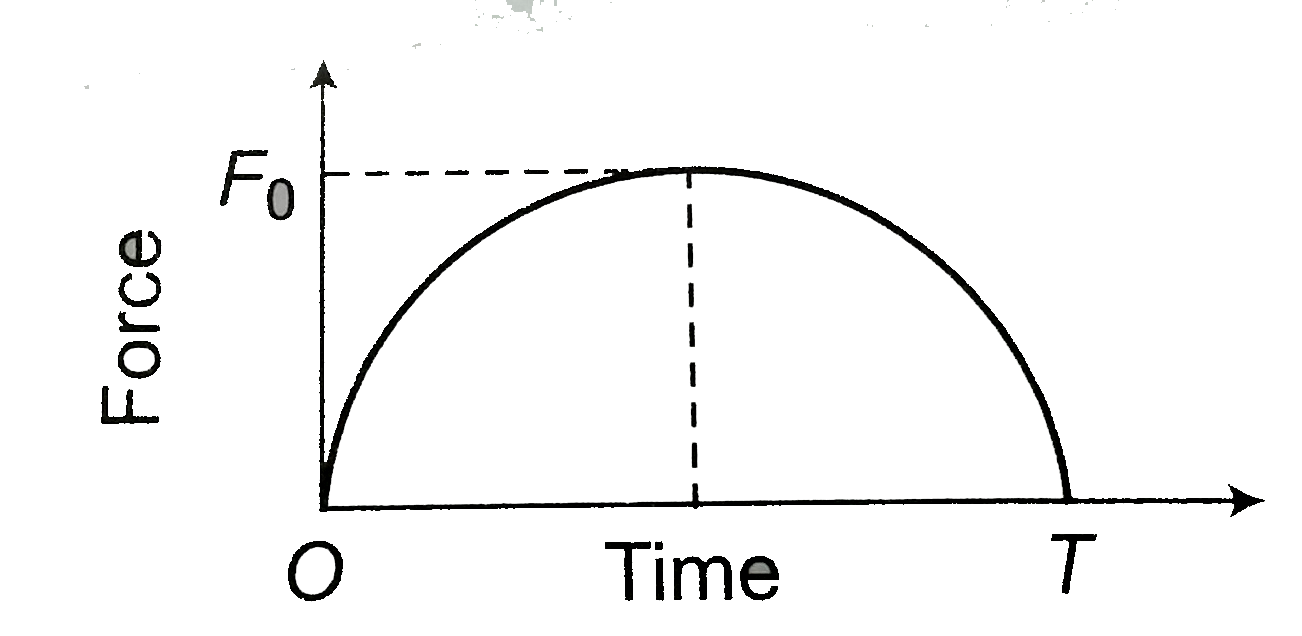
A
B
C
D
Text Solution
Verified by Experts
The correct Answer is:



Similar Questions
Explore conceptually related problems
Recommended Questions
- A particle of mass m , initially at rest , is acted upon by a variable...
Text Solution
|
- A particle of mass 'm' and initially at rest is acted by a force F=a t...
Text Solution
|
- A block of mass m at rest is acted upon by a force F for a time t. The...
Text Solution
|
- A particle of mass m , initially at rest , is acted upon by a variable...
Text Solution
|
- A particle of mas 70g, moving at 50cm//sis acted upon by a variable fo...
Text Solution
|
- A variable force acts on a body of mass m (initially at rest) from t =...
Text Solution
|
- A particle of mass m is acted upon by a force F= t^2-kx . Initially , ...
Text Solution
|
- A particle of mass m at rest in acted upon by a force P for a time t. ...
Text Solution
|
- A particle of mass m, initially at rest is acted upon by a variable fo...
Text Solution
|