Home
Class 12
CHEMISTRY
Isobutyraldehyde on reaction with formal...

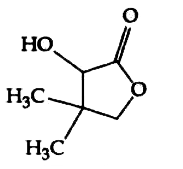
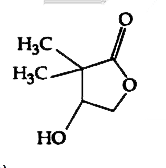
Isobutyraldehyde on reaction with formaldehyde and `K_2CO_3`, gives compound 'A'. Compound "A' reacts with KCN and yields compound 'B', which on hydrolysis gives a stable compound 'C'. The compound 'C' is

A

`HO-CH_2-overset(CH_3)overset(|)underset(CH_3)underset(|)(C)-underset(OH)underset(|)(CH)-COOH`

B

`HO-CH_2CH_2-underset(CH_3)underset(|)(CH)-underset(OH)underset(|)(CH)-COOH`

C

D

Text Solution

AI Generated Solution

The correct Answer is:

To solve the problem step by step, we will analyze the reactions involving isobutyraldehyde, formaldehyde, K2CO3, KCN, and the hydrolysis process to find the stable compound 'C'. ### Step 1: Reaction of Isobutyraldehyde with Formaldehyde Isobutyraldehyde (CH3)2C=CHOH reacts with formaldehyde (HCHO) in the presence of K2CO3 (a base). This reaction is a typical example of an aldol condensation, where two aldehydes react to form a β-hydroxy aldehyde. The reaction can be represented as follows: - Isobutyraldehyde + Formaldehyde → Compound A The structure of Compound A will be: - Compound A: (CH3)2C(OH)CH2CHO ### Step 2: Reaction of Compound A with KCN Next, Compound A reacts with KCN (potassium cyanide). This reaction typically involves nucleophilic addition of the cyanide ion (CN-) to the carbonyl group of Compound A, leading to the formation of a cyanohydrin. The reaction can be represented as follows: - Compound A + KCN → Compound B The structure of Compound B will be: - Compound B: (CH3)2C(OH)CH(CN)OH ### Step 3: Hydrolysis of Compound B Now, Compound B undergoes hydrolysis. In this step, the cyanide group (CN) is converted to a carboxylic acid (COOH) through hydrolysis. The reaction can be represented as follows: - Compound B + H2O → Compound C The structure of Compound C will be: - Compound C: (CH3)2C(OH)COOH ### Step 4: Stability of Compound C Compound C is stable due to the presence of the carboxylic acid group and the hydroxyl group, which can form intramolecular hydrogen bonds, contributing to its stability. ### Final Answer The stable compound 'C' is: - Compound C: 2-Hydroxy-4-methylpentanoic acid (or 2-hydroxy-3-methylbutanoic acid) ---

To solve the problem step by step, we will analyze the reactions involving isobutyraldehyde, formaldehyde, K2CO3, KCN, and the hydrolysis process to find the stable compound 'C'. ### Step 1: Reaction of Isobutyraldehyde with Formaldehyde Isobutyraldehyde (CH3)2C=CHOH reacts with formaldehyde (HCHO) in the presence of K2CO3 (a base). This reaction is a typical example of an aldol condensation, where two aldehydes react to form a β-hydroxy aldehyde. The reaction can be represented as follows: - Isobutyraldehyde + Formaldehyde → Compound A ...
Promotional Banner

Similar Questions

Explore conceptually related problems

Which compound reacted with CO_2 gives an organic compound?

Compound 'A' on chlorination gives compound 'B' , compound 'B' reacts with alc. KOH gives gas 'C', which decolourise Baeyer reagent. Ozonolysis of compound 'C' gives only HCHO compound 'A' is:

Compound A on reduction gives B which on further reaction with CHCl_(3) and alcoholic KOH gives compound C which of further hydrolysis gives aniline. The compound A is :

Propyl lithium reacts with ethene to give a compound (A) , which on reaction with methanal followed by acidic hydrolysis gives compound (B) . The compound (B) is :
