

Home
Class 12
PHYSICS
A curved suface is shown in figure. The ...


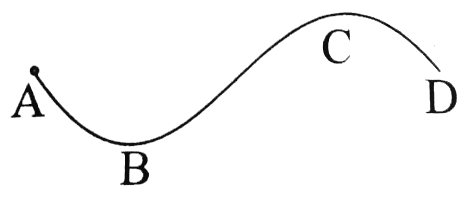
A curved suface is shown in figure. The portion BCD is free of friction. There are three spherical balls of identical radii and masses. Balls are released from rest one by one from A which is at a slightly greater height than C.
Wioth the surface AB, ball 1 has large enough friction to cause rolling down without slipping, ball 2 has a small friction and ball 3 has a negligible friction.
(a) For which ball is total mechanical energy conserved?
(b) Which ball(s) can reach D?
(c )For ball which do not reach D, which of the balls can reach back A?

Promotional Banner

Similar Questions

Explore conceptually related problems

A curved surface is shown in the figure. The portion BCD is free of friciton. There are three spherical balls of identical radii and masses. Balls are released from rest one by one from A which is at a slightly greater height than C. With the surface AB, ball 1 has large enough firction to cause rolling down without slipping, ball 2 has a small friction and ball 3 has a negligible frction. For which balls is total mechanical energy conserved?

A curved surface is shown figure . The portion BCD is free of friction .There are three spherical balls of identical radii and masses . Balls are released from at rest one by one from A which is at a slighly greater height than C . with the surface Ab , ball 1 has large eneough friction to cause rolling down without slipping , ball 2 has a small friction and ball 3 has a negligible friction . (a) For which balls is total mechanical energy conserved ? (b) Which ball (s) can reach D ? (c ) For ball which do not reach D, which of the balls can reach back A ?

A curved surface is shown in the figure. The portion BCD is free of friciton. There are three spherical balls of identical radii and masses. Balls are released from rest one by one from A which is at a slightly greater height than C. With the surface AB, ball 1 has large enough firction to cause rolling down without slipping, ball 2 has a small friction and ball 3 has a negligible frction. Which balls (s) can reach D?

A curved surface is shown in the figure. The portion BCD is free of friciton. There are three spherical balls of identical radii and masses. Balls are released from rest one by one from A which is at a slightly greater height than C. With the surface AB, ball 1 has large enough firction to cause rolling down without slipping, ball 2 has a small friction and ball 3 has a negligible frction. For balls which do nt each D, which of the balls an reach back A?

Ball-bearing converts sliding friction into rolling friction (yes/No)

Knot in a theread:_____ friction:: ball bearing:_____ friction

There are 2 identical white balls,3 identical red balls and 4 green balls of different shades. The number of ways in which they can be arranged in a row so that atleast one ball is separated from the balls of the same colour,is

A cannot ball and a marble ball roll from rest down an incline. Which goes to the buttom first ?

When a ball is moving on plain ground, the work done by the frictional force on the ball is