

Home
Class 12
PHYSICS
A narrow tube is bent in the form of a c...

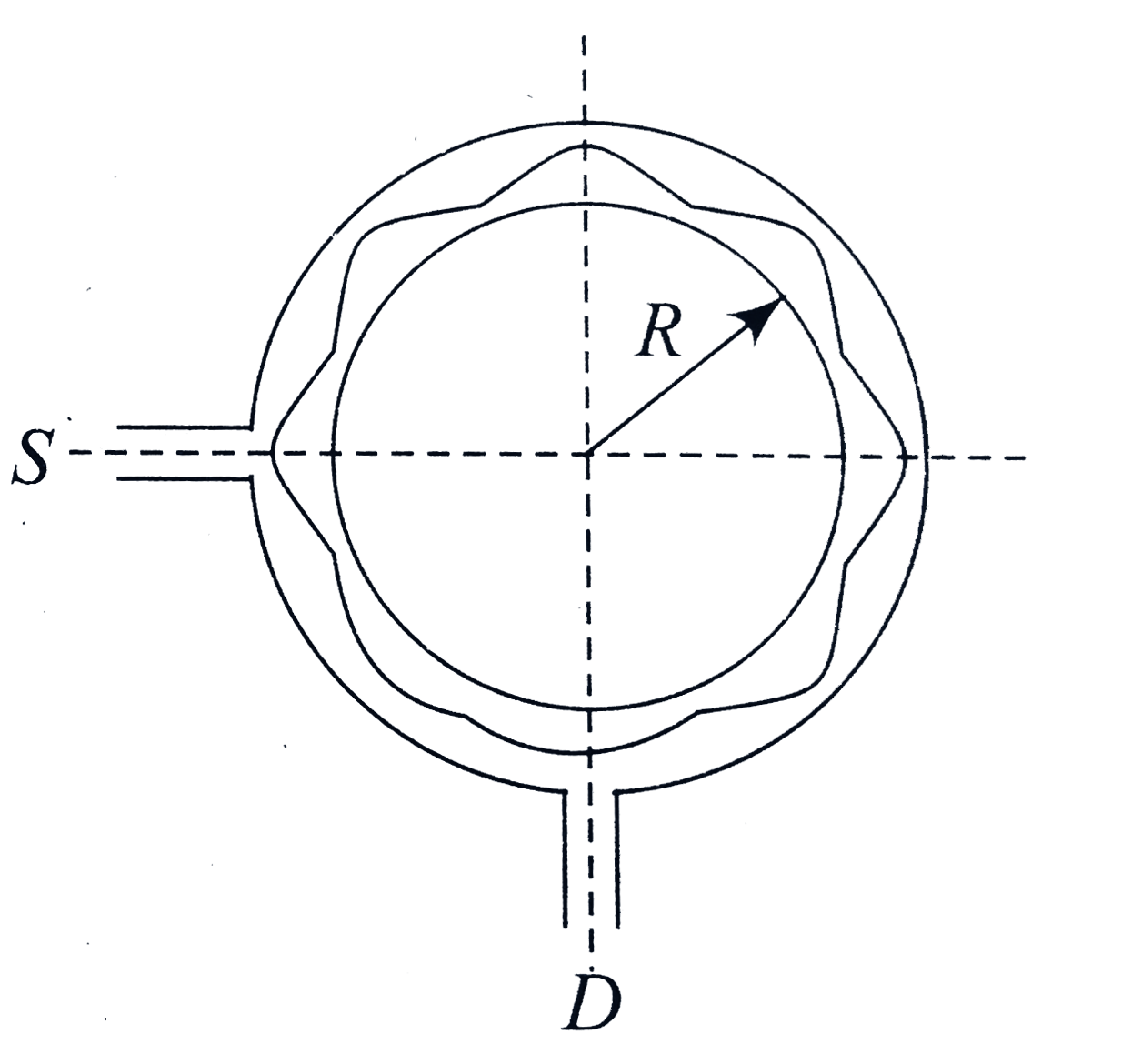
A narrow tube is bent in the form of a circle of radius R, as shown in figure. Two small holes S and D are made in the tube at the position at right angle to each other. A source placed at S generates a wave of intensity `I_(0)` which two parts: one part travels along the longer path, while the other travels along the shorter path. Both the waves meet at point D where a detector is placed.

1. If a maxima if formed at a detector, then the magnitude of wavelength `lambda` of the, wave produced is given by

Promotional Banner

Similar Questions

Explore conceptually related problems

A narrow tube is bent in the form of a circle of radius R, as shown in figure. Two small holes S and D are made in the tube at the position at right angle to each other. A source placed at S generates a wave of intensity I_(0) which two parts: one part travels along the longer path, while the other travels along the shorter path. Both the waves meet at point D where a detector is placed. 2. If a minima is formed at the detector, then the magnitude of wavelength lambda of the wave produced is given by

A narrow tube is bent in the form of a circle of radius R, as shown in figure. Two small holes S and D are made in the tube at the position at right angle to each other. A source placed at S generates a wave of intensity I_(0) which two parts: one part travels along the longer path, while the other travels along the shorter path. Both the waves meet at point D where a detector is placed. 2. If a minima is formed at the detector, then the magnitude of wavelength lambda of the wave produced is given by

A narrow tube is bent in the form of a circle of radius R, as shown in figure. Two small holes S and D are made in the tube at the position at right angle to each other. A source placed at S generates a wave of intensity I_(0) which two parts: one part travels along the longer path, while the other travels along the shorter path. Both the waves meet at point D where a detector is placed. The maximum intensity produced at D is given by

A narrow tube is bent in the form of a circle of radius R, as shown in figure. Two small holes S and D are made in the tube at the position at right angle to each other. A source placed at S generates a wave of intensity I_(0) which two parts: one part travels along the longer path, while the other travels along the shorter path. Both the waves meet at point D where a detector is placed. The maximum intensity produced at D is given by

A narrow tube is bend in the form of a circle of radius R, as shown in the figure. Two small holes S and D are made in the tube at the positions right angle to each other. A source placed at S generated a wave of intensity I_(0) which is equally divided into two parts : One part travels along the longer path, while the other travels along the shorter path. Both the parts wave meet at the point D where a detector is placed. If the minima is formed at the detector then, the magnitude of wavelength lamda of the wave produced is given by :-

A narrow tube is bend in the form of a circle of radius R, as shown in the figure. Two small holes S and D are made in the tube at the positions right angle to each other. A source placed at S generated a wave of intensity I_(0) which is equally divided into two parts : One part travels along the longer path, while the other travels along the shorter path. Both the parts wave meet at the point D where a detector is placed. If a maximum is formed at the detector then, the magnitude of wavelength lamda of the wave produced is given by :-

A narrow tube is bend in the form of a circle of radius R, as shown in the figure. Two small holes S and D are made in the tube at the positions right angle to each other. A source placed at S generated a wave of intensity I_(0) which is equally divided into two parts : One part travels along the longer path, while the other travels along the shorter path. Both the parts wave meet at the point D where a detector is placed. The maximum intensity produced at D is given by :-