

Home
Class 11
PHYSICS
A door is hinged at one and is free to r...

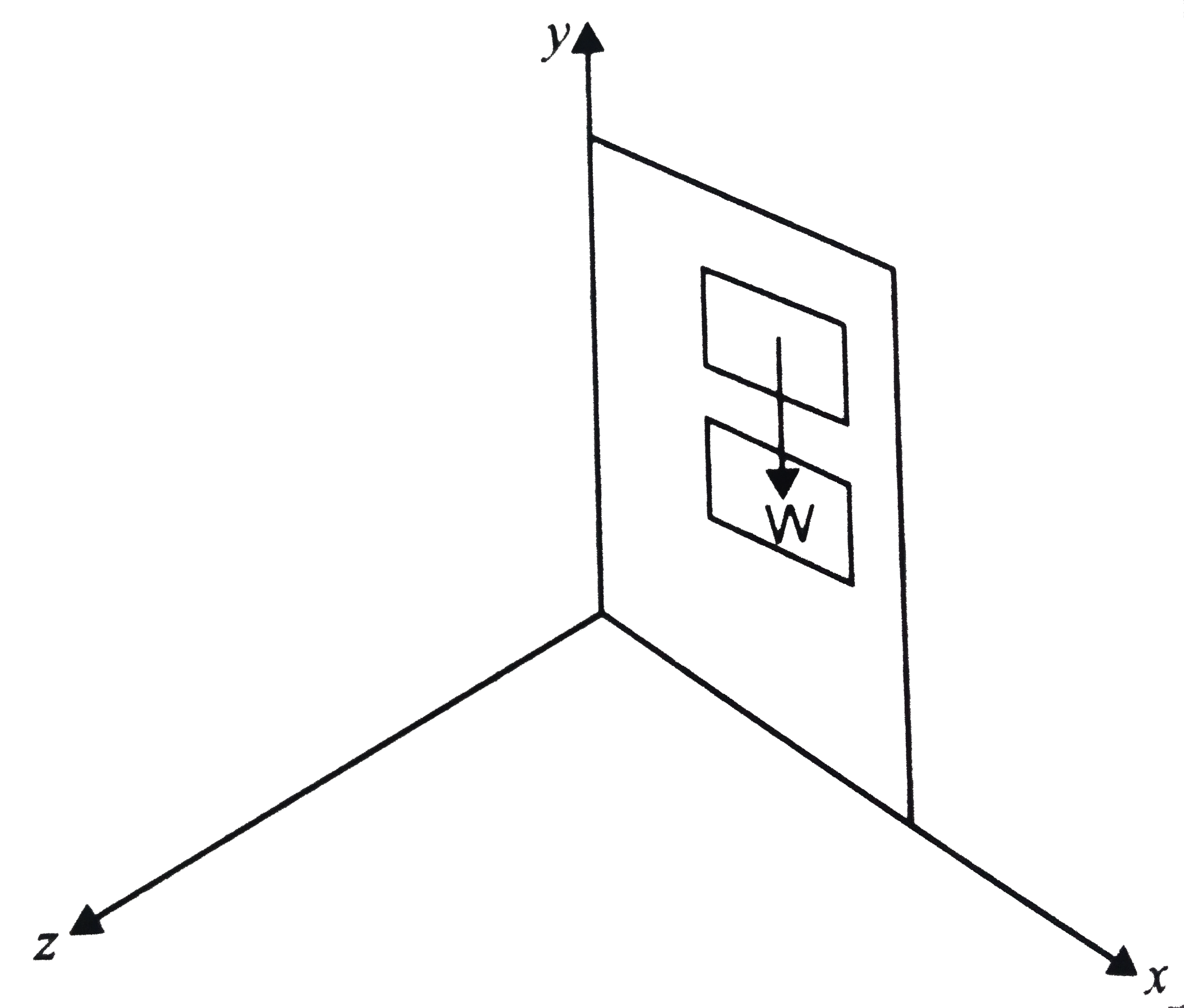
A door is hinged at one and is free to rotate about a vertical axis [Fig.] Does its weight cause any torque the axis ? Given reason for you answer.

Promotional Banner

Similar Questions

Explore conceptually related problems

A door is hinged at one end and is free to rotate about a vertical axis. (show in the figure) Does its weight cause any torque about this axis ? Give reasons for your answer.

A bullet of mass 10 g and speed 500 m//s is fired into a door and gets embedded exactly at the centre of the door. The door is 1.0 m wide and weight 12 kg . It is hinged at one end and rotates about a vertical axis practically without friction. Find the angular speed of the door just after the bullet embeds into it.(Hint. The moment of inertia of the door about the vertical axis at one end is ML^(2)//3)

A bullet of mass 10 g and speed 500 m//s is fired into a door and gets embedded exactly at the centre of the door. The door is 1.0 m wide and weight 12 kg . It is hinged at one end and rotates about a vertical axis practically without friction. Find the angular speed of the door just after the bullet embeds into it.(Hint. The moment of inertia of the door about the vertical axis at one end is ML^(2)//3)

The torque of the weight of any body about any vertical axis is zero. Is it always correct?

The torque of the weight of any body about any vertical axis is zero. Is it always correct?

When a body is hinged at a point and a force is acting on the body in such a way that the line of action of force is at some distance from the hinged point, the body will start rotating about the hinged point. The angular acceleration of the body can be calculated by finding the torque of that force about the hinged point. A disc of mass m and radius R is hinged at point A at its bottom and is free to rotate in the vertical plane. A force of magnitude F is acting on the ring at top most point. Component of reaction at the hinge in the vertical direction is

When a body is hinged at a point and a force is acting on the body in such a way that the line of action of force is at some distance from the hinged point, the body will start rotating about the hinged point. The angular acceleration of the body can be calculated by finding the torque of that force about the hinged point. A disc of mass m and radius R is hinged at point A at its bottom and is free to rotate in the vertical plane. A force of magnitude F is acting on the ring at top most point. Component of reaction at the hinge in the vertical direction is

The figure shows three small spheres that rotate about a vertical axis. The perpendicular distance between the axis and the center of each sphere is given. Rank the three spheres according to their rotational inertia about that axis, greatest first.

When a body is hinged at a point and a force is acting on the body in such a way that the line of action of force is at some distance from the hinged point, the body will start rotating about the hinged point. The angular acceleration of the body can be calculated by finding the torque of that force about the hinged point. A disc of mass m and radius R is hinged at point A at its bottom and is free to rotate in the vertical plane. A force of magnitude F is acting on the ring at top most point. Component of reaction at the hinge in the horizontal direction is

When a body is hinged at a point and a force is acting on the body in such a way that the line of action of force is at some distance from the hinged point, the body will start rotating about the hinged point. The angular acceleration of the body can be calculated by finding the torque of that force about the hinged point. A disc of mass m and radius R is hinged at point A at its bottom and is free to rotate in the vertical plane. A force of magnitude F is acting on the ring at top most point. Component of reaction at the hinge in the horizontal direction is