

Home
Class 11
PHYSICS
Forces X,Y and Z have magnitudes 10N 5(s...

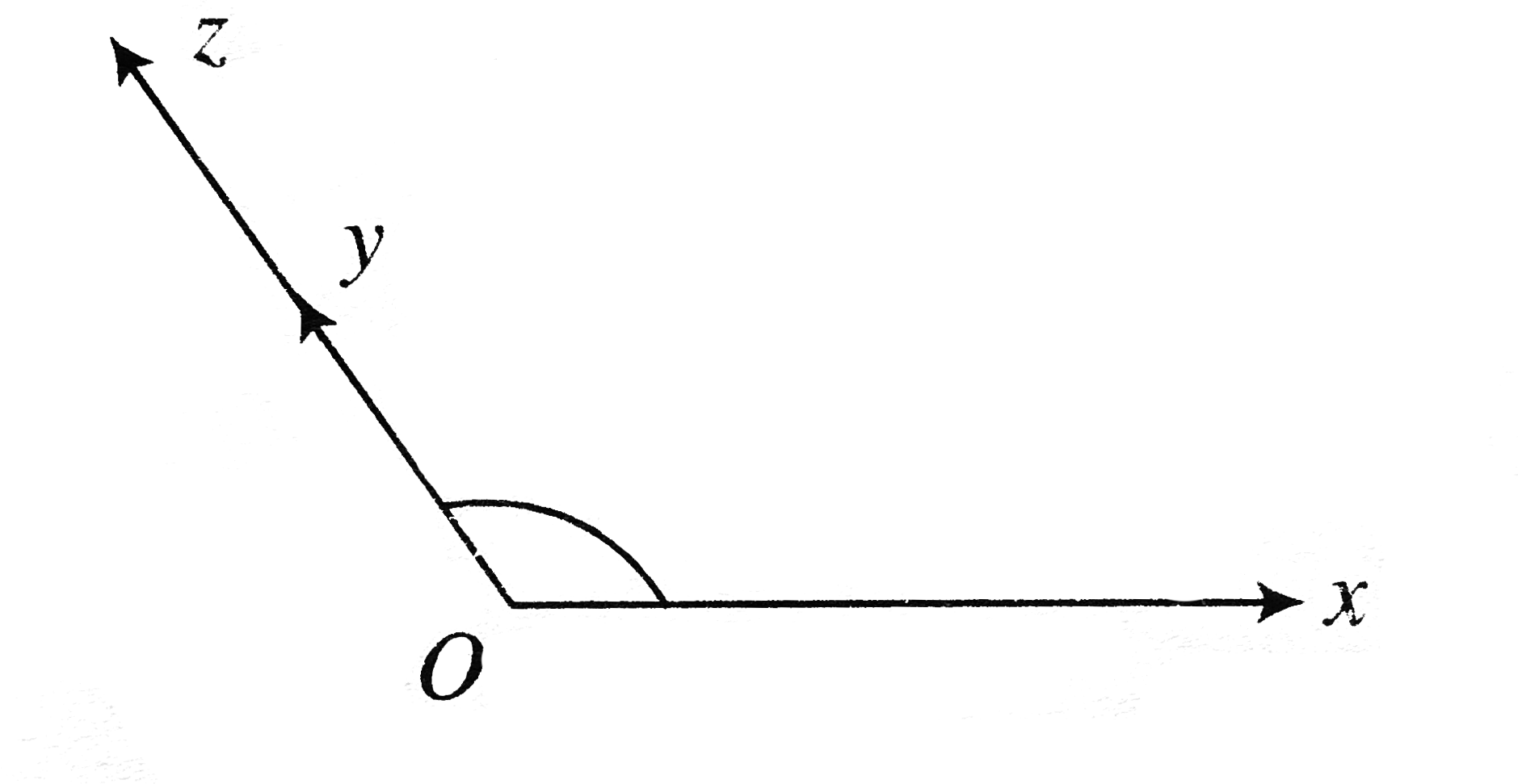
Forces X,Y and Z have magnitudes `10N 5(sqrt(3)-1) N` and `5(sqrt(3)+1) N`, respectively. The forces Y and Z act in the same direction as shown in (figure) The resultant of X and Y and the resultant of X and Z have the same magnitudes. Find `theta`, the angle between X and Y.

Promotional Banner

Similar Questions

Explore conceptually related problems

Two forces acting in opposite direction have resultant 10 N and when acting perpendicularly have resultant 50 N . Find the magnitude of forces.

Two forces of magnitude 1 N and 13 N resultant of magnitude 6sqrt(5)N, then that is the angle between two forces.

The two forces 2 sqrt2N and xN are acting at a point their resultant is perpendicular to hat(x)N and having magnitude of sqrt6N . The angle between the two forces and magnitude of x are

The two forces 2sqrt(2)N and xN are acting at a point their resultant is perpendicular to hat(x)N and having magnitude of vec(6) N . The angle between the two forces and magnitude of x are

Two horizontal forces of magnitudes of 10N and P N act on a particle. The force of magnitude 10N acts due west and the force of magnitude P N acts on a bearing of 30^(@) east of north as shown in (figure) The resultant of these two force acts due north. Find the magnitude of the resultant.

Two horizontal forces of magnitudes of 10N and P N act on a particle. The force of magnitude 10N acts due west and the force of magnitude P N acts on a bearing of 30^(@) east of north as shown in (figure) The resultant of these two force acts due north. Find the magnitude of the resultant.

Two forces 12N and 5N are acting at right angles to each other. Find the magnitude and direction of the resultant force.

If two forces of 5 N each are acting along X and Y axes, then the magnitude and direction of resultant is