

Home
Class 11
PHYSICS
In a ring having linear charge density l...

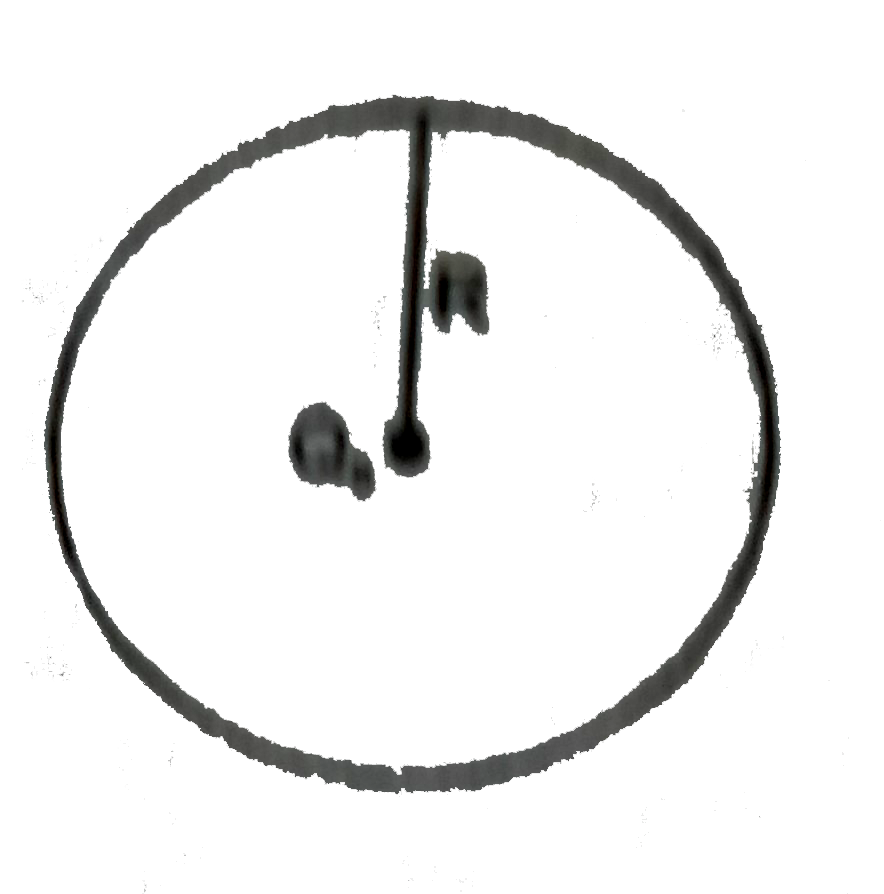
In a ring having linear charge density `lambda`, made up of wire of cross-section area `A`, young modulus `y, a` charge `Q_(0)` is placed at it's centre. If initial radius is `'R'`, then find out change in radius

Promotional Banner

Similar Questions

Explore conceptually related problems

A uniform ring of radius R and made up of a wire of cross - sectional radius r is rotated about its axis with a frequency f . If density of the wire is rho and young's modulus is Y . Find the fractional change in radius of the ring .

A uniform ring of radius R and made up of a wire of cross - sectional radius r is rotated about its axis with a frequency f . If density of the wire is rho and young's modulus is Y . Find the fractional change in radius of the ring .

A half ring of radius r has a linear charge density lambda .The potential at the centre of the half ring is

A half ring of radius r has a linear charge density lambda .The potential at the centre of the half ring is

A thin circular wire of radius r has a charge Q. If a point charge q is placed at the centre of the ring, then find the increase in tension in the wire.

A thin circular wire of radius r has a charge Q. If a point charge q is placed at the centre of the ring, then find the increase in tension in the wire.

A thin circular wire of radius r has a charge Q. If a point charge q is placed at the centre of the ring, then find the increase in tension in the wire.

A ring of radius R having a linear charge density lambda moves towards a solid imaginary sphere of radius (R)/(2) , so that the centre of ring passes through the centre of sphere. The axis of the ring is perpendicular to the line joining the centres of the ring and the sphere. The maximum flux through the sphere in this process is

A ring of radius R having a linear charge density lambda moves towards a solid imaginary sphere of radius (R)/(2) , so that the centre of ring passes through the centre of sphere. The axis of the ring is perpendicular to the line joining the centres of the ring and the sphere. The maximum flux through the sphere in this process is

A wire of length L and cross-sectional area A is made of a material of Young's modulus Y. IF the wire is stretched by an amount x, the workdone is