Home
Class 11
CHEMISTRY
Catalytic hydrogenation involves additio...

Catalytic hydrogenation involves addition of hydrogen to a `C = C or -C -= C-` bond in presence of a metal catalyst such as Ni, Pt, Pd, etc. These are called heterogeneous catalysts. Both `H_2` and alkene/alkyne get adsorbed on the surface of the metal , and syn-addition of hydrogen atoms takes place. The relative rates of hydrogenation follows the order:
`-C-=C- gt C=C gt C= O gt C_6H_6`
If sodium or lithium in liquid ammonia is used, anti-addition of H-atoms occurs across `-C-=C-`bond. These reducing agents can also be used to reduce double bonds of benzene rings and conjugated dienes but not of isolated dienes.
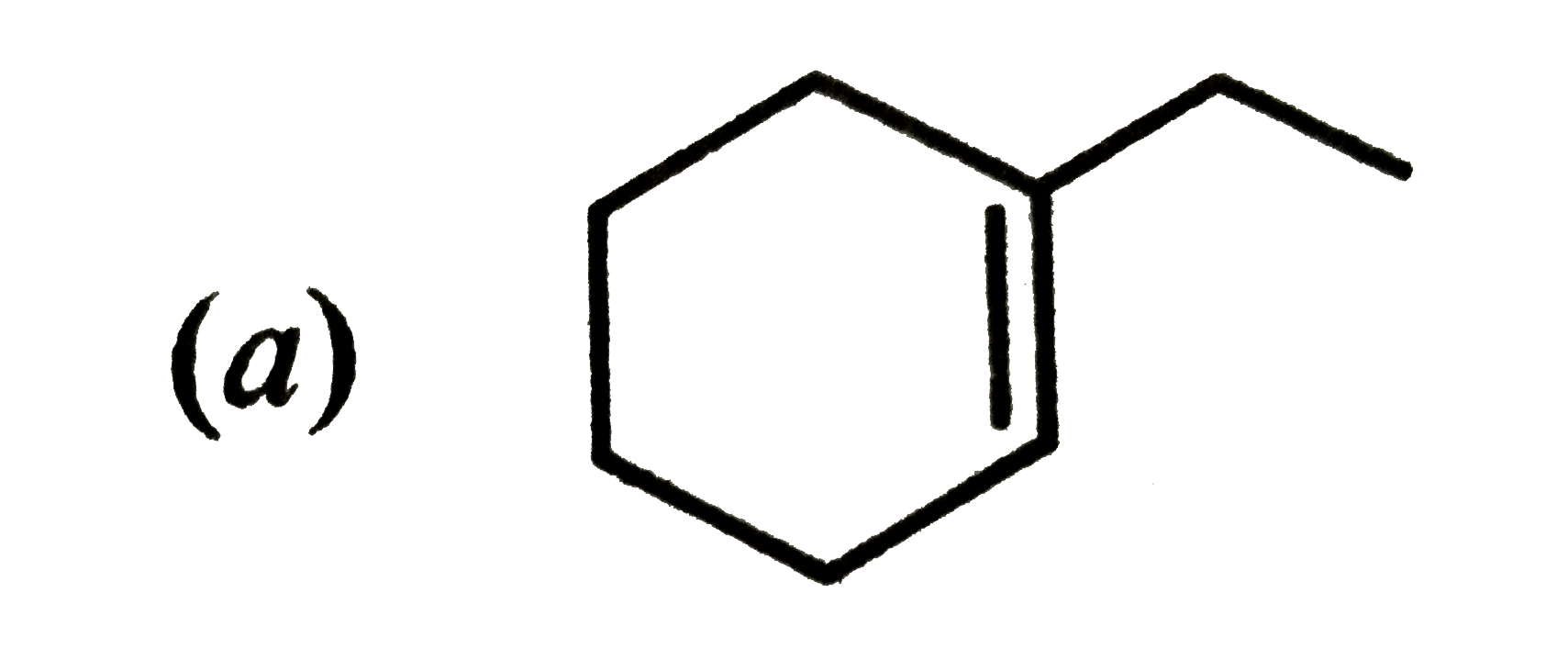
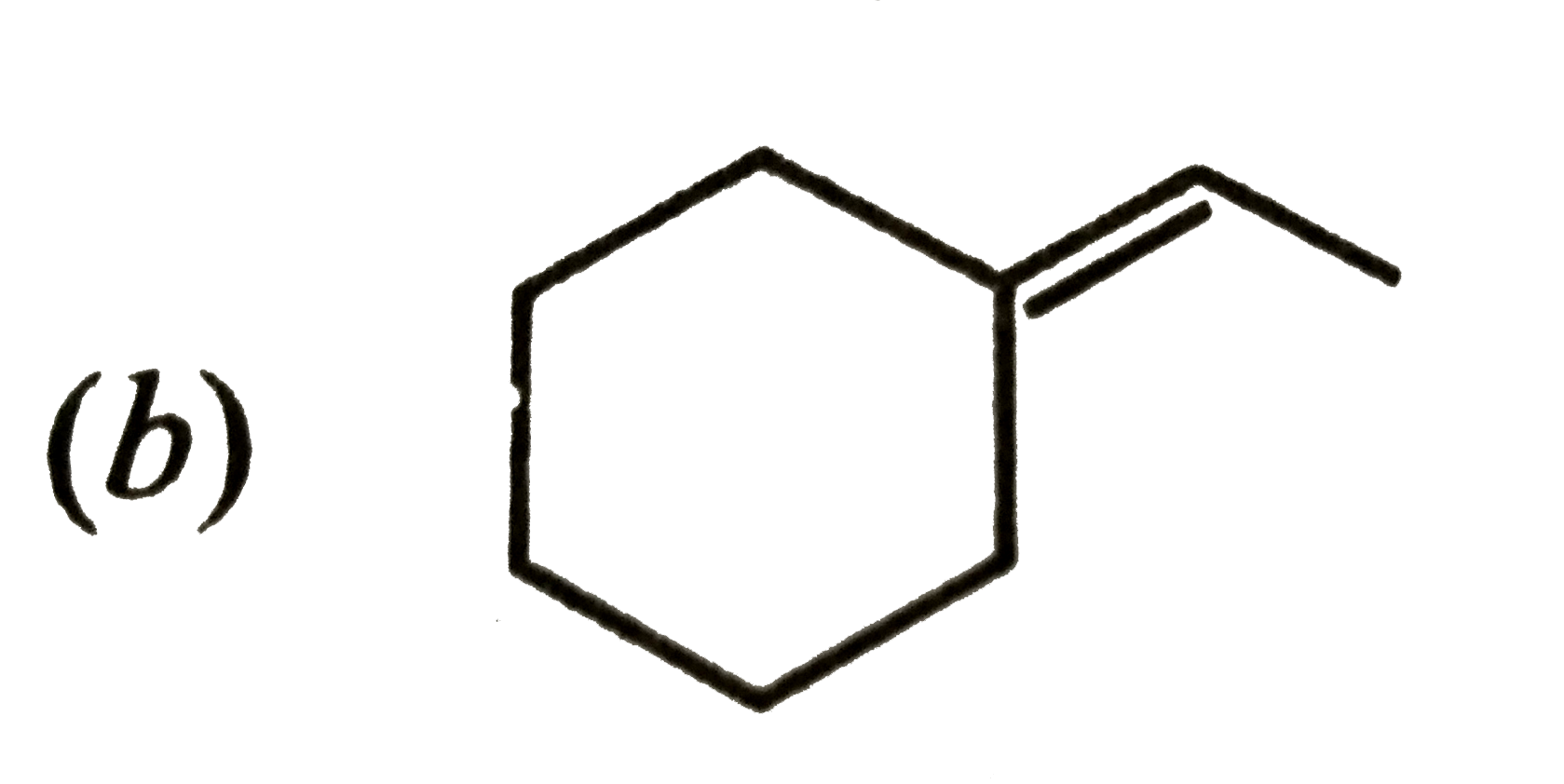
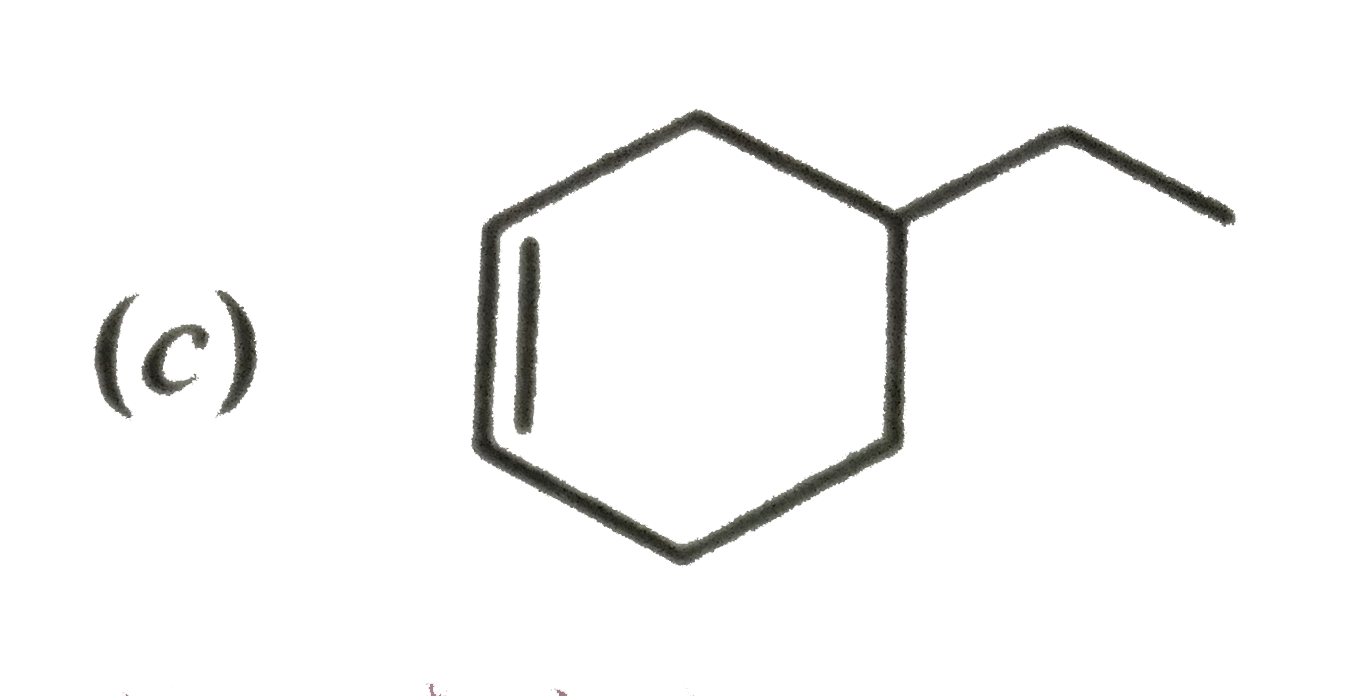
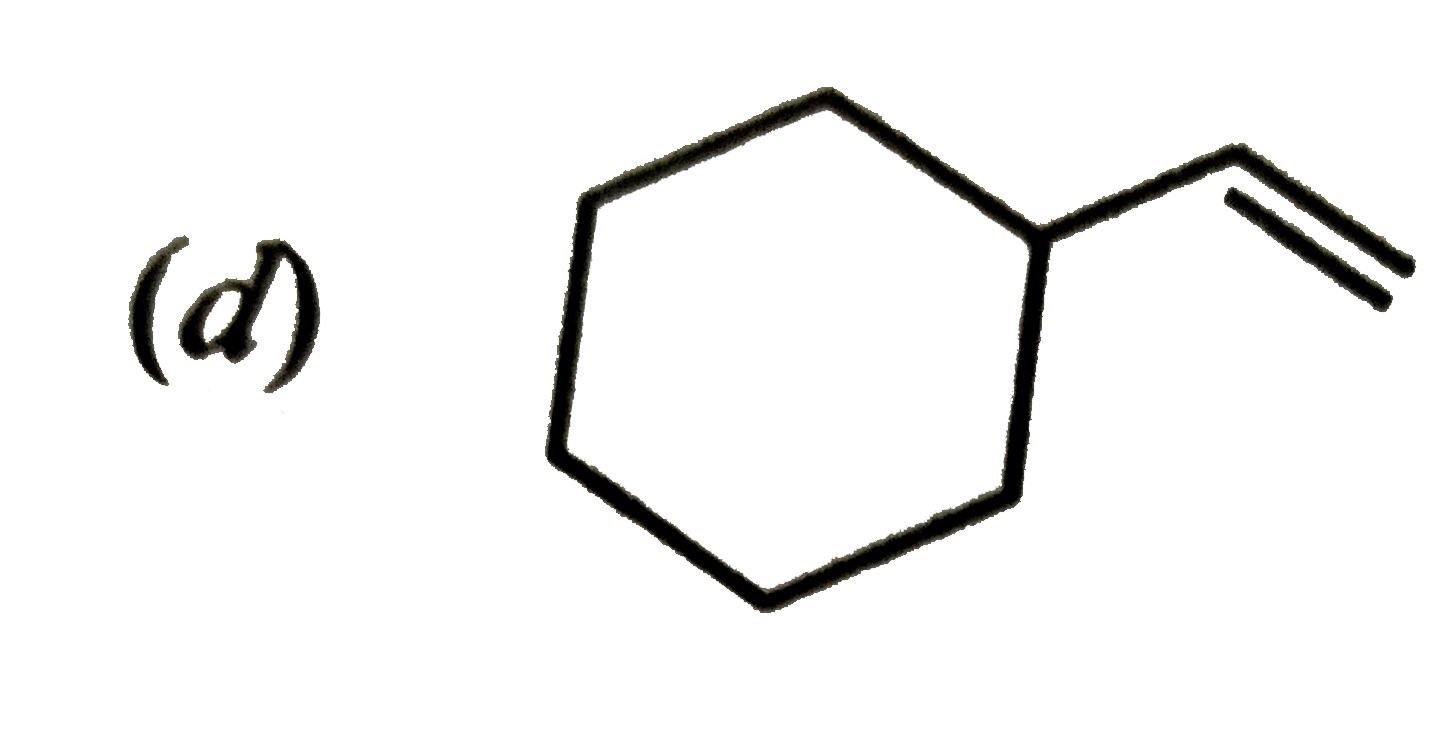
The catalytic hydrogenation of which of the following alkenes is most exothermic ?

A

B

C

D

Text Solution

AI Generated Solution

The correct Answer is:

To determine which alkene undergoes the most exothermic catalytic hydrogenation, we need to analyze the number of alpha hydrogens (α-H) present in each alkene structure. The heat of hydrogenation is inversely related to the number of α-H atoms; the fewer α-H atoms there are, the more exothermic the reaction will be. ### Step-by-Step Solution: 1. **Identify the Structures of Alkenes**: We need to look at the given options (A, B, C, D) and identify the structure of each alkene. 2. **Count the Alpha Hydrogens**: For each alkene, we will count the number of α-H atoms. The α-H atoms are the hydrogens attached to the carbon atoms that are directly involved in the double bond. - **Option A**: - Structure: R1C=C(R2) - Count: 2 α-H from one carbon and 2 α-H from the other carbon = 4 α-H total. - **Option B**: - Structure: R1C=C(R2) - Count: 3 α-H from one carbon and 2 α-H from the other carbon = 5 α-H total. - **Option C**: - Structure: R1C=C(R2) - Count: 2 α-H from one carbon and 2 α-H from the other carbon = 4 α-H total. - **Option D**: - Structure: R1C=C(R2) - Count: 1 α-H from one carbon and 0 α-H from the other carbon = 1 α-H total. 3. **Determine the Exothermicity**: The alkene with the least number of α-H atoms will have the most exothermic hydrogenation. - **Option A**: 4 α-H - **Option B**: 5 α-H - **Option C**: 4 α-H - **Option D**: 1 α-H 4. **Conclusion**: Since Option D has the least number of α-H atoms (1 α-H), it will have the most exothermic hydrogenation. ### Final Answer: The catalytic hydrogenation of the alkene in **Option D** is the most exothermic. ---

To determine which alkene undergoes the most exothermic catalytic hydrogenation, we need to analyze the number of alpha hydrogens (α-H) present in each alkene structure. The heat of hydrogenation is inversely related to the number of α-H atoms; the fewer α-H atoms there are, the more exothermic the reaction will be. ### Step-by-Step Solution: 1. **Identify the Structures of Alkenes**: We need to look at the given options (A, B, C, D) and identify the structure of each alkene. 2. **Count the Alpha Hydrogens**: ...
Promotional Banner

Topper's Solved these Questions

  • HYDROCARBONS

    PRADEEP|Exercise Competition Focus (JEE(main and advanced)/Medical Entrance) IV. MATCHING TYPE QUESTIONS|3 Videos
  • HYDROCARBONS

    PRADEEP|Exercise Competition Focus (JEE(main and advanced)/Medical Entrance) V. MATRIX-MATCH TYPE QUESTIONS|1 Videos
  • HYDROCARBONS

    PRADEEP|Exercise Competition Focus (JEE(main and advanced)/Medical Entrance) II. MULTIPLE CHOICE|14 Videos
  • EQUILIBRIUM IN PHYSICAL AND CHEMICAL PROCESSES

    PRADEEP|Exercise Competition Focus (Jee(Main and advanced)/Medical Entrance) VIII. ASSERTION - REASON TYPE QUESTIONS (TYPE - II)|10 Videos
  • HYDROGEN

    PRADEEP|Exercise COMPETITION FOCUS (Assertion-Reason Type Questions) Type 2|15 Videos

Similar Questions

Explore conceptually related problems

The relative rate of catalytic hydrogenation of the following alkenes is :

Addition of hydrogen to alkene in presence of nickel catalyst is

Phenol on hydrogenation in the presence of nickel catalyst at 160^(@)C gives

Hydrogenation of the above compound in the presence of poisoned Pd catalyst gives:

Reduction of CH_3CH_2NC with hydrogen in presence of Ni or Pt as catalyst gives

Reduction of H_(3)C-NC with hydrogen in the presence of Ni//Pt catalyst gives
