

Home
Class 12
CHEMISTRY
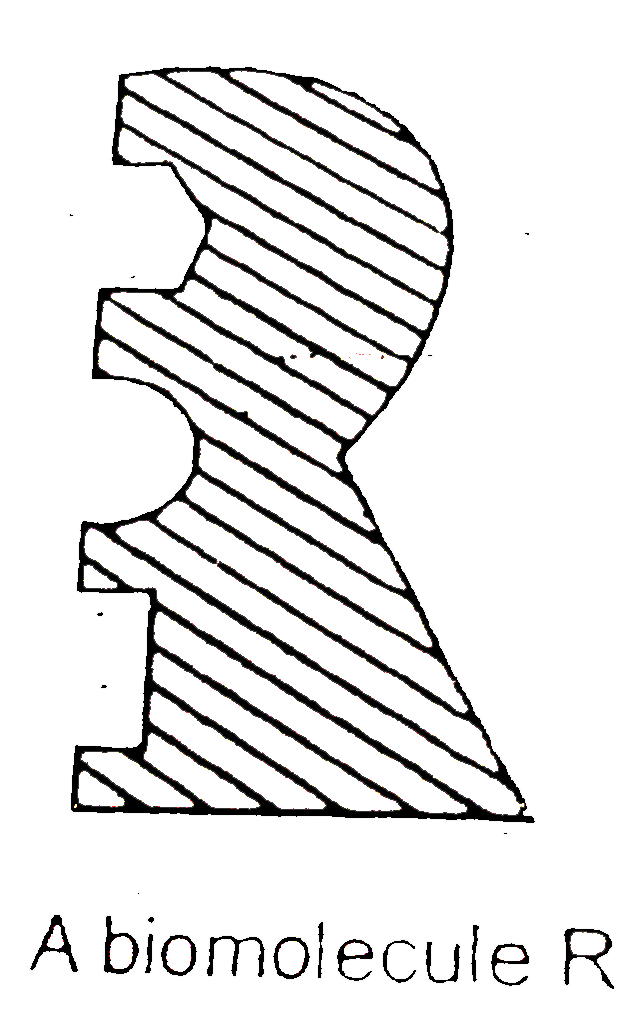
The active site of a biomolecule R is sh...

The active site of a biomolecule R is shown below

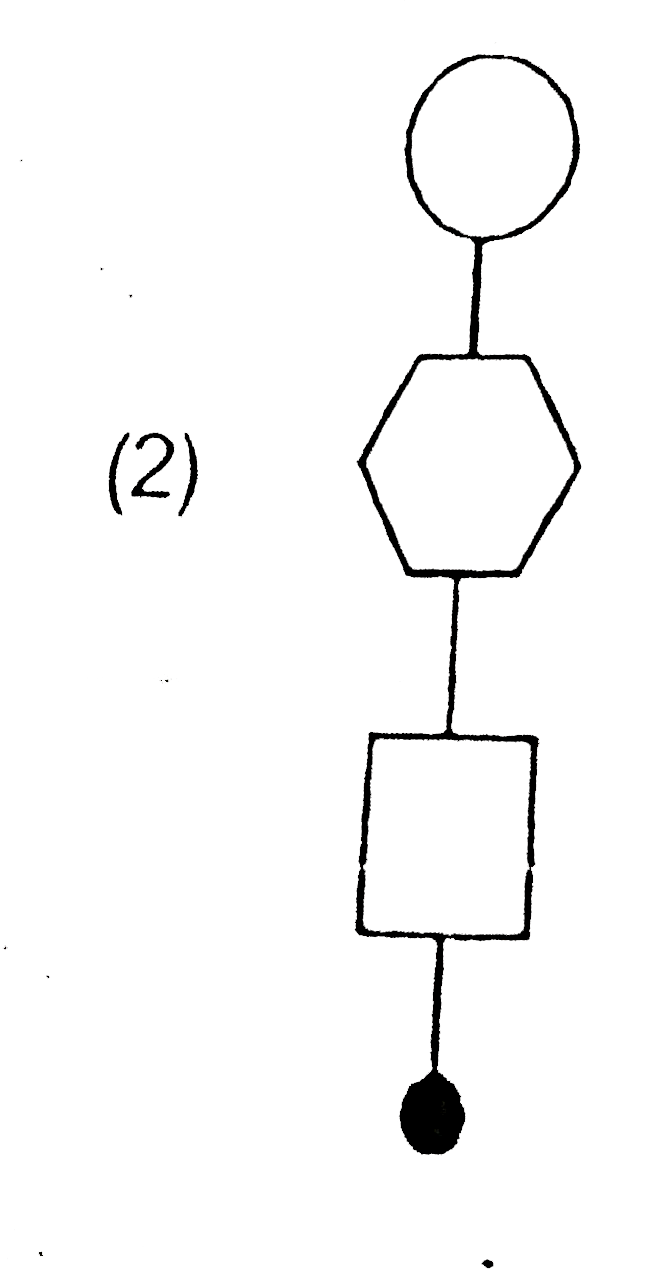
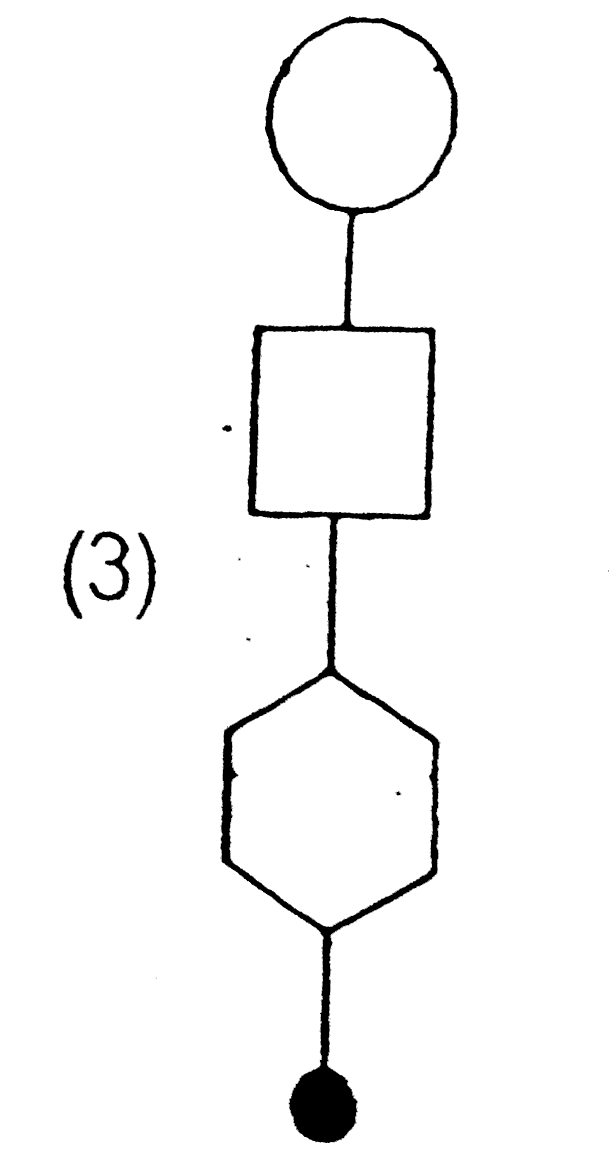
The biomolecule R binds to a tripeptide because its binding site is complementry to that of tripeptide. The shape of the tripeptide would be
Note : Complimentarity in the figure is shown by shape

A

B

C

D

Text Solution

Verified by Experts

The correct Answer is:

D
Promotional Banner

Topper's Solved these Questions

  • BIOMOLECULES

    AAKASH INSTITUTE|Exercise (TRY YOURSELF)|17 Videos
  • BIOMOLECULES

    AAKASH INSTITUTE|Exercise EXERCISE|24 Videos
  • BIOMOLECULES

    AAKASH INSTITUTE|Exercise Section-I (Subjective type Questions)|6 Videos
  • AMINES

    AAKASH INSTITUTE|Exercise Assignment Section -J (Aakash Challengers Questions)|9 Videos
  • CHEMICAL BONDING AND MOLECULAR STRUCTURE

    AAKASH INSTITUTE|Exercise Assignment Section J (Aakash Challengers Questions)|10 Videos

Similar Questions

Explore conceptually related problems

Drugs bind to the allosteric site then I.It does not change the shape of active site II.It changes the shape of active site Choose the correct option

Arrange the steps of catalytic action of an enzyme in order an choose the right option (A) The enzyme releases the products of the reaction and the enzyme is free to bind to another substrate (B) The active site of enzyme is in close proximity of the substrate and breaks the chemical bonds of the substrate (C) The binding of substrate induces the enzyme to alter its shape fitting more tightly around the substrate (D) The substrate binds to the active site of the enzyme fitting into the active site

Arrange the steps of catalytic action of an enzyme in order and select the correct option I. The enzyme releases the products of the reaction and the enzyme is free to bind to another substrate II. The active site of enzyme is in close proximity of the substrate and breaks the chemical bonds of the substrate III. The binding of substrate induces the enzyme to alter its shape fitting more tightly around substrate. VI. The substrate binds to the active site of the enzyme

Which of the following statement are incorrect about receptor proteins? I.Majority of receptor proteins are embedded in the cell membranes II.The active site of receptor proteins opens on the inside region of the cell III.Chemical messengers are received at the binding sites of receptor proteins IV.Shape of receptor does not change during attachment of messenger choose the option with all incorrect statements

A uniform cylinder of radius r and mass m can rotate freely about a fixed horizontal axis. A thin cord of length l and mass m_(0) is would on the cylinder in a single layer. Find the angular acceleration of the cylinder as a function of the length x of the hanging part of the end. the wound part of the cord is supposed to have its centre of gravity on the cylinder axis is shown in figure.

A fixed thermally conducting cylinder has a radius R and height L_0 . The cylinder is open at ita bottom and has a small hole at its top. A piston of mass M is held at a distance L from the top surface, as shown in the figure. The atmospheric pressure is P_0 . The piston is taken completely out of the cylinder. The hole at the top is sealed. A water tank is brought below the cylinder and put in a position so that the water surface in the tank is at the same level as the top of the cylinder as shown in the figure. The density of the water is rho . In equilibrium, the height H of the water coulmn in the cylinder satisfies

The following features occur during protein synthesis: (a) Movement of mRNA from the nucleus into the cytoplasm, where it binds to the ribosomes (b) Formation of tRNA-amino acid complex (c) Transcription of specific segments of DNA into mRNA molecules in the nucleus (d) Binding of N-terminal amino acid, methionine tRNA to the 'P' site of the ribosome. The tRNA anticodon 'pairs with AUG on mRNA' (e) Formation of peptide bond between first and second amino acids at the A site (f) Release of the complete polypeptide chain from mRNA and the ribosomes (g) Migration of dipeptide to form a tripeptide and then a polypeptide The correct order of events is:
