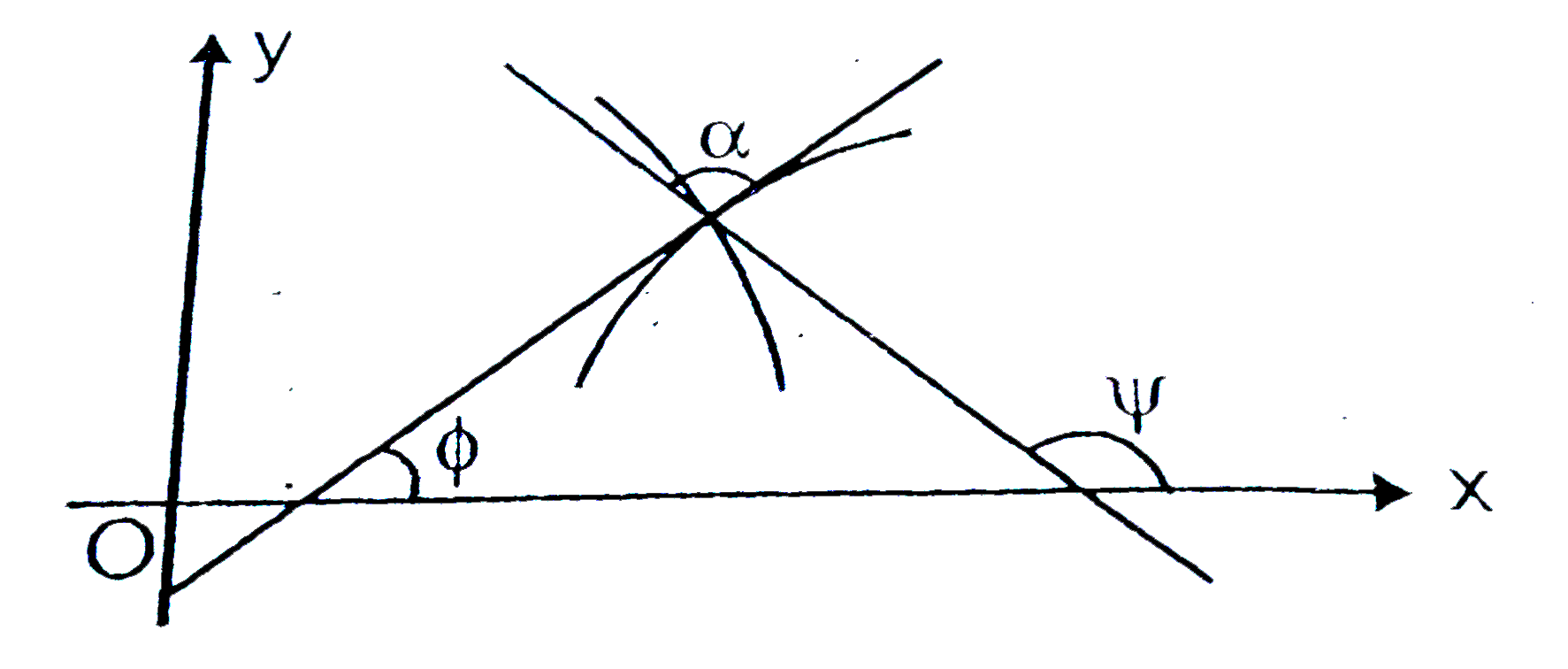
A
B
C
D
Text Solution
Verified by Experts
The correct Answer is:



Topper's Solved these Questions
DIFFERENTIAL EQUATIONS
AAKASH INSTITUTE|Exercise Assignment Section - E (Assertion - Reason Type Questions)|10 VideosDIFFERENTIAL EQUATIONS
AAKASH INSTITUTE|Exercise Assignment Section-G (Integer Answer Type Questions)|3 VideosDIFFERENTIAL EQUATIONS
AAKASH INSTITUTE|Exercise Assignment Section - C (Objective Type Questions) (Multiple than one options are correct)|17 VideosDETERMINANTS
AAKASH INSTITUTE|Exercise SECTION - J|12 VideosINTEGRALS
AAKASH INSTITUTE|Exercise Try yourself|50 Videos
Similar Questions
Explore conceptually related problems
AAKASH INSTITUTE-DIFFERENTIAL EQUATIONS-Assignment Section - D (Linked Comprehension Type Questions))
- Newton's law of cooling states that the rate of change of the temperat...
Text Solution
|
- Newton's law of cooling states that the rate of change of the temperat...
Text Solution
|
- Newton's law of cooling states that the rate of change of the temperat...
Text Solution
|
- Let the trajectories cut the crve of given family at an angle alpha wh...
Text Solution
|
- A family of curves is such that the slope of normal at any point (x, y...
Text Solution
|
- A family of curves is such that the slope of normal at any point (x, y...
Text Solution
|
- A family of curves is such that the slope of normal at any point (x, y...
Text Solution
|
- A tangent to a curve at P(x, y) intersects x-axis and y-axis at A and ...
Text Solution
|
- A tangent to a curve at P(x, y) intersects x-axis and y-axis at A and ...
Text Solution
|
- A tangent to a curve at P(x, y) intersects x-axis and y-axis at A and ...
Text Solution
|