

Home
Class 11
PHYSICS
A body is performing simple harmonic mot...

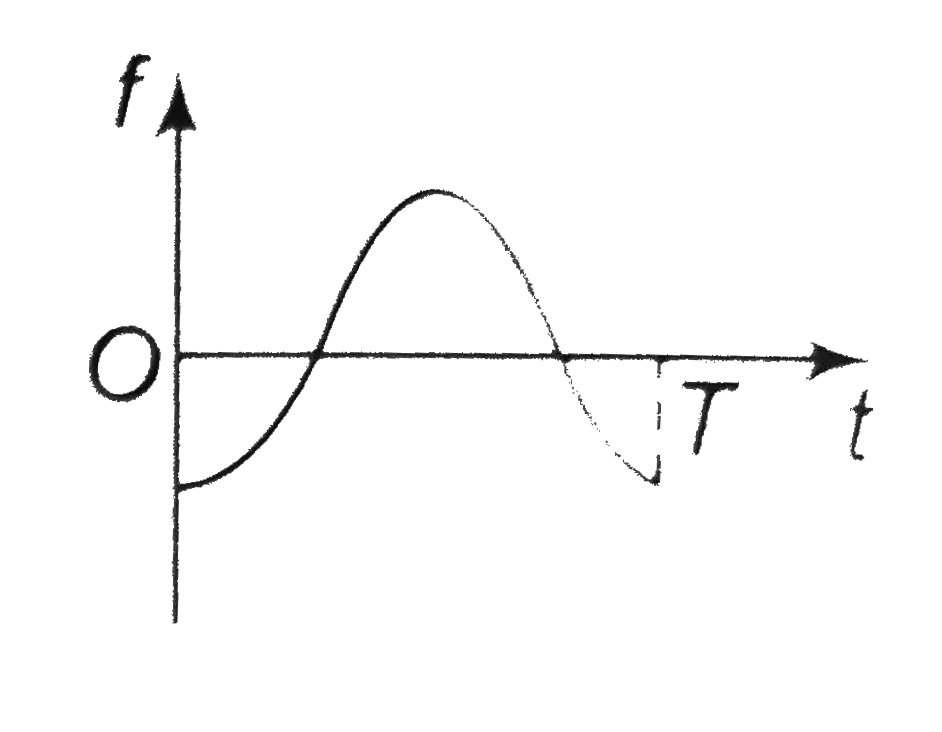
A body is performing simple harmonic motion with apmlitude a and line period `T` varation of its acceleration `(f)` with time`(t)` is shown in figure If a line `x` velocity of the body is `x` which of the following graph is correct?

Promotional Banner

Similar Questions

Explore conceptually related problems

A body is performing simple harmonic motion with amplitude A and time period T variation of its acceleration (f) with time (t) is shown in figure If a line x velocity of the body is x which of the following graph is correct?

A body is performing simple harmonic motion with amplitude a and time period T variation of its acceleration (f) with time (t) is shown in figure If at time t velocity of the body is v which of the following graph is correct?

A body is performing simple harmonic motion with amplitude a and time period T variation of its acceleration (f) with time (t) is shown in figure If at time t velocity of the body is v which of the following graph is correct?

A body is performing simple harmonic motion. Then its

A body is performing simple harmonic motion of amplitude A and time period T. The figure shown position-time graph of the body . At any time t, acceleration of the body is f, then which of the following graphs is/are appropriate?

A body is performing simple harmonic motion of amplitude A and time period T. The figure shown position-time graph of the body . At any time t, acceleration of the body is f, then which of the following graphs is/are appropriate?

A simple harmonic motion of amplitude A has a time period T. The acceleration of the oscillator when its displacement is half the amplitude is

A particle performs simple harmonic motion about O with amolitude A and time period T . The magnitude of its acceleration at t=(T)/(8) s after the particle reaches the extreme position would be

A particle performs simple harmonic motion about O with amolitude A and time period T . The magnitude of its acceleration at t=(T)/(8) s after the particle reaches the extreme position would be