

Home
Class 11
PHYSICS
A ring consisting of two parts ADB and A...

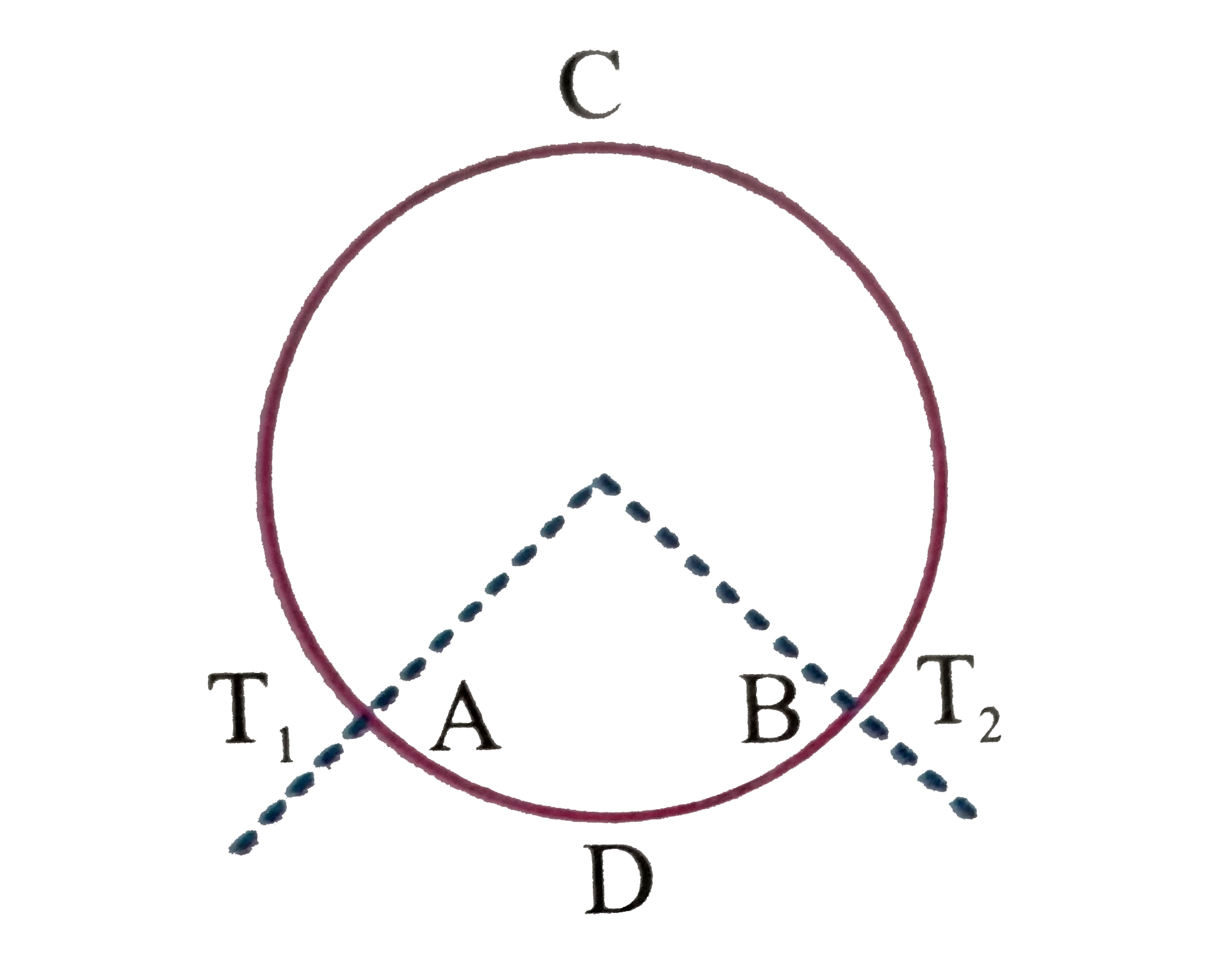
A ring consisting of two parts `ADB` and `ACB` of same conductivity k carries an amount of heat `H` The `ADB` part is now replaced with another metal keeping the temperature `T_91)` and `T_(2)` constant The heat carried increases to `2H` What should be the conductivity of the new `ADB` Given `(ACB)/(ADB)=3`
.

Promotional Banner

Similar Questions

Explore conceptually related problems

Consider two rods of same length and different specific heats ( S_1 and S_2 ), conductivities K_1 and K_2 and area of cross section ( A_1 and A_2 ) and both having temperature T_1 and T_2 at their ends. If the rate of heat loss due to conduction is equal then

Consider two rods of same length and different specific heats ( S_1 and S_2 ), conductivities K_1 and K_2 and area of cross section ( A_1 and A_2 ) and both having temperature T_1 and T_2 at their ends. If the rate of heat loss due to conduction is equal then

A rod of length l and cross sectional area A has a variable conductivity given by K=alphaT , where alpha is a positive constant T is temperatures in Kelvin. Two ends of the rod are maintained at temperatures T_1 and T_2(T_1gtT_2) . Heat current flowing through the rod will be

A rod of length l and cross sectional area A has a variable conductivity given by K=alphaT , where alpha is a positive constant T is temperatures in Kelvin. Two ends of the rod are maintained at temperatures T_1 and T_2(T_1gtT_2) . Heat current flowing through the rod will be

A rod of length l and cross-section area A has a variable thermal conductivity given by K = alpha T, where alpha is a positive constant and T is temperature in kelvin. Two ends of the rod are maintained at temperature T_(1) and T_(2) (T_(1)gtT_(2)) . Heat current flowing through the rod will be

A rod of length l and cross-section area A has a variable thermal conductivity given by K = alpha T, where alpha is a positive constant and T is temperature in kelvin. Two ends of the rod are maintained at temperature T_(1) and T_(2) (T_(1)gtT_(2)) . Heat current flowing through the rod will be

A rod of length l with thermally insulated lateral surface consists of material whose heat conductivity coefficient varies with temperature as k= a//T , where a is a constant. The ends of the rod are kept at temperatures T_1 and T_2 . Find the function T(x), where x is the distance from the end whose temperature is T_1 .

A rod of length l with thermally insulated lateral surface consists of material whose heat conductivity coefficient varies with temperature as k= a//T , where a is a constant. The ends of the rod are kept at temperatures T_1 and T_2 . Find the function T(x), where x is the distance from the end whose temperature is T_1 .