Home
Class 12
MATHS
Prove that function given by f(x)=sin x ...

Prove that function given by f(x)=sin x is
(i) Strictly increasing in `(-(pi)/(2),(pi)/(2))`
(ii) Strictly decreasing in `((pi)/(2),(3pi)/(2))`

Text Solution

Verified by Experts
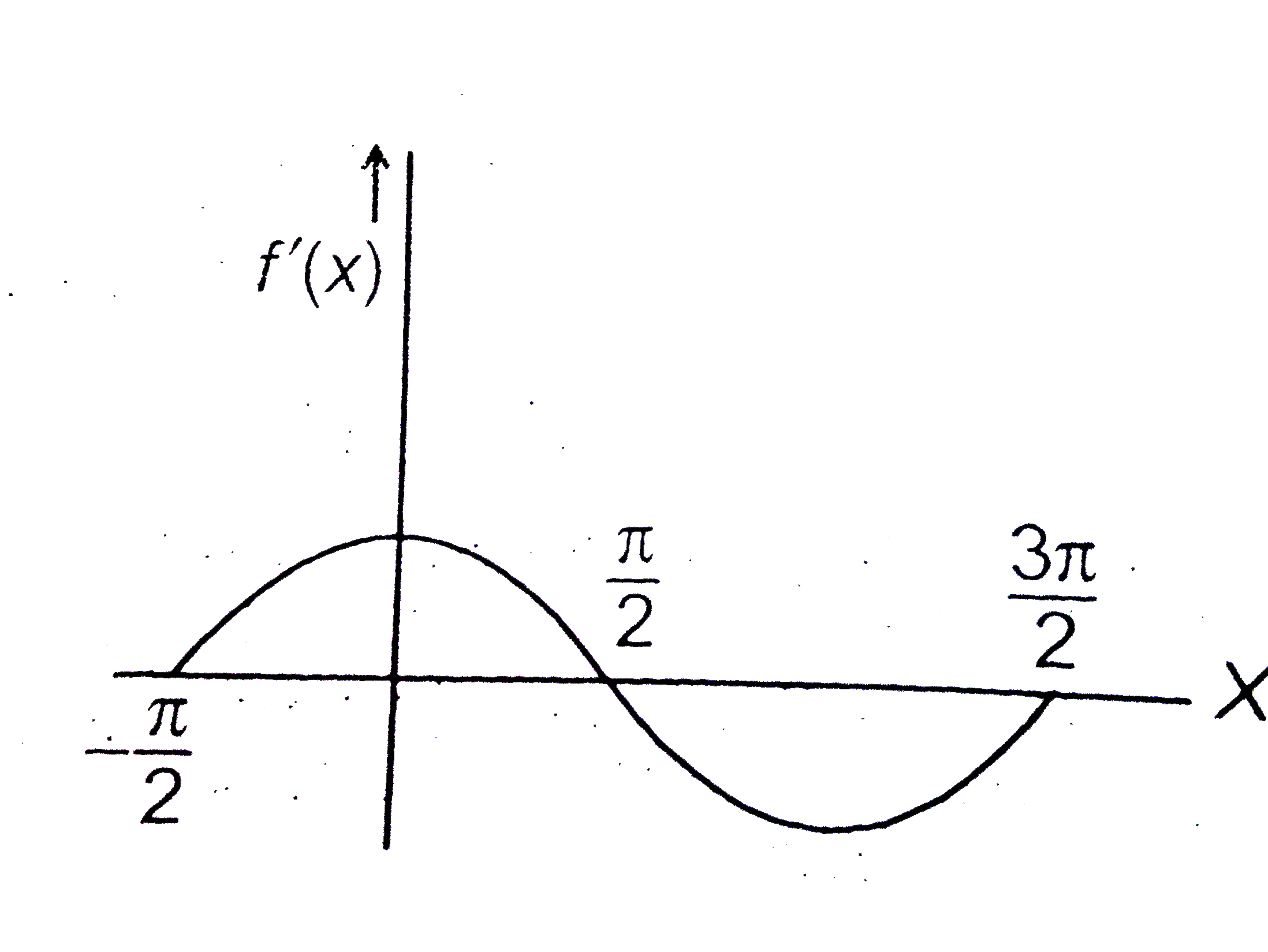
`f(x)=sinx `
then , `f'(x)=cos x `
(i) For each ` x in (-(pi)/(2),(pi)/(2))`
`cos x gt 0`
So, `f'(x) gt 0`
f(x) is strictly increasing in `(-(pi)/(2),(pi)/(2))`

(ii) For each ` x in ((pi)/(2),(3pi)/(2))`
`cos x lt 0`
So, `f'(x) lt 0`
f(x) is strictlyu decreasing in ` x in ((pi)/(2),(3pi)/(2))`
Promotional Banner

Topper's Solved these Questions

  • APPLICATION OF DERIVATIVES

    AAKASH INSTITUTE|Exercise TRY YOURSELF|39 Videos
  • APPLICATION OF DERIVATIVES

    AAKASH INSTITUTE|Exercise Assignment SECTION-A (Competition Level Questions)|50 Videos
  • APPLICATION OF INTEGRALS

    AAKASH INSTITUTE|Exercise Assignment Section - I Aakash Challengers Questions|2 Videos

Similar Questions

Explore conceptually related problems

Prove that the function 'f' given by f(x)=logsinx is strictly increasing on (0, (pi)/(2)) .

Show that the fucntion given by f(x) = sinx is : (a) strictly increasing in (0,(pi)/(2)) (b) strictly decreasing in ((pi)/(2),pi) (c ) neither increasing nor decreasing in (0, pi) .

Prove that the function f given by f(x)=log cos x is strictly decreasing on (0, (pi)/(2)) .

Prove that the function f given by f(x)=log(cos x) is strictly increasing on (-(pi)/(2),0) and strictly decreasing on (0,(pi)/(2))

Prove that the function f given by f(x)=log sin,xf(x)=log sinquad x is strictly increasing on (0,(pi)/(2)) and strictly decreasing on ((pi)/(2),pi)

Prove that the function f given by f(x)=log cos x is strictly increasing on (-pi/2,0) and strictly decreasing on (0,pi/2)

Prove that the function f(x)=cos x is strictly increasing in (pi,2 pi)

Prove that the function given by f(x)=2x^(3)-6x^(2)+7x is strictly increasing in R.

show that the function f(x)=sin x is strictly increasing in (0,(pi)/(2)) strictly decreasing in ((pi)/(2),pi)

Show that the function given by f (x) = sinx is (a) strictly increasing in (0,pi/2) (b) strictly decreasing in (pi/2,pi) (c) neither increasing nor decreasing in (0, pi)

