

Home
Class 11
PHYSICS
A board is moving with velocity v on a s...


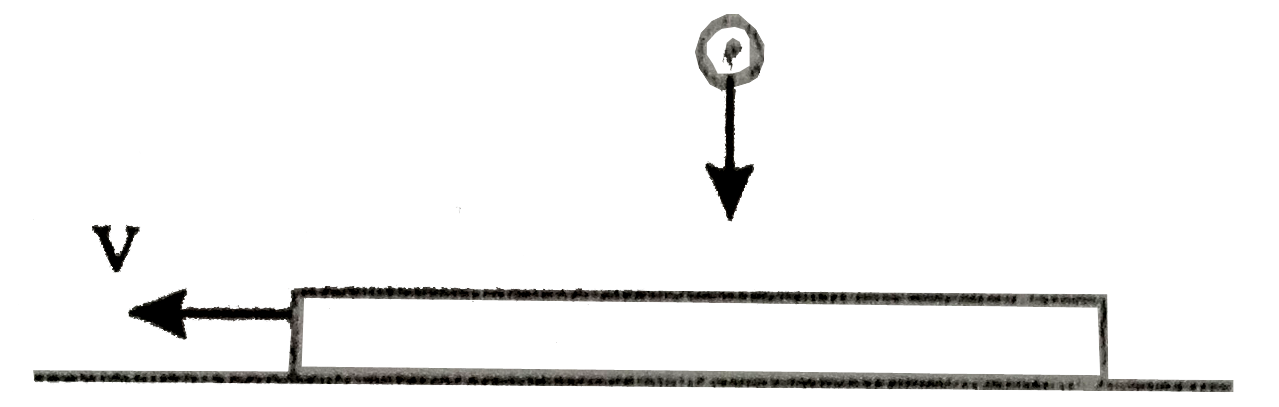
A board is moving with velocity `v` on a smoother horizontal plane. The upper surface of the board is rough on which a ball falls with velocity `v` and rebounds with velocity `(v)/(2)`. The mass of the board is same as that of ball. After the collision, the board comes to state of rest. The co-efficient of friction between the board and the ball is

Promotional Banner

Similar Questions

Explore conceptually related problems

A rough vertical board has an acceleration a so that a 2 kg block pressing against it dows not fall. The coefficient of friction between the block and the board should be

A rough vertical board has an acceleration a so that a 2 kg block pressing against it dows not fall. The coefficient of friction between the block and the board should be

A rough vertical board has an acceleration a so that a 2 kg block pressing against it dows not fall. The coefficient of friction between the block and the board should be

A rough vertical board has an acceleration a so that a 2 kg block pressing against it dows not fall. The coefficient of friction between the block and the board should be

A billiard ball of mass M , moving with velocity v_1 collides with another ball of the same mass but at rest . If the collision is elastic , the angle of divergence after the collision is

A ball of mass 1kg moving with a velocity of 15m // s undergoes a head on elastic collision with another ball of unknown mass at rest, and rebound with a velocity of 10m//s . What is the mass of the other ball?

A ball moving with velocity u strikes a smooth horizontal floor at an angle alpha with the normal to the surface at the point of contact . After collision , ball moves with velocity v at an angle beta with the normal . Assume e as the coefficient of restitution .

A ball of mass m moving with a velocity v undergoes an oblique elastic collision with another ball of the same mass m but at rest. After the collision if the two balls move with the same speeds , the angle between their directions of motion will be: