

Home
Class 12
PHYSICS
Two point sources X and Y emit waves of ...

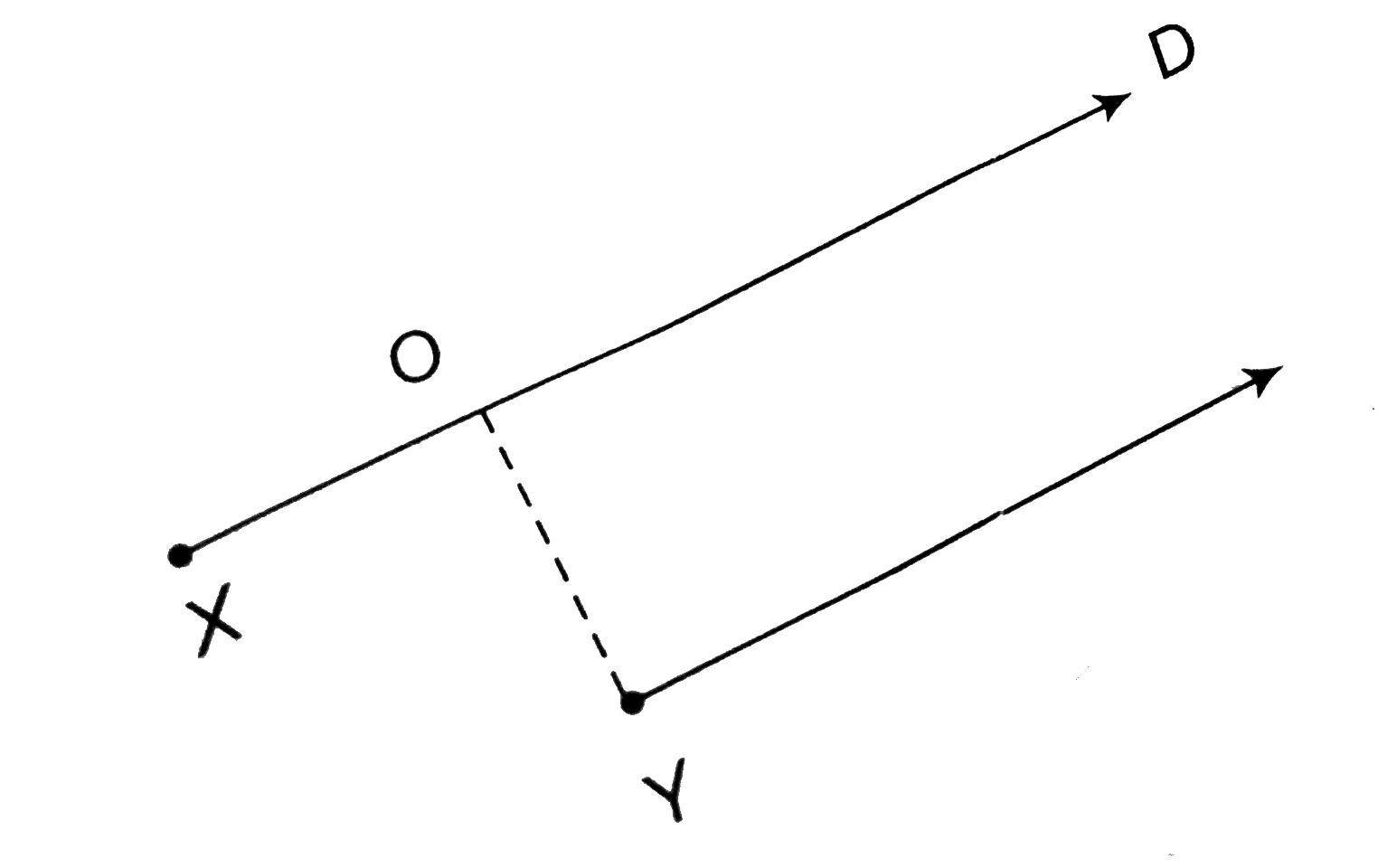
Two point sources X and Y emit waves of same frequency and speed but Y lags in phase behind X by `2 pid` radian. If there is a maximum in direction D, the distance XO using n as an integer is given by

Promotional Banner

Similar Questions

Explore conceptually related problems

Two point sources X and Y emit waves of same frequency and speed but Y lags in phase behind X by 2pi//radian . If there is a maximum in direction D the distance XO using n as an integer is given by

Two point sources X and Y emit waves of same frequency and speed but Y lags in phase behind X by 2pi//radian . If there is a maximum in direction D the distance XO using n as an integer is given by

When two waves of the same amplitude and frequency but having a phase difference of phi , travelling with the same speed in the same direction (positive x), interfere, then

When two waves of the same amplitude and frequency but having a phase difference of phi , travelling with the same speed in the same direction (positive x), interfere, then

Two sinusoidal plane waves of same frequency having intensities I_(0) and 4I_(0) are travelling in the same direction. The resultant intensity at a point at which waves meet with a phase difference of zero radian is

Consider two sources A and B as shown in the figure below . Let the two sources emit simple harmonic waves of same frequency but of different amplitudes , and both are in phase (same phase) . Let O be any point equidistant from A and B as shown in the figure . Calculate the intensity at points O , Y and X . ( X and Y are not equidistant from A & B)

The phase difference between the two light waves arriving point is 2n pi radians. The condition for maximum intensity of light at that point is

Two sinusoidal wave having the same frequency and travelling in the same direction are combined. What is the amplitude of the resultant motion if their amplitudes are 3cm and 4cm and they differ in phase by pi//2 radian?