

Home
Class 11
PHYSICS
A particle slides with a speed of 3m s^(...

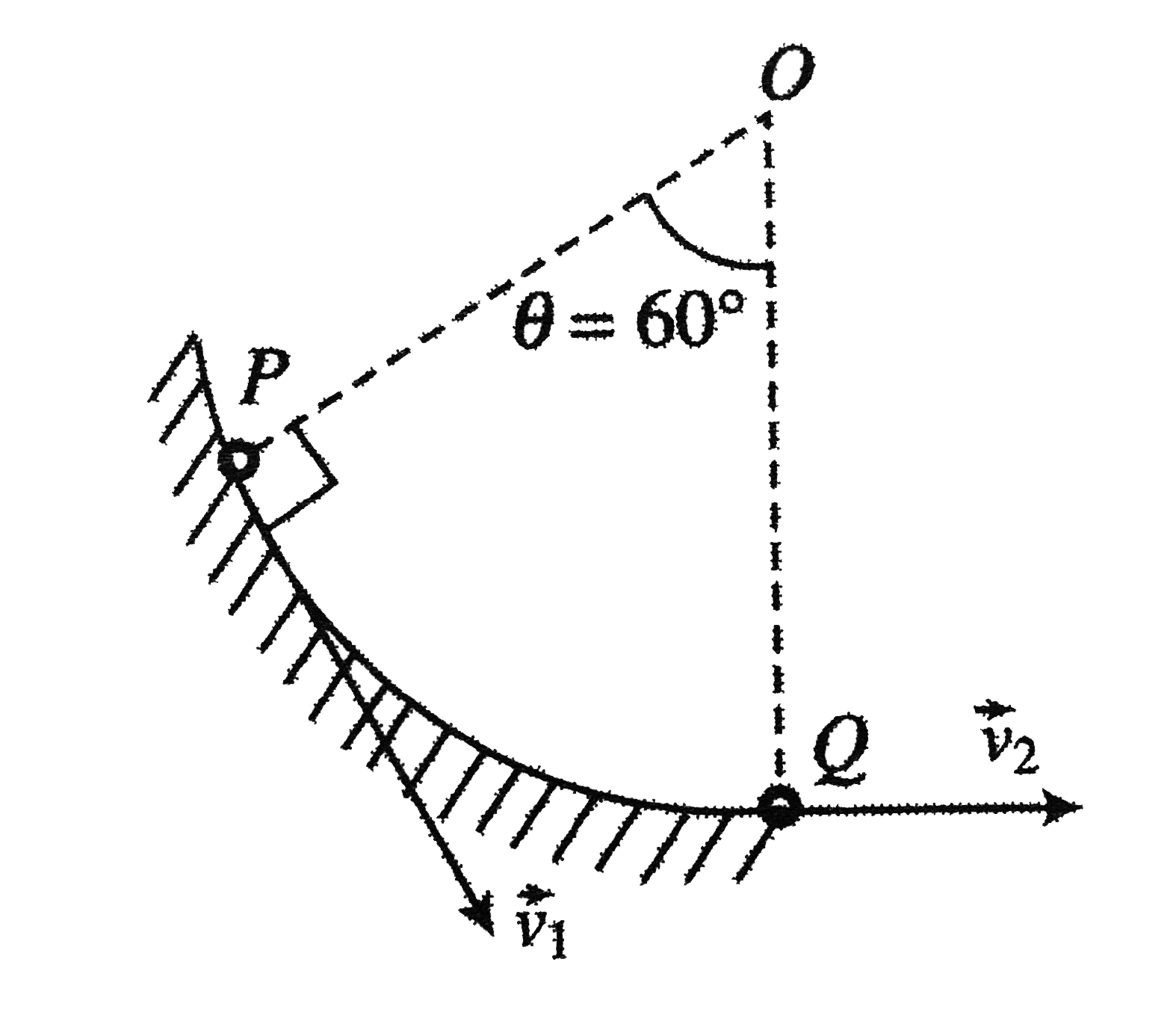
A particle slides with a speed of `3m s^(-1)` at P. When it reaches `Q`,it acquires a speed of `4m s^(-1)` after describing an angle of `60^(@)` at `O` as shown in figure .Find the changes in the velocity of the particle between `P` and `Q`. Assume that the path followed by the particle is circular from `P` to `Q`

Promotional Banner

Similar Questions

Explore conceptually related problems

Find the horizontal velocity of the particle when it reach the point Q. Assume the block to be frictionless. Take g=9.8 m//s^(2) .

Find the horizontal velocity of the particle when it reach the point Q. Assume the block to be frictionless. Take g=9.8 m//s^(2) .

A particle P is moving along a straight line with a velocity of 3ms^(-1) and another particle Q has a velocity of 4ms^(-1) at an angle of 30^(@) to the path of P. Find the speed of Q relative to P.

A particle describing circular motion as shown in figure. The velocity of particle in m s is-

A particle is moving on a circular path with constant speed v then the change in its velocity after it has described an angle of 60^(@) will be

A particle is moving on a circular path with constant speed v then the change in its velocity after it has desceibed an angle of 60^(@) will be

A particle is moving in a circle of radius r with speed v as shown in the figure. The magnitude of change in velocity in moving from P to Q is

A particle is moving in a circle of radius r with speed v as shown in the figure. The magnitude of change in velocity in moving from P to Q is

A particle is moving in a circle of radius r with speed v as shown in the figure. The magnitude of change in velocity in moving from P to Q is

A particle is moving in a circle of radius r with speed v as shown in the figure. The magnitude of change in velocity in moving from P to Q is