

Home
Class 11
PHYSICS
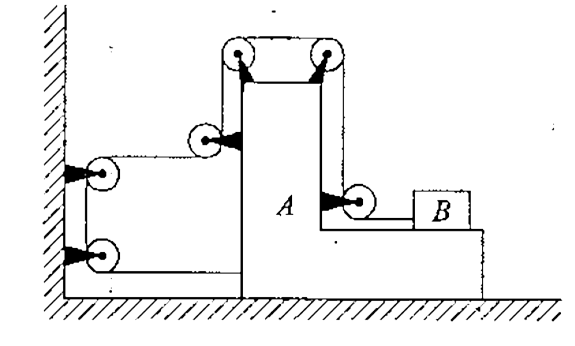
Figure-2.202 shows a two block constrain...

Figure-2.202 shows a two block constrained motion system. Block A has a mass M and B has a mass m. If block A is pulled toward right horizontally with an external force F, find the acceleration of the block B relative to ground.

Promotional Banner

Similar Questions

Explore conceptually related problems

Figure shows a block A constrained to slide along the inclined plane of the wedge B shown. Block A is attached with a string which passes through three ideal pulleys and connected to the wedge B. If wedge is pulled toward right with an acceleration a, find (a) the acceleration of the block with respect to wedge (b) the acceleration of the block with respect to ground.

Figure shows a block A constrained to slide along the inclined plane of the wedge B shown. Block A is attached with a string which passes through three ideal pulleys and connected to the wedge B. If wedge is pulled toward right with an acceleration a, find (a) the acceleration of the block with respect to wedge (b) the acceleration of the block with respect to ground.

In the system shown in the figure, all surfaces are smooth. Block A and B have mass m each and mass of block C is 2 m. All pulleys are massless and fixed to block C. Strings are light and the force F applied at the free end of the string is horizontal. Find the acceleration of all three blocks.

Figure shows a block of mass 2m sliding on a block of mass m. Find the acceleration of each block . ( All surface are smoth )

Figure shows a block of mass 2m sliding on a block of mass m. Find the acceleration of each block . ( All surface are smooth )

Figure 5-20 shows a block S (the sliding block) with mass M = 3.3 kg. The block is free to move along a horizontal frictionless surface and connected, by a cord that wraps over a frictionless pulley, to a second block H (the hanging block), with mass m = 2.1 kg. The cord and pulley have negligible masses compared to the blocks (they are "massless"). The hanging block H falls as the sliding block S accelerates to the right. Find (a) the acceleration of block S, (b) the acceleration of block H, and ( c ) the tension in the cord. Figure 5.20 A block S of mass M is connected to a block H of mass m by a cord that wraps over a pulley.

A small block B of mass m_2 is placed on another block A of mass m_1 A constant horizontal force F is applied to the block A. All the surfaces are assumed to be frictionless. Find the acceleration of center of mass of the system

Two blocks of masses m and M are placed on a horizontal frictionless table connected by light spring as shown in figure. The Mass M is pulled to the right with a force F It the acceleration of mass m is a then the acceleration of M will be .

Find the acceleration of block B as shown in fig. (a) and (b) relative to block A and relative to ground if block A is moving toward right with acceleration a.