

Home
Class 12
PHYSICS
The actual value of resistance R, shown ...

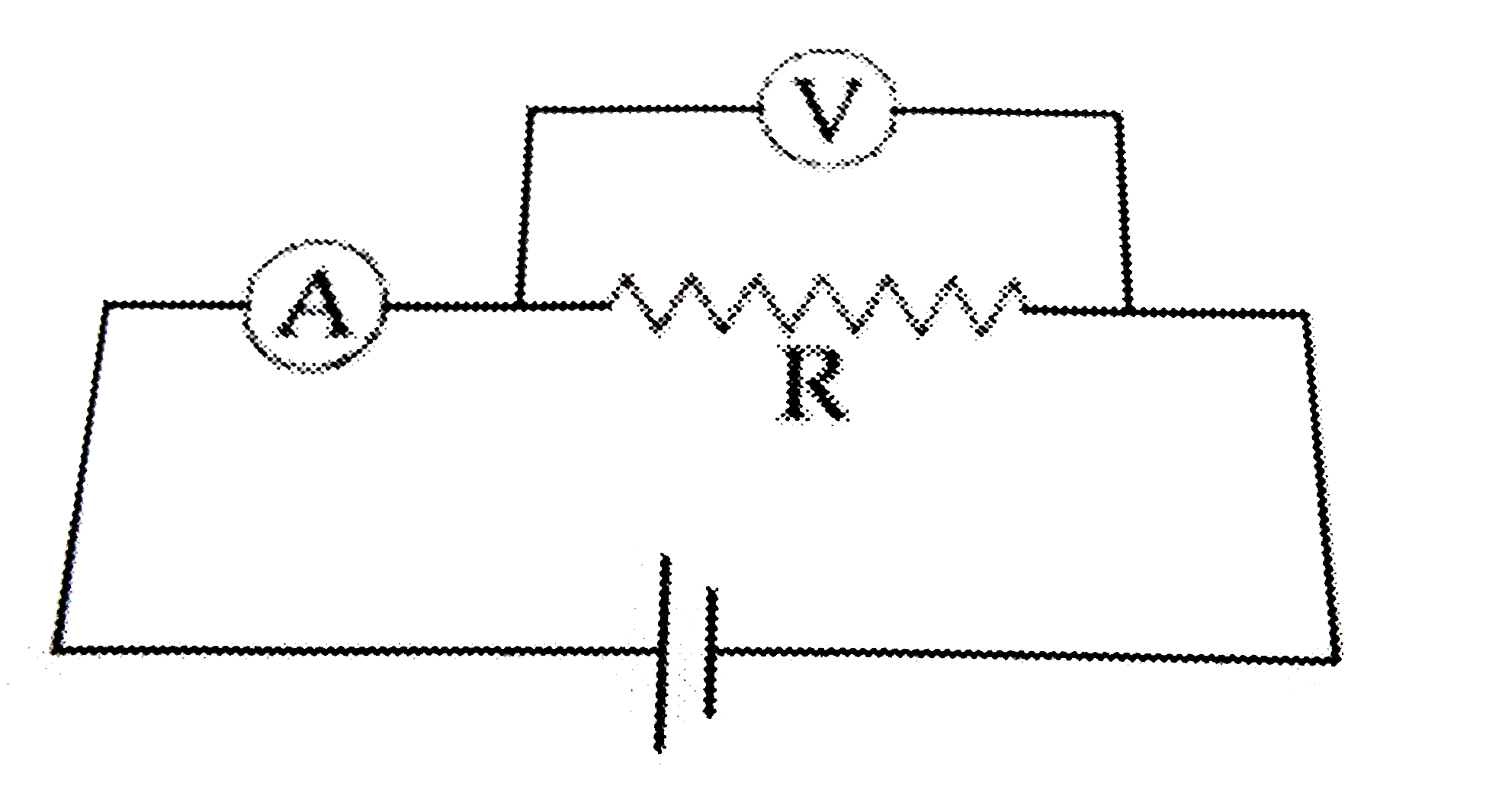
The actual value of resistance R, shown in the figure is `30 Omega`. This is measured in an experiment as shown using the standard formula `R = (V)/(I)`, where V and I are the readings of the voltmeter and ammeter, respectively. If the measured value of R is 5% less, then the internal resistance of the voltmeter is

Promotional Banner

Similar Questions

Explore conceptually related problems

For the adjoining circuit diagram, the readings of ammeter and voltmeter are 2A and 120 V respectively. If the value of R is 75 Omega , then the voltmeter resistance will be

In the adjoining circuit diagram, the readings of ammeter and voltmeter are 2 A and 120 V, respectively. If the value of R is 75Omega , then the voltmeter resistance will be

In the adjoining circuit diagram, the readings of ammeter and voltmeter are 2 A and 120 V, respectively. If the value of R is 75Omega , then the voltmeter resistance will be

Let V and I be the readings of the voltmeter and the ammeter respectively as shown in the figure. Let R_(V) " and "R_(A) be their corresponding resistancce Therefore,

Let V and I be the readings of the voltmeter and the ammeter respectively as shown in the figure. Let R_(V) " and "R_(A) be their corresponding resistancce Therefore,

The value of resistance of an unknown resistor is calculated using the formula R = V//I where V and I are the readings of the voltmeter and the ammeter, respectivley. Consider the circuits below. The internal resistances of the voltmeter and the ammeter (R_V and R_G, respectively) are finite and nonzero. , Let R_(A) and R_(B) be the calculated values in the two cases A and B , respectively. If the resistance of voltmeter is R_(V) = 1k Omega and the percentage error in the measurement of R (the value of R is nearly 10 Omega )is

The value of resistance of an unknown resistor is calculated using the formula R = V//I where V and I are the readings of the voltmeter and the ammeter, respectivley. Consider the circuits below. The internal resistances of the voltmeter and the ammeter (R_V and R_G, respectively) are finite and nonzero. , Let R_(A) and R_(B) be the calculated values in the two cases A and B , respectively. If the resistance of voltmeter is R_(V) = 1k Omega and the percentage error in the measurement of R (the value of R is nearly 10 Omega )is

The value of resistance of an unknown resistor is calculated using the formula R = V//I where V and I are the readings of the voltmeter and the ammeter, respectivley. Consider the circuits below. The internal resistances of the voltmeter and the ammeter (R_V and R_G, respectively) are finite and nonzero. , Let R_(A) and R_(B) be the calculated values in the two cases A and B , respectively. The relation between R_A and the actual value of R is

Determine the resistance r if an ammeter shows a current of I = 5 A and a voltmeter 100 V . The internal resistance of the voltmeter is R=2,500Omega

Determine the resistance r if an ammeter shows a current of I = 5 A and a voltmeter 100 V . The internal resistance of the voltmeter is R=2,500Omega