

Home
Class 12
PHYSICS
Two bodies of masses 2kg and 3kg are con...

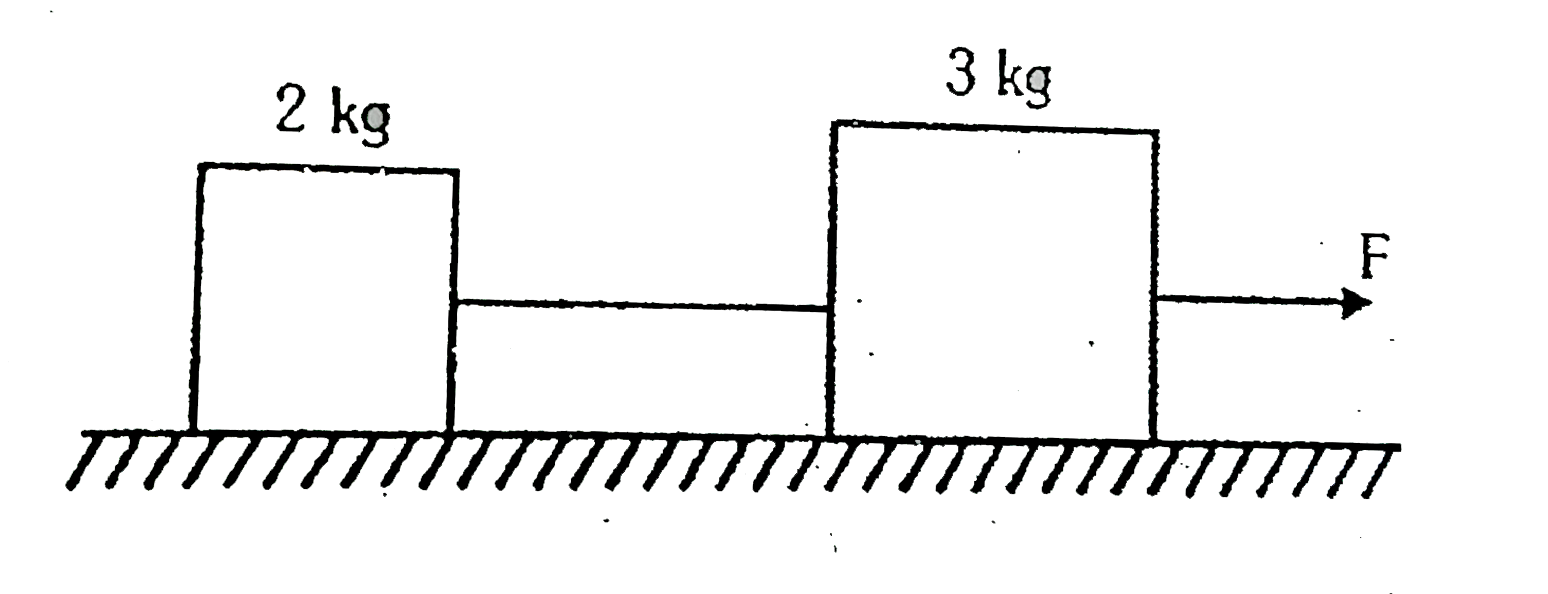
Two bodies of masses 2kg and 3kg are connected by a metel wire of cross section 0.04 `mm^(2)`. Breaking stress of metel wire is 2.5 Gpa. The maximum force F that can be applied to 3kg block so that wire does not break is :

Promotional Banner

Similar Questions

Explore conceptually related problems

Two bodies of masses 2 kg and 3 kg are connected by a metal wire of cross-section 0.04 mm^(2) and are placed on a frictionless horizontal surface. Breaking stress of metal wire is 2.5 Gpa. The maximum force F that can be applied to 3kg block so that wire does not break is

Two bodies of masses 2 kg and 3 kg are connected by a metal wire of cross-section 0.04 mm^(2) and are placed on a frictionless horizontal surface. Breaking stress of metal wire is 2.5 Gpa. The maximum force F that can be applied to 3kg block so that wire does not break is

A 20kg" load is suspended by a wire of cross section 0.4mm^(2).The stress produced in N/m ' is

A 20kg load is suspended by a wire of cross section 0.4mm^(2) . The stress produced in N//m^(2) is

Two blocks of masses 2 kg and 3kg are connected by a metal wire going over a smoother pulley as shown in figure. The breaking stress of the steel is 2xx10^(9)Nm^(-2) . What would be the minimum radius of the wire used if it not to break ? Take , g=10 ms^(-2)

Two blocks of masses 2 kg and 3kg are connected by a metal wire going over a smoother pulley as shown in figure. The breaking stress of the steel is 2xx10^(9)Nm^(-2) . What would be the minimum radius of the wire used if it not to break ? Take , g=10 ms^(-2)

Two blocks of masses 1 kg and 2kg are connect by a metal wire going over a smooth pulley as shown in figure. The breaking stress of the metal is 2xx10^9Nm^-2 . What should be the minimum radius of the wire used if it is not to break? Take g=10ms^-2