

Home
Class 11
PHYSICS
A uniform rod of length L rests against ...

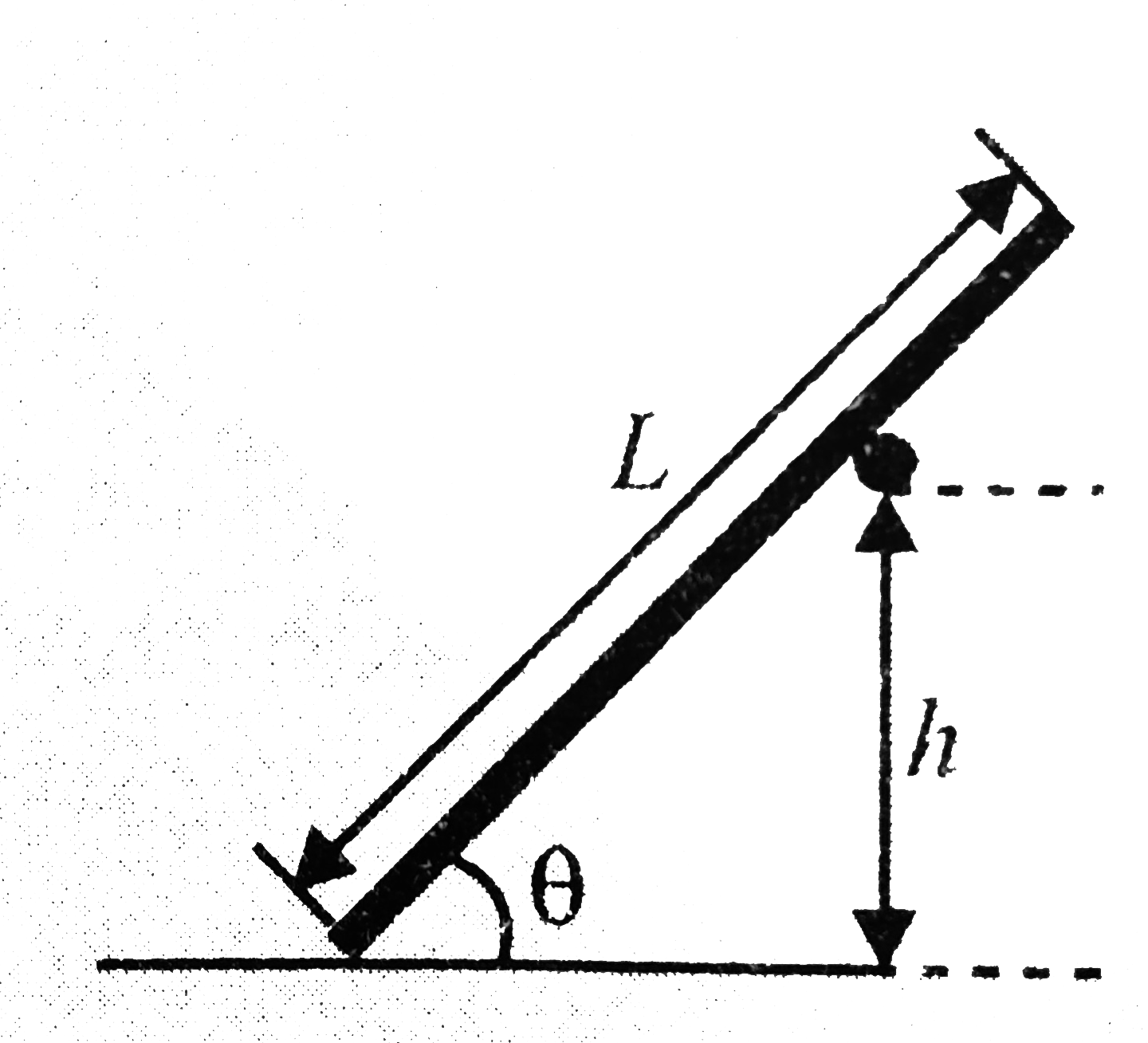
A uniform rod of length `L` rests against a smooth roller as shown in Fig. Find the friction coefficient between the ground and the lower end if the minimum angle that the rod can make with the horizontal is `theta`.

Promotional Banner

Similar Questions

Explore conceptually related problems

A uniform rod of length L rests against a smooth roller as shown in figure. Find the friction coefficient between the ground and the lower end if the minimum angle that rod can make with the horizontal is theta .

A uniform rod of length L rests against a smooth roller as shown in figure. Find the friction coefficient between the ground and the lower end if the minimum angle that rod can make with the horizontal is theta .

A uniform rod of length L rests against a smooth roller as shown in figure. Find the friction coefficient between the ground and the lower end if the minimum angle that rod can make with the horizontal is theta .

A ladder of length l and mass m is placed against a smooth vertical wall, but the ground is not smooth. Coefficient of friction between the ground and the ladder is mu . The angle theta at which the ladder will stay in equilibrium is

A ladder of length l and mass m is placed against a smooth vertical wall, but the ground is not smooth. Coefficient of friction between the ground and the ladder is mu . The angle theta at which the ladder will stay in equilibrium is

A uniform rod of length 1m having mass 1 kg rests against a smooth wall at an angle of 30^(@) with the ground. Calculate the force exerted by the ground on the rod. Take g = 10 ms^(-2) .

A uniform rod is lying against a smooth wall and on a smooth floor. It is relased from rest when it makes an angle theta_(0) with the ground. Find the angle rod will make with the ground it just leaves the contact with the walls.

A uniform rod of length l and mass M pivoted about its end as shown in Fig. and is free to rotate in the vertical plane about the pivot. The rod is released from rest in the horizontal position. (a) What is the initial angular acceleration of the rod? (b) Find the initial acceleration of the right end of the rod? ( c) Find normal contact force due to hinge when rod has rotated through angle theta as shown in Fig.