

Home
Class 11
PHYSICS
The temperature across two different sla...


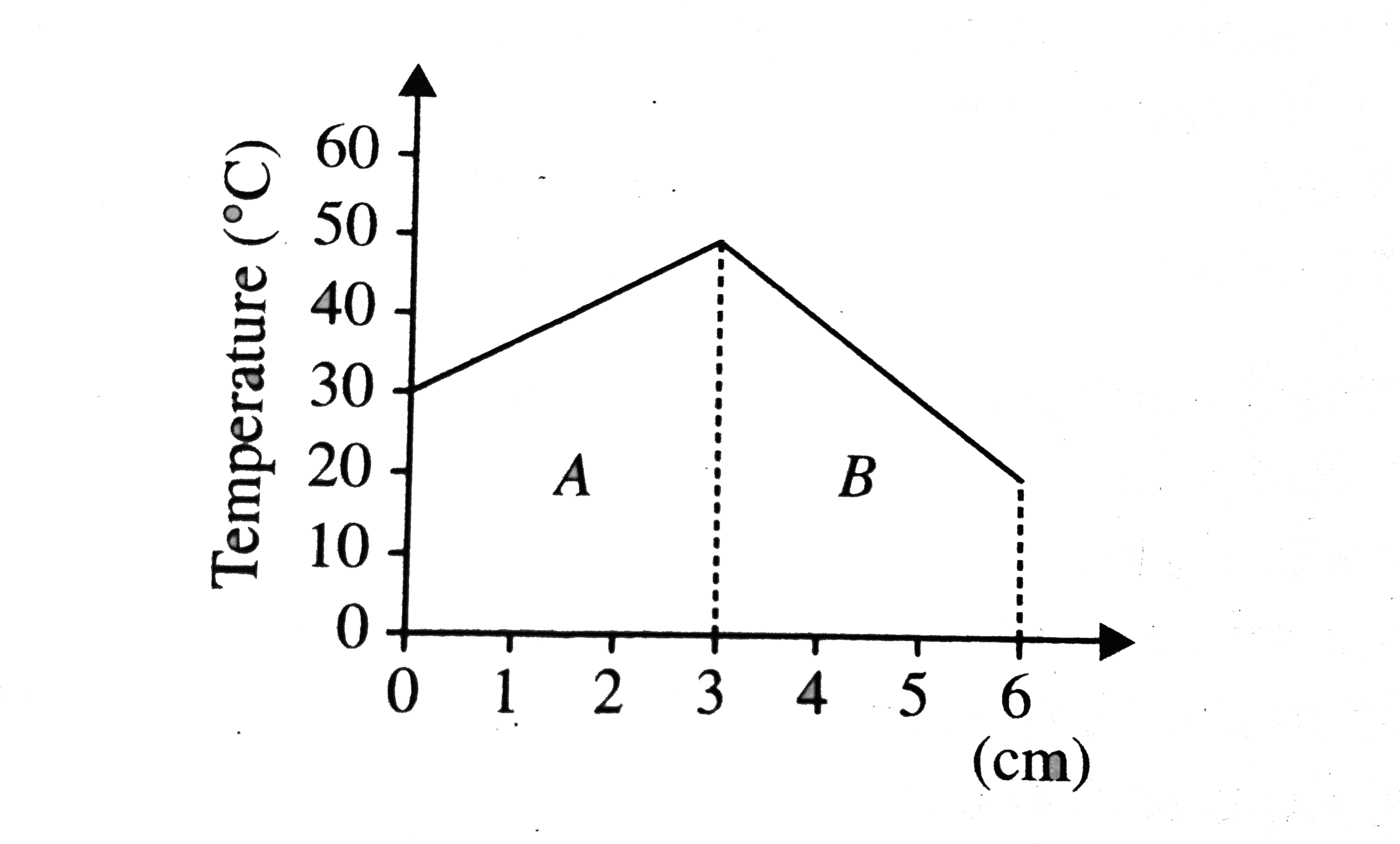
The temperature across two different slabs A and B are shown I the steady state (as shown Fig) The ratio of thermal conductivities of A and B is

Promotional Banner

Similar Questions

Explore conceptually related problems

Two different rods A and B are kept as shown in figure . The variation of temperature of different cross sections with distance is plotted in a graph shown in figure . The ration of thermal conductivities of A and B is -

Two different rods A and B are kept as shown in figure . The variation of temperature of different cross sections with distance is plotted in a graph shown in figure . The ration of thermal conductivities of A and B is -

Two different rods A and B are kept as shown in figure . The variation of temperature of different cross sections with distance is plotted in a graph shown in figure . The ration of thermal conductivities of A and B is -

Steady state temperature are shown in the diagram. Find ratio of thermal conductivity k_1/k_2 if length of all rods are same

Steady state temperature are shown in the diagram. Find ratio of thermal conductivity k_1/k_2 if length of all rods are same

A partition wall has two layers of different materials A and B in contact with each other. They have the same thickness but the thermal conductivity of layer A is twice that of layer B. At steady state the temperature difference across the layer B is 50 K, then the corresponding difference across the layer A is

A partition wall has two layers of different materials A and B in contact with each other. They have the same thickness but the thermal conductivity of layer A is twice that of layer B. At steady state the temperature difference across the layer B is 50 K, then the corresponding difference across the layer A is

Two rods of similar area of cross section and length are joined as shown in the figure. The ratio of their thermal conductivity is 2:3. The free ends are maintained at 100^(@)C and 0^(@)C respectivley. THE temperature at junction in steady state is