

Home
Class 12
PHYSICS
An equilateral glass prism can produce a...

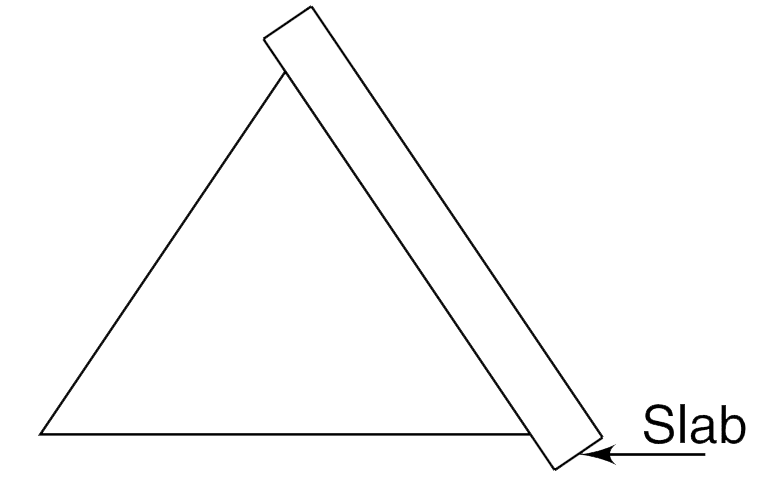
An equilateral glass prism can produce a minimum deviation of `30°` to the path of an incident ray. A transpar- ent slab of refractive index 1.5 is placed in contact with one of the refracting faces of the prism. Thickness of the slab is 3 cm. Now calculate the minimum possible deviation which can be produced by this prism-slab combination.

Promotional Banner

Similar Questions

Explore conceptually related problems

An equilateral prism produces a minimum deviation of 30^(@) . The angle of incidence is

An equilateral prism produces a minimum deviation of 30^(@) . The angle of incidence is

A prism is made of glass of refractive index 1.5. If the angle of minimum deviation is equal to the refracting angle of the prism, calculate the angle of the prism.

A prism is made of glass of refractive index 1.5. If the angle of minimum deviation is equal to the refracting angle of the prism, calculate the angle of the prism.

A ray of light suffers a minimum deviation when incident on a equilateral prism of refractive index sqrt2 . The angle of incidence is

The angle of minimum deviation is an equilateral prism of refractive index 1.414 is

A ray of light suffers minimum deviation when incident on an equilateral prism of refractive index sqrt2 . What is the angle of incidence ?

A ray of light suffers a minimum deviation when incident on an equilateral prism of refractive index sqrt(2) The angle of incidence is

A ray of light suffers a minimum deviation when incident on an equilateral prism of refractive index sqrt(2) The angle of incidence is

An equilateral prism is kept in the minimum deviation position. If the angle of incidence of a monochromatic ray at a refracting face is 49^@30 , the angle of minimum deviation of the ray will be