

Home
Class 12
PHYSICS
In Fig. there are two sliders and they ...

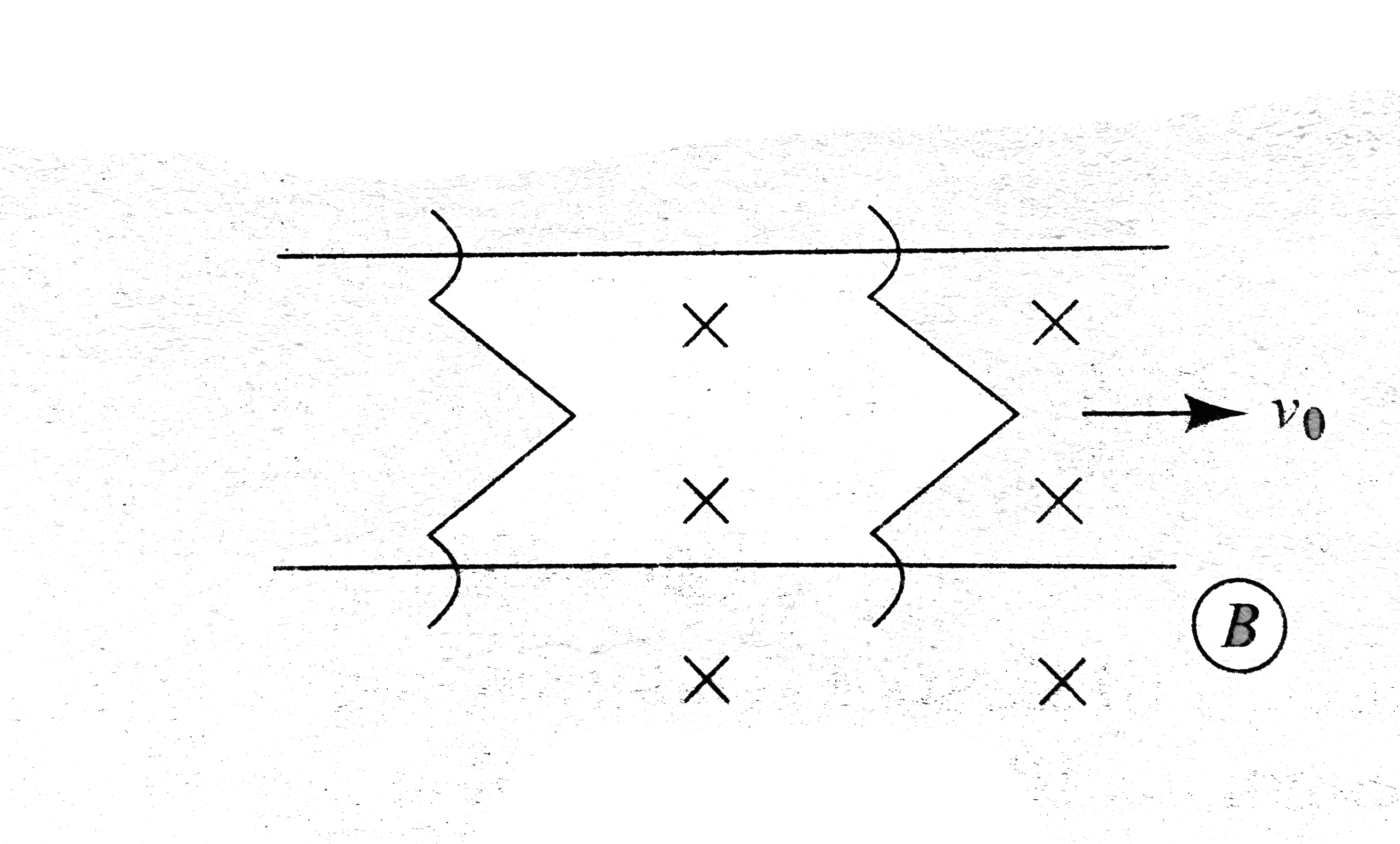
In Fig. there are two sliders and they can slide on two frictionless parallel wires in uniform magnetic field `B`, which is present everywhere. The mass of each slider is `m`, resistance `R` and initially these are at reat. Now, if one slider is given a velocity `v_(0) = 16ms^(-1)`, what will be the velocity (in `ms^(-1`)) of other slider after long time ? (neglect the emf self-inducetion)

Promotional Banner

Similar Questions

Explore conceptually related problems

In Fig. there are two sliders and they can slide on two frictionless parallel wires in uniform magnetic field B , which is present everywhere. The mass of each slider is m , resistance R and initially these are at reat. Now, if one slider is given a velocity v_(0) , what will be the velocity (in ms^(-1 )) of other slider after long time ? (neglect the emf self-inducetion)

A rectangular loop with a slide wire of length l is kept in a uniform magnetic field as shown in the figure. The resistance of slider is R. Neglecting self inductance of the loop find the current in the connector during its motion with a velocity v.

A rectangular loop with a slide wire of length l is kept in a uniform magnetic field as shown in the figure. The resistance of slider is R. Neglecting self inductance of the loop find the current in the wonnector during its motion with a velocity v.

A conducting bar of mass m and length l moves on two frictionless parallel rails in the presence of a constant uniform magnetic field of magnitude B directed into the page as shown in the figure . The bar is given an initial velocity v_(0) towards the right at t = 0. Then the

A conducting bar mass m and length l moves on two frictionless parallel conducting rails in the presence of a uniform magnetic field B_(0) directed into the paper. The bar is given an initial velocity v_(0) to the right and is released at t = 0 . The velocity of the bar as a function of time is given by

A bar of mass m and length l moves on two frictionless parallel rails in the presence of a uniform magnetic field directed into the plane of the paper. The bar is given and initial velocity v_(i) to the right and released. Find the velocity of bar, induced emf across the bar and the current in the circuit as a function of time