

Home
Class 11
PHYSICS
A block of ,mass m =11.7 kg is to be pus...

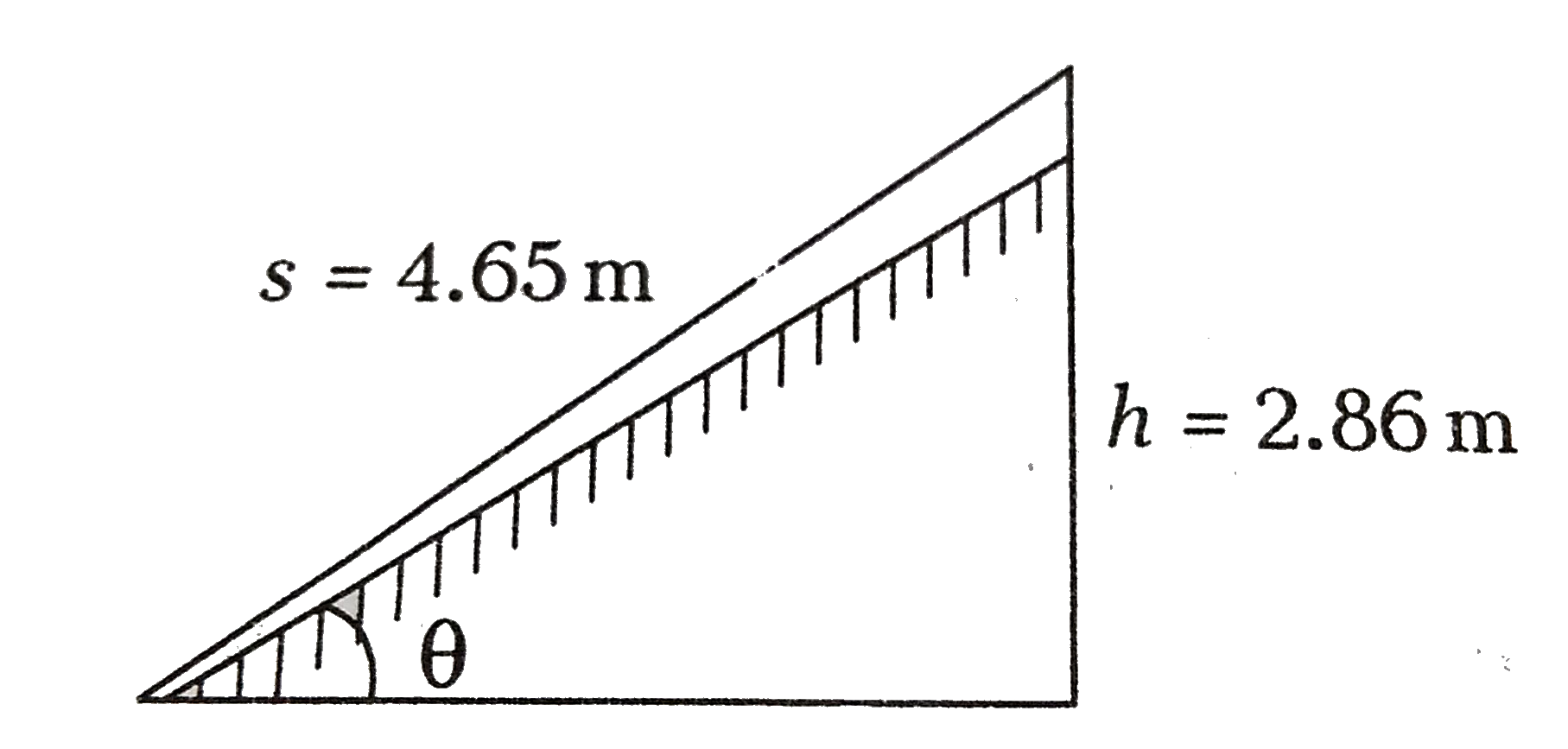
A block of ,mass m =11.7 kg is to be pushed a distance of s=4.65 m. Assuming frictionless surface. Calculate the work done in applying a force parallel to the incline to push the block up at a constant speed. (Take, g=9.8 `ms^(-2)`)

Promotional Banner

Similar Questions

Explore conceptually related problems

An inclined plane is moving with Constant velocity v = 4 m//s on a horizoontal surface as shown in figure. If a block of mass 2 kg is kept at top of the incline and their is no friction between the block and the incline, then the distance travelled by the incline till the block reaches bottom of the inclined is (g = 10 m//s^(2))

An inclined plane is moving with Constant velocity v = 4 m//s on a horizoontal surface as shown in figure. If a block of mass 2 kg is kept at top of the incline and their is no friction between the block and the incline, then the distance travelled by the incline till the block reaches bottom of the inclined is (g = 10 m//s^(2))

A block of mass 2.0 kg is pushed down an inclined plane of inclination 37^0 with a force of 20N acting parallel to the incline. It is found that the block moves on the incline with an acceleration of 10 m/s^2 . If the block started from rest, find the work done by the applied force in the first second .

A block of mass 2.0 kg is pushed down an inclined plane of inclination 37^0 with a force of 20N acting parallel to the incline. It is found that the block moves on the incline with an acceleration of 10 m/s^2 . If the block started from rest, find the work done a. by the applied force in the first second b. by the weight of the block in the first second and c. by the frictional force acting on the block in the first second. Take g=10 m/s^2 .

A block of mass 50 kg slides over a horizontal distance of 1m. If the coefficient of friction between their surface is 0.2, then work done against friction is (take g = 9.8 m//s^(2) ) :

A block of mass 50 kg slides over a horizontal distance of 1m. If the coefficient of friction between their surface is 0.2, then work done against friction is (take g = 9.8 m//s^(2) ) :

A block of mass 2.0 kg kept at rest on an inclined plane of inclination 37^0 is pulledup the plane by applying a constant force of 20 N parallel to the incline. The force acts for one second. A. show that the work done by the applied force does not exceed 40 J. b. find the work work done by the applied force is 40 J. c. Find the kinetic energy of he block at the instant the force ceases to act. Take g=10 m/s^2 .

A block of mass 2.0 kg kept at rest on an inclined plane of inclination 37^0 is pulledup the plane by applying a constant force of 20 N parallel to the incline. The force acts for one second. A. show that the work done by the applied force does not exceed 40 J. b. find the work work done by the applied force is 40 J. c. Find the kinetic energy of the block at the instant the force ceases to act. Take g=10 m/s^2 .

A block of mass 2.0 kg is pushed down an inclined plane of inclination 37^0 with a force of 20N cting parallelto the incline. It is found tht the block moves on the incline with an acceleration of 10 m/s^2 . If the blcok started from rest, find the work done a. by the applied force in the first second b. by the weight of the block in the first second and c. by the frictional force acting on the block in the first second. Take g=10 m/s^2 .

A block of mass 2.0 kg is pushed down an inclined plane of inclination 37^0 with a force of 20N cting parallelto the incline. It is found tht the block moves on the incline with an acceleration of 10 m/s^2 . If the blcok started from rest, find the work done a. by the applied force in the first second b. by the weight of the block in the first second and c. by the frictional force acting on the block in the first second. Take g=10 m/s^2 .