

Home
Class 12
CHEMISTRY
The heat of hydroggenation for 3-methylb...

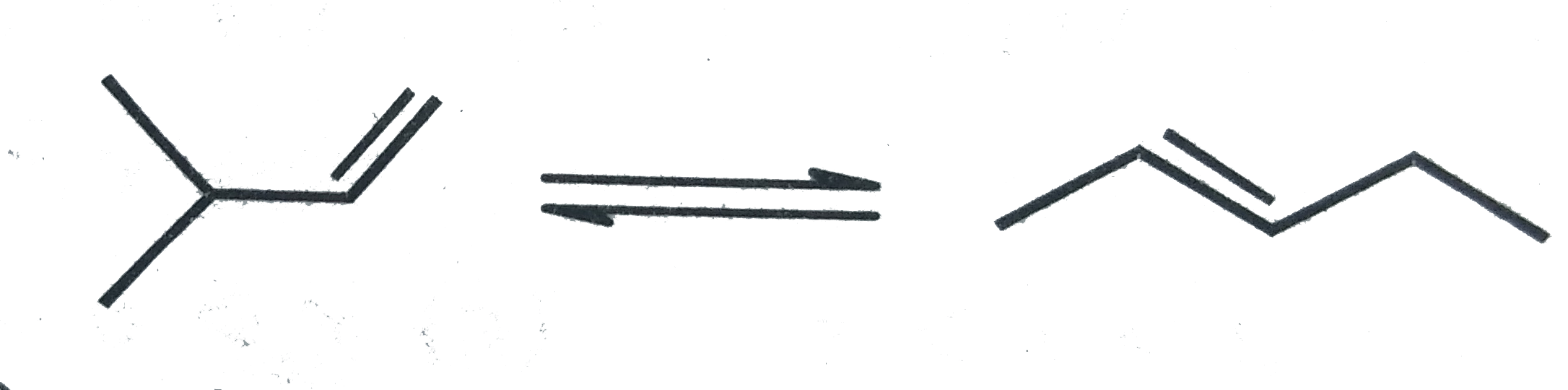
The heat of hydroggenation for 3-methylbutene and 2-pentene are 30-kcal/mol and -28kcal/ mol respectively . The heats of combustion of 2-methylbutane and pentane are -784 kcal/mol and -782 kcal /mol respectively. All the values are given under standard conditions. Taking into account that combustion of both akanes give the same products, what is `DeltaH` (in kcal.mol)n for the following reaction under same conditions ?

Promotional Banner

Similar Questions

Explore conceptually related problems

The heat of hydrogenation for 3-methylbutene and 2-pentene are -30 kcal/mol and -28 kcal/mol respectively. The heats of combustion of 2-methylbutane and pentane are - 784 kcal/mol and -782 kcal/mol respectively. All the values are given under standard conditions. Taking into account that combustion of both alkanes give the same products, what is DeltaH (in kcal/mol) for the following reaction under same conditions ?

The heats of combustion of ethane, ethene and acetylene are -341.1 kcal, -330 kcal and -310.9 kCal mol^(-1) respectively. The best fuel among them is

Heats of hydrogenation of benzene and cyclohexane are -49.8 and -28.6 kcal *mol^(-1) respectively. Determine the resonance energy of benzene.

Heats of combustion of benzene, carbon and hydrogen are - 782, -94, -68 kcal mol^(-1) respectively. Calculate heat of formation of benzene.

The standard heat of formation of NO_2(g) and N_2O_4(g) are 8.0 and 2.0 kcal mol^-1 respectively. The heat of dimarization of NO_2 in kcal is:

If the calculated and the experimental heats of combustion of benzene are 824.1 and 789.1 kcal *mol^(-1) respectively, then calculate the value of resonance energy of benzene.

Heat of formation of CO and CO_2 are -26.4, -94.0 kcal/mole respectively. What is the heat of combustion of CO in kcals?