

Home
Class 11
PHYSICS
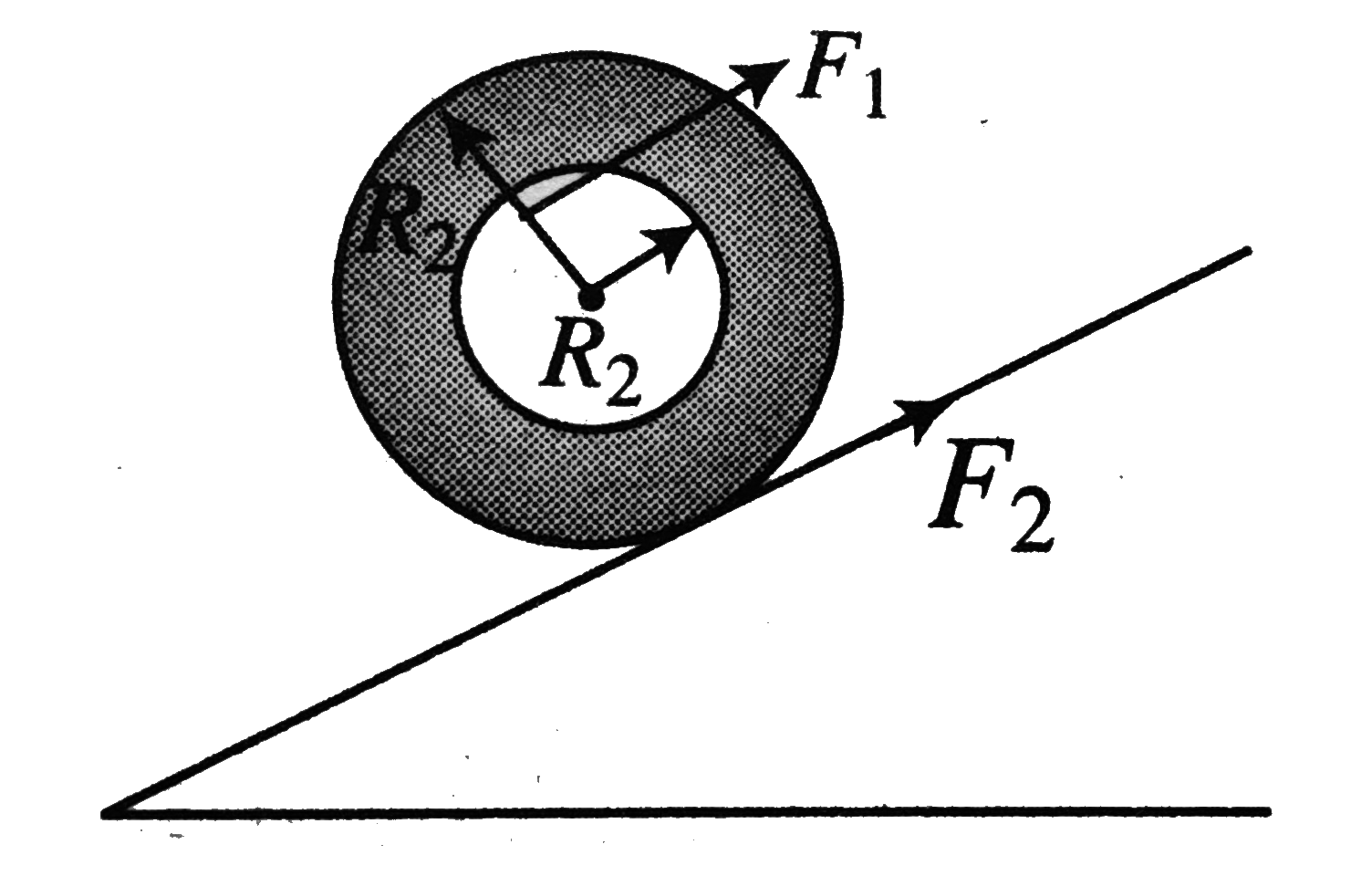
A certain bicycle can go up a gentle inc...

A certain bicycle can go up a gentle incline with constant speed when the frictional force of ground pushing the rear wheel is `F_(2) = 4 N`. With what force `F_(1)` must the chain pull on the sprocket wheel if `R_(1) = 5m` and `R_(2) = 30m`?

Promotional Banner

Similar Questions

Explore conceptually related problems

A bicycle moves on a horizontal road with some acceleration. The forces of friction between the road and the front and rear wheels are F_(1) and F_(2) respectively.

A horizontal force F pulls a 20 kg box at a constant speed along a rough horizotal floor. The coefficient of friction between the box and the floor is 0.25. The work done by force F on the block in displacing it by 2 m is

A horizontal force F pulls a 20 kg box at a constant speed along a rough horizotal floor. The coefficient of friction between the box and the floor is 0.25. The work done by force F on the block in displacing it by 2 m is

A block is pushed by a force F = 10 N. A frictional force of 2 N acts between the block and the surface. Find the work done by the friction when the block moves 10 m.

The gravitional force between two point masses m_(1) and m_(2) at separation r is given by F=k (m_(1)m_(2))/r^(2) The constant k

A bicycle has pedal rods of length 16 cm connected to sprocketed disc of radius 10 cm . The bicycle wheels are 70 cm in diameter and the chain runs over a gear of radius 4cm . The speed of the cycle is constant and the cyclist applies 100 N for, that is always perpendicular to the pedal rod, as shown in figure. Assume tension in the lower part of chain is negligible. The cyclist is peddling at a constant rate of two revolutions per second. Assume that the force applied by other foot is zero when one foot is exerting 100 N force. Neglect friction within cycle parts and the rolling friction. The net force of the friction on the rear wheel due to the road is:

A bicycle has pedal rods of length 16 cm connected to sprocketed disc of radius 10 cm . The bicycle wheels are 70 cm in diameter and the chain runs over a gear of radius 4cm . The speed of the cycle is constant and the cyclist applies 100 N for, that is always perpendicular to the pedal rod, as shown in figure. Assume tension in the lower part of chain is negligible. The cyclist is peddling at a constant rate of two revolutions per second. Assume that the force applied by other foot is zero when one foot is exerting 100 N force. Neglect friction within cycle parts and the rolling friction. The net force of the friction on the rear wheel due to the road is: