Self-induction : The prroduction of induced emf in a coil, due to the chhange of current in the same coil, is called self-induction.
Consider an isolated coil or circuit in which there is a current I.
The current produces a mgnetic flux linked with the coil.
The magnetie flux linked with the coil can be changed by varying the current in the coil itself, eg. by breaking amd closing the circuit Fig (1) This produres a self-induced emf in the coil, called a back emf because it opposes the change producing it. It sets up an induced current in the coil
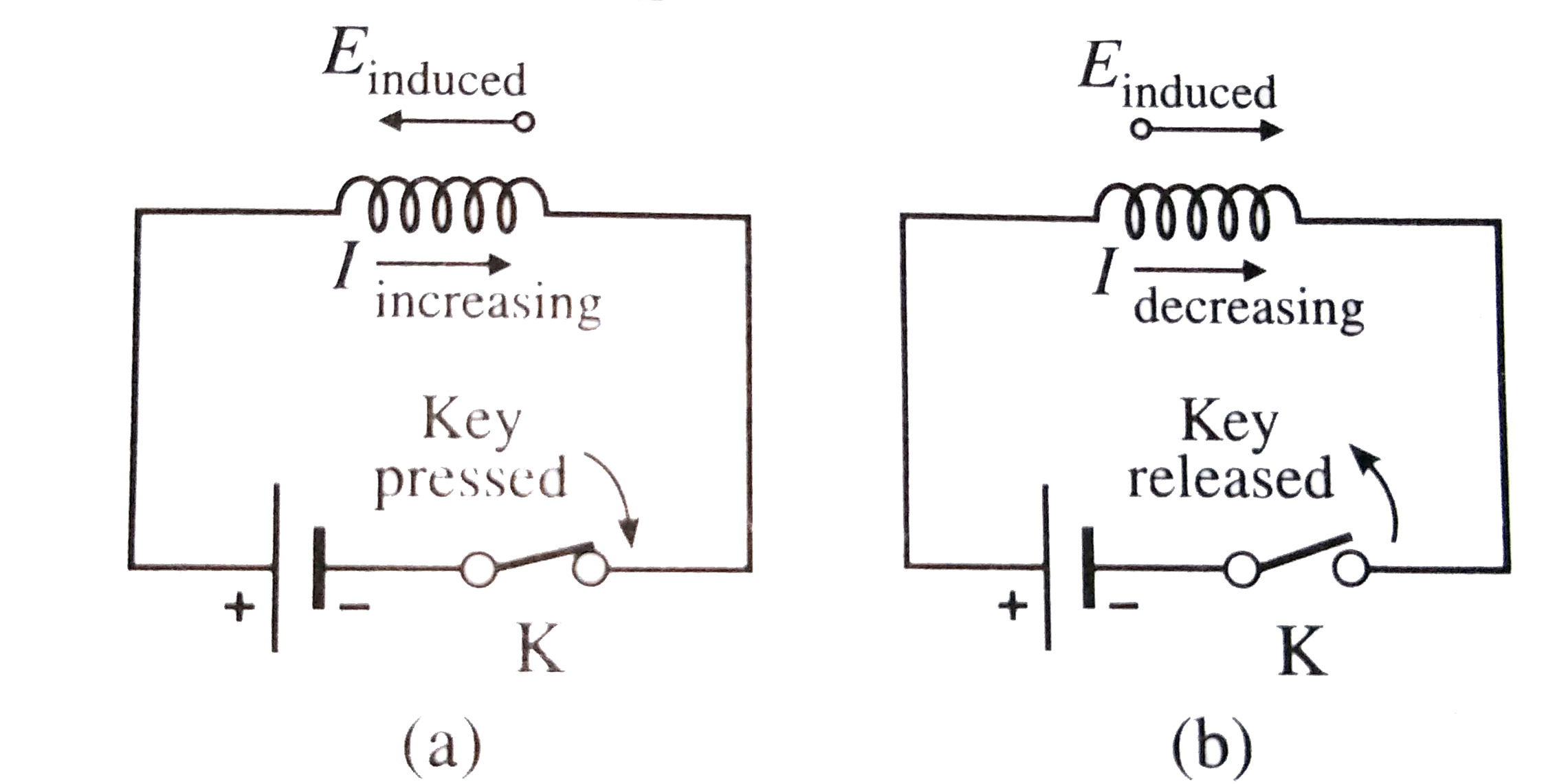
itself in the same direction as the original current opposing its decrease when the key K is suddenly opened When the key K is closed, the induced current is opposite to the conventional curent, opposing its increase.
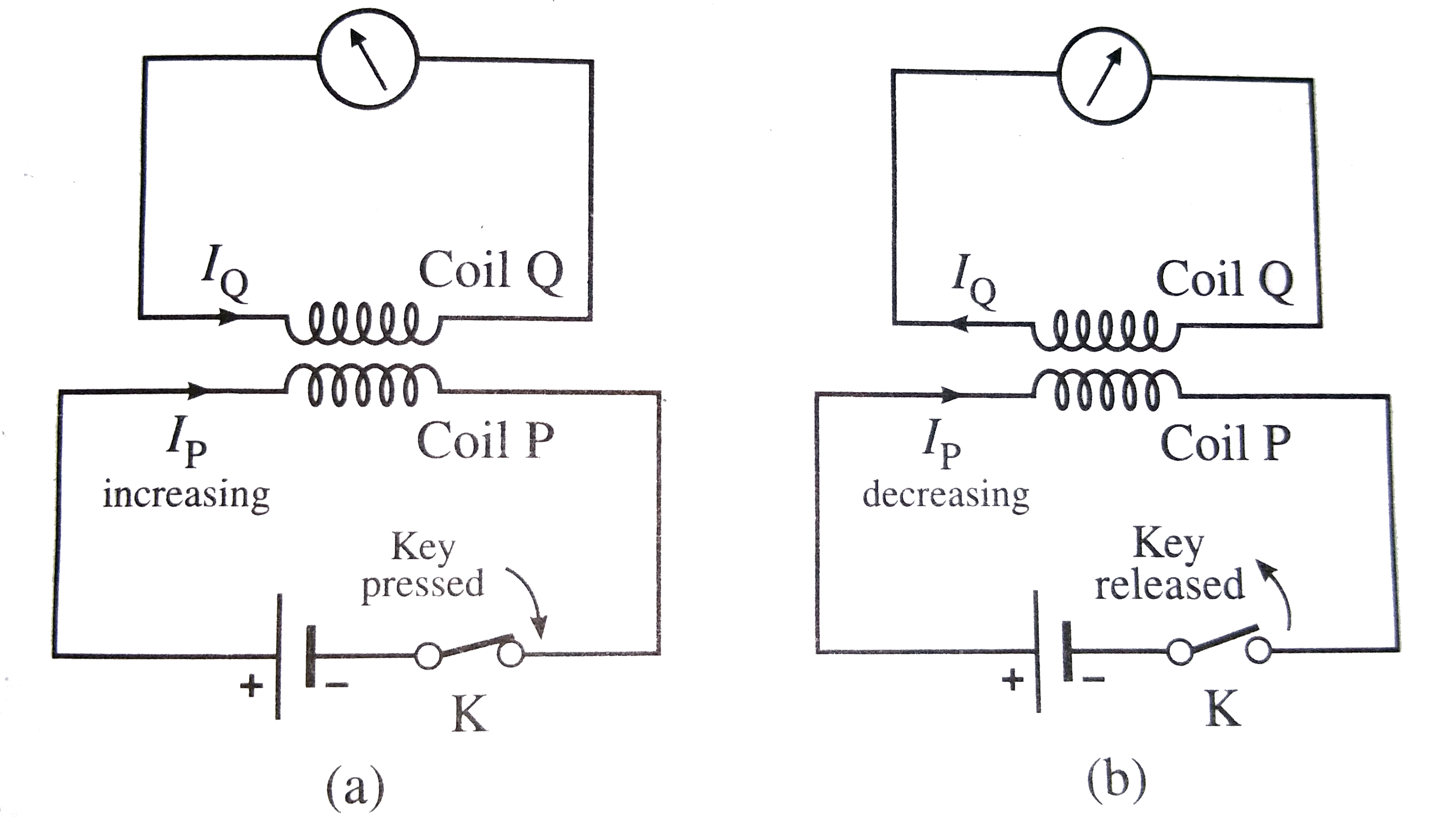
(2) Mutual induction : The production of induced emf in a coil due to the changes of current in a neighbouring coil is called mutual induction
Suppose that two coils- a primary coil Pand a secondary coil Q-are placed close to each other, Fig (2).
if a current is passed through the primary coil by closig key K. a magnetic field is produced in the surrounding region As the secondary coil is in this region, a magnetic flux is linked with the secondary coil. On closing the key K, the effect of self-inductance of the primary coil is to delay the rise of current in it As the current im the primary coil increases, the changing flux linked with the secondary coil nearby induces an emf in the secondary. This is shown by momentary deflection (throw) of the galvanometer G.
On releasing the tap key, the current in the primary does not reduce to zero instantaneusly, again due to the self-inductance of the primary coil. The decreasing flux through its turn induces an emf in the secondary coil, now with opposite polarity. This is shown by the opposite throw of the galvonometer.